Doxepin
SINEQUAN
Pronunciation: DOX-e-pin (SIN-e-kwon)
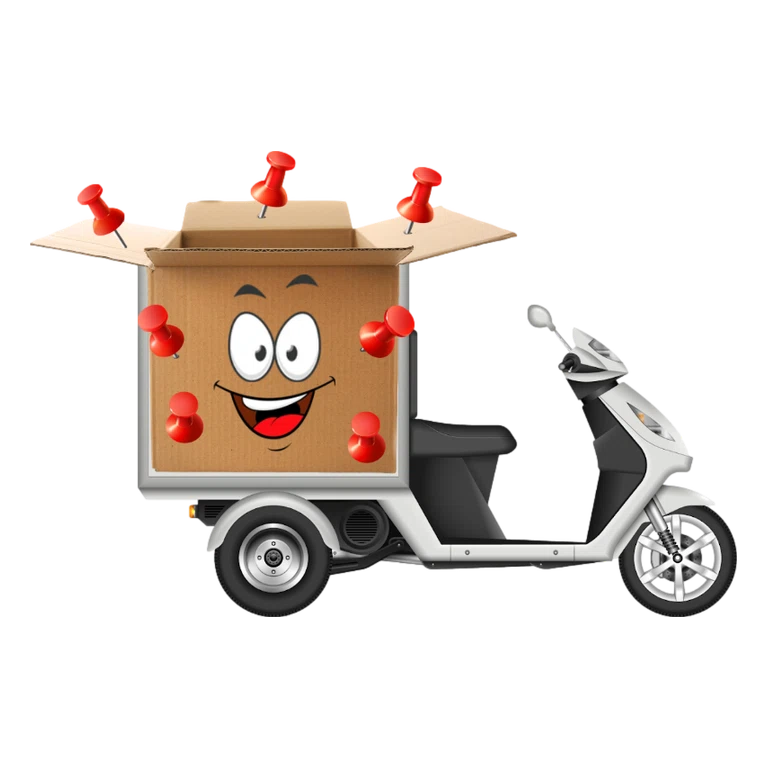
“Box with pins”
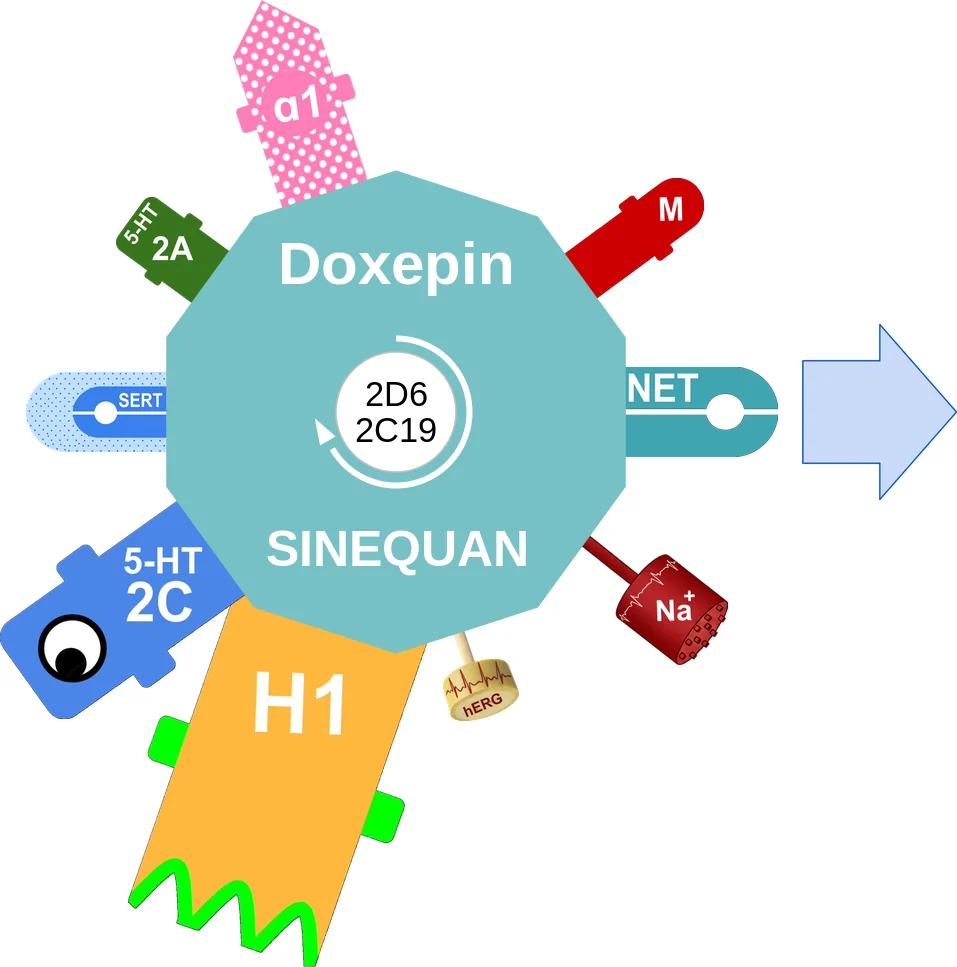
What it isTricyclic with very high H1 affinity; at low dose an insomnia agent, at high dose an antidepressant.
Why this oneAt 3 to 6 mg it is essentially a pure H1 antagonist, giving sleep maintenance without anticholinergic or dependence effects.
What limits itAt antidepressant doses it becomes a full tricyclic with all the anticholinergic and overdose liability. The dose determines which drug it is.
Doxepin prescription history
Animated chart of estimated U.S. prescriptions per year, Sleep meds (1869–2026). Doxepin enters in 1969 (estimated).
FDA-approved for
- depression/anxiety (~1969)
- insomnia (2010)
Off-label
- chronic urticaria
- insomnia
Classes and tags
Clinical profile
Legacy pregnancy categoryC
Defining liabilityTricyclic anticholinergic and cardiac toxicity become life-threatening in overdose.
FDA label
Read the full label on DailyMed ↗
| FDA dosing | Population | Start | Target | Max |
|---|---|---|---|---|
| Major depressive disorder (MDD) | Adults | 25 mg TID or 75 mg QD | 75–150 mg/day (QD or divided) | 100 mg TID |
| MDD | Geriatric | Generally lower than younger adults (no number on label) | Undefined | 100 mg TID |
Renal Undefined
Hepatic Not studied; may have greater exposure — consider doxepin concentrations and modify dosage as appropriate
Not approved for pediatric use; may cause sedation — avoid driving/hazardous machinery; alcohol response may be potentiated
Instructions
- Total daily dose may be given once daily or in divided doses
- Reduce dose if anticholinergic effects (dry mouth, blurred vision, constipation) develop
- Strong CYP2D6 inhibitors or known CYP2D6/CYP2C19 poor metabolizers: reduce dose based on doxepin plasma concentrations
- ≥14 days between stopping an MAOI and starting, and between stopping doxepin and starting an MAOI
- Screen for personal/family history of bipolar disorder, mania or hypomania before starting
- Taper gradually to discontinue
Available strengths
- cap 10, 25, 50, 75, 100, 150 mg
- sol 10 mg/mL
- tab 3, 6 mg
- cream 5 %
Contraindications
- Glaucoma
- Current or past urinary retention
- MAOIs (concurrently or within 14 days of stopping), incl. linezolid or IV methylene blue — serotonin syndrome
Cautions
- Suicidal thoughts and behaviors (adolescents/young adults)
- Serotonin syndrome
- Angle-closure glaucoma
- Sedation and driving risks
- Activation of mania/hypomania
- Seizures
- Psychosis (in schizophrenia)
Adverse reactions
- Somnolence
- Dry mouth
- Dizziness
- Constipation
- Fatigue
Pregnancy No established increased risk of major birth defects/miscarriage; poor neonatal adaptation with third-trimester TCA exposure
Lactation Doxepin/nordoxepin present in milk; reports of excess sedation, respiratory depression, poor suckling, hypotonia — breastfeeding not recommended
Cost
Generic entry1986
Serotonicity
This drug is routinely called serotonergic. By Gillman’s human-effect criteria it does not raise serotonin in the synapse.
Predominantly antihistaminic at usual doses; negligible clinically meaningful SRI activity.
Label contraindicationMAOIs (concurrently or within 14 days of stopping), incl. linezolid or IV methylene blue — serotonin syndrome. The label governs prescribing; Gillman’s point concerns serotonin toxicity only.
It binds the serotonin transporter, and its SERT peg is drawn to that textbook affinity. The pale halo around the peg marks binding that, by Gillman’s human-effect criteria, does not produce clinical serotonin reuptake inhibition.
Gillman’s four human testsA measurable SERT affinity that fails all four is not clinical serotonicity.
- Retarded orgasm
- Efficacy in OCD and cataplexy
- Clonus and hyperreflexia in single-drug overdose
- Serotonin toxicity when combined with an MAOI
Non-elevating action5-HT2A antagonism may be present
Evidence confidenceHigh
Background: what serotonicity is · what is and is not an SRI · what counts as a relevant MAOI.
Active metabolites
Open Doxepin in the interactive console ↗
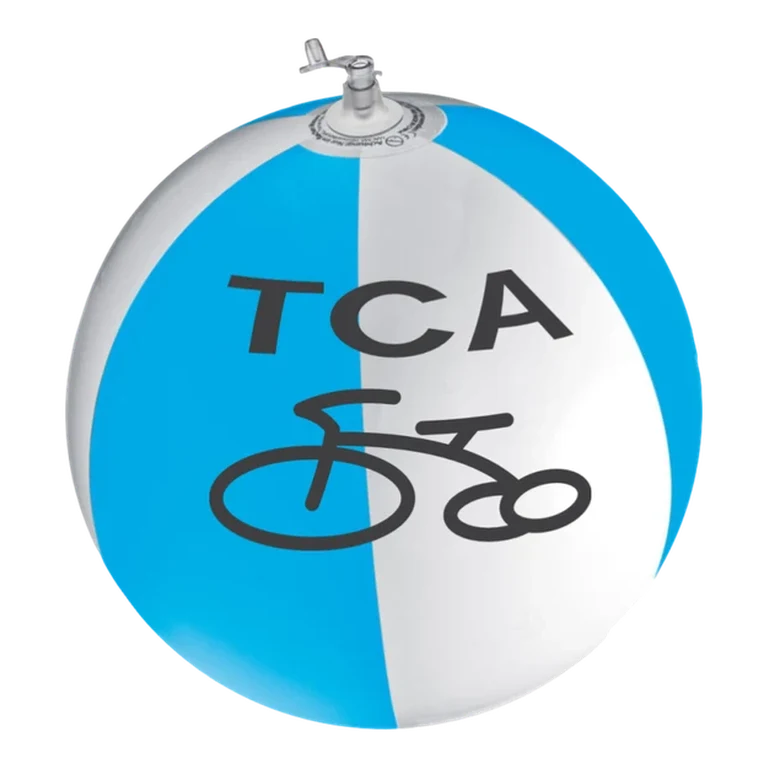
Memory aids: interaction avatars

Open Doxepin in the interactive console ↗
Self-check
- At what dose is doxepin essentially a pure H1 antagonist?
3–6 mg. - What liabilities emerge at antidepressant doses?
Full tricyclic anticholinergic and overdose liability.