Buprenorphine patch
BUTRANS
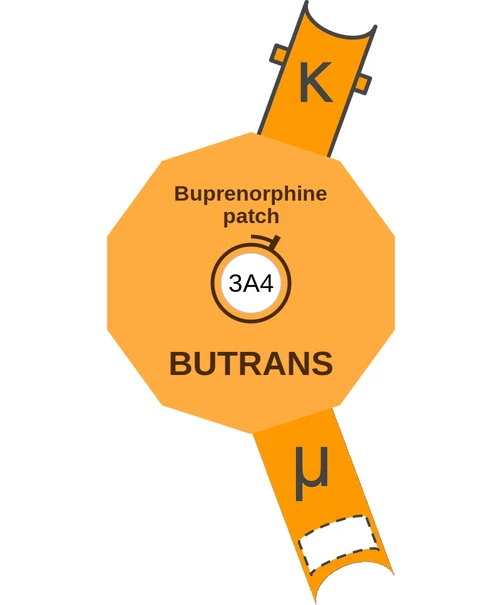
What it isPartial mu-opioid agonist and kappa antagonist delivered by 7-day transdermal system; continuous treatment of chronic pain.
Why this oneUnlike sublingual buprenorphine, it carries a PAIN label, not OUD; weekly delivery provides continuous analgesia.
What limits itExternal heat can accelerate absorption; respiratory depression worsens with benzodiazepines, and the patch still carries addiction risk.
FDA-approved for
- chronic pain (around-the-clock) (2010)
FDA label
Read the full label on DailyMed ↗
| FDA dosing | Population | Start | Target | Max |
|---|---|---|---|---|
| Severe and persistent pain requiring an around-the-clock opioid (alternatives inadequate); not for PRN use | Adults; opioid-nontolerant | 5 mcg/hr patch every 7 days | Individualized | 20 mcg/hr |
Titration Minimum titration interval 72 hours (time to steady state)
Renal Undefined
Hepatic Not evaluated in severe hepatic impairment; consider an alternate analgesic
Apply a new patch every 7 days
Instructions
- Transdermal use on intact skin; wear each patch 7 days
- Wait a minimum of 3 weeks before applying to the same site; rotate sites
- Do not cut the patch; avoid heat exposure (hot water, direct sun)
- Do not abruptly discontinue in physically dependent patients — taper
- Doses 7.5–20 mcg/hr only for patients on <=80 mg/day oral morphine equivalent for >=1 week
Contraindications
- Significant respiratory depression
- Acute or severe bronchial asthma in an unmonitored setting or without resuscitative equipment
- Known or suspected gastrointestinal obstruction, including paralytic ileus
Cautions
- Opioid-induced hyperalgesia/allodynia
- Life-threatening respiratory depression in chronic pulmonary disease or elderly/cachectic/debilitated patients
- Adrenal insufficiency
- Severe hypotension
- Increased intracranial pressure/head injury/impaired consciousness
- QTc prolongation
- Hepatotoxicity
Adverse reactions
- Nausea
- Headache
- Application-site pruritus/erythema/rash
- Dizziness
- Constipation
- Somnolence
- Vomiting
- Dry mouth
Pregnancy Insufficient human data; prolonged use during pregnancy can cause neonatal opioid withdrawal syndrome; not recommended immediately prior to labor.
Lactation Breastfeeding not recommended (risk of excess sedation and respiratory depression); monitor infant for sedation/breathing and withdrawal.
⚠ BOXED WARNINGS
- Addiction, abuse and misuse
- Life-threatening respiratory depression
- Risk from concomitant use with benzodiazepines
Classes and tags
Clinical profile
Mechanism of action: Buprenorphine patch ballicule
Open Buprenorphine patch in the interactive console ↗
Memory aids: mascots and interaction avatars

pinpoint pupils → opioid
SubuTEXAS flag
SUBmarine periscope on bumper car