Torsemide
DEMADEX
What it isNKCC2-inhibiting loop diuretic; edema and hypertension, especially with heart failure or kidney disease.
Why this oneOral absorption is more reliable and its action longer than furosemide, making outpatient response more predictable.
What limits itVolume depletion, hypokalemia, and hyponatremia require monitoring; excessive diuresis can worsen kidney function.
FDA-approved for
- edema/hypertension (1993)
FDA label
Read the full label on DailyMed ↗
| FDA dosing | Population | Start | Target | Max |
|---|---|---|---|---|
| Edema - heart failure | Adult | 10-20 mg QD | 200 mg/day (higher not studied) | |
| Edema - chronic renal failure | Adult | 20 mg QD | 200 mg/day (higher not studied) | |
| Edema - hepatic cirrhosis | Adult (with aldosterone antagonist or K-sparing diuretic) | 5-10 mg QD | 40 mg/day (higher not studied) | |
| Hypertension | Adult | 5 mg QD | 10 mg QD |
Titration Hypertension: increase after 4-6 weeks if needed; edema: titrate by doubling per diuretic response
Renal Undefined (contraindicated in anuria)
Hepatic Contraindicated in hepatic coma
Contraindications
- Anuria
- Hepatic coma
Cautions
- Hypotension and worsening renal function
- Electrolyte/metabolic abnormalities (hypokalemia, hyponatremia, hypomagnesemia, hypocalcemia, alkalosis); hyperglycemia; hyperuricemia/gout
- Ototoxicity
Adverse reactions
- Excessive urination
Pregnancy No human data; animal fetal/maternal toxicity at high doses
Lactation No data; diuretics can suppress lactation
NO BOXED WARNINGS
Principal riskVolume depletion with hypokalemia
Cost, est. cash$20–$1,500/dose or month
Generic entry2002
Classes and tags
Clinical profile
Legacy pregnancy categoryC
Defining liabilityVolume depletion and electrolyte disturbances; kidney function and interacting medications modify risk.
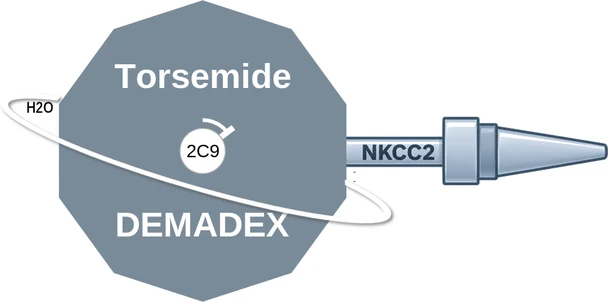
Mechanism of action: Torsemide ballicule
Open Torsemide in the interactive console ↗
Memory aids: mascots and interaction avatars

Bananas dispersing → ↓ serum potassium