CYP2C9 interactions
CYP2C9 clears warfarin, phenytoin, the NSAIDs and the sulfonylureas — four groups where a modest change in level produces a visible clinical event.
Warfarin is the classic victim because 2C9 clears its more potent S-enantiomer. Add fluconazole, amiodarone or metronidazole and the INR climbs; add carbamazepine, phenytoin, phenobarbital, rifampin, St John’s wort or enzalutamide and it falls. Either direction is measurable within days, which is the one mercy here — the endpoint is a number you already check.
Phenytoin is both substrate and inducer of this enzyme, and its clearance saturates within the therapeutic range, so small dose increases produce disproportionate level rises and any 2C9 inhibitor exaggerates that further.
The sulfonylureas glimepiride, glipizide, glyburide and tolbutamide give hypoglycemia when inhibited. The NSAIDs — celecoxib, meloxicam, piroxicam, flurbiprofen — give GI and renal toxicity. Losartan inverts the pattern: it needs 2C9 to form its active metabolite, so inhibition costs efficacy rather than causing toxicity. Valproate, dronabinol, fluvastatin and torsemide complete the substrate list.
In practice the pairing to look for is an azole or amiodarone arriving in a chart that already contains warfarin or a sulfonylurea.
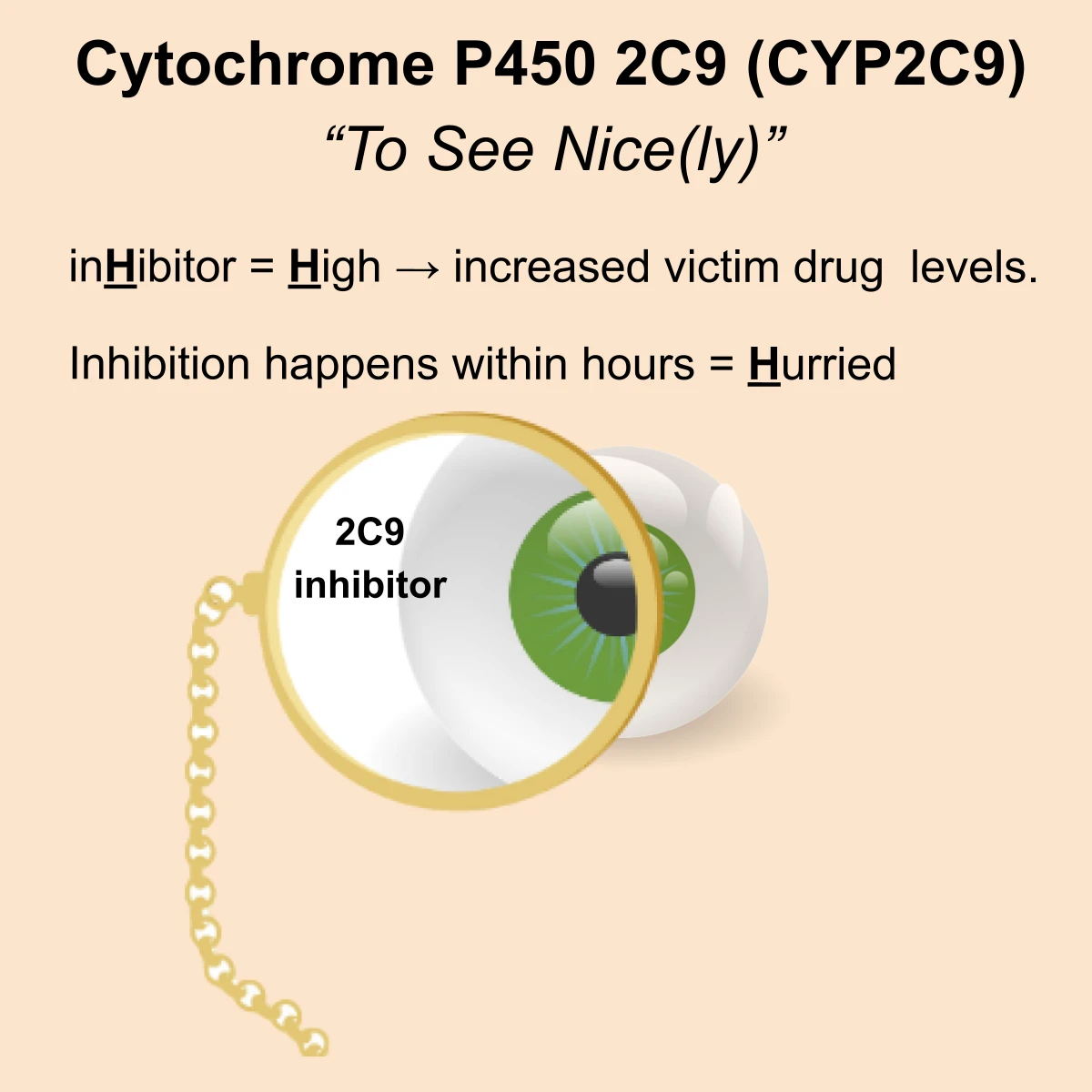
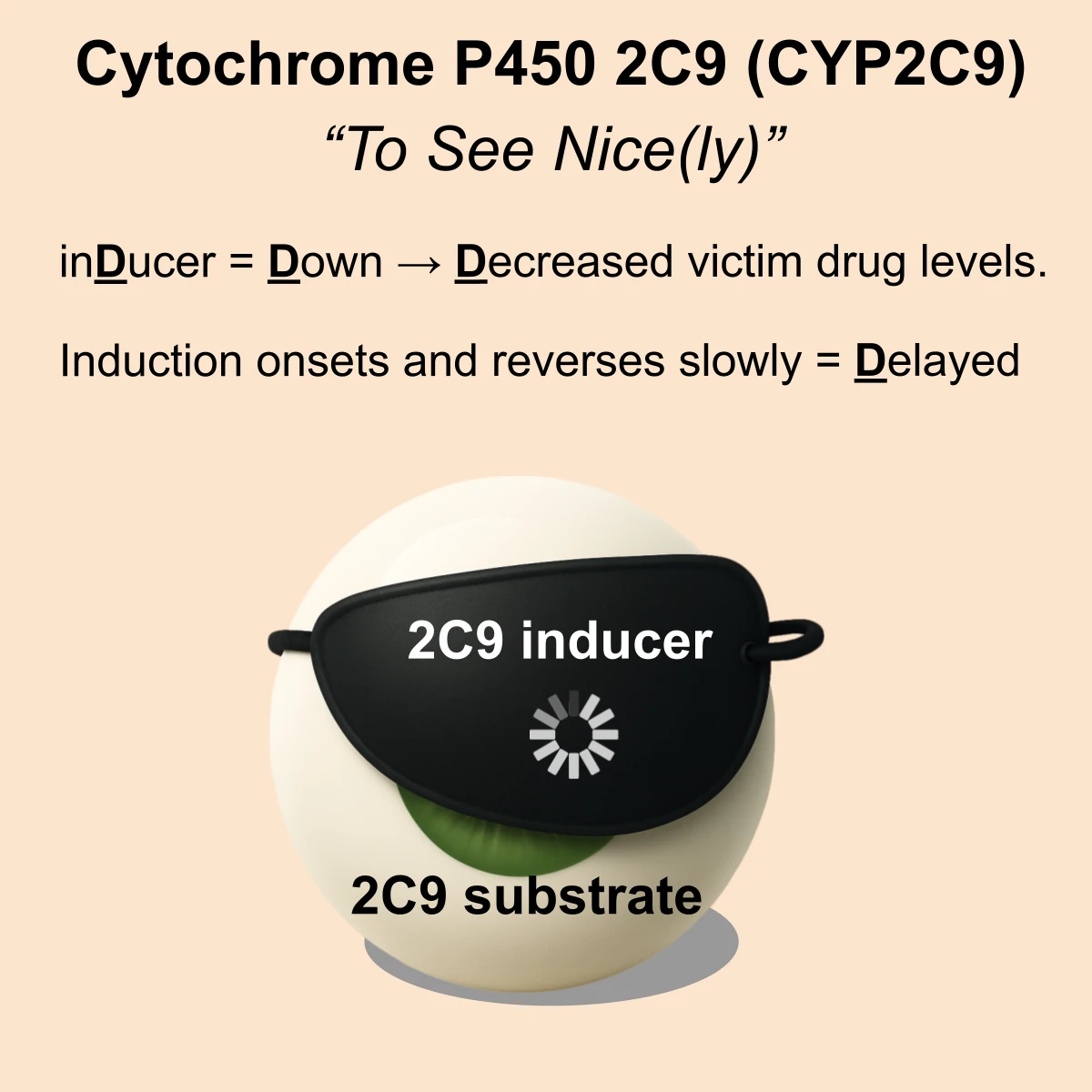
CYP2C9 inhibitors (4)

CYP2C9 inhibitor

CYP2C9 inhibitor

CYP2C9 inhibitor

CYP2C9 inhibitor
CYP2C9 inducers (6)

CYP2C9 inducer

CYP2C9 inducer

CYP2C9 inducer

CYP2C9 inducer

CYP2C9 inducer

CYP2C9 inducer
CYP2C9 substrates (15)
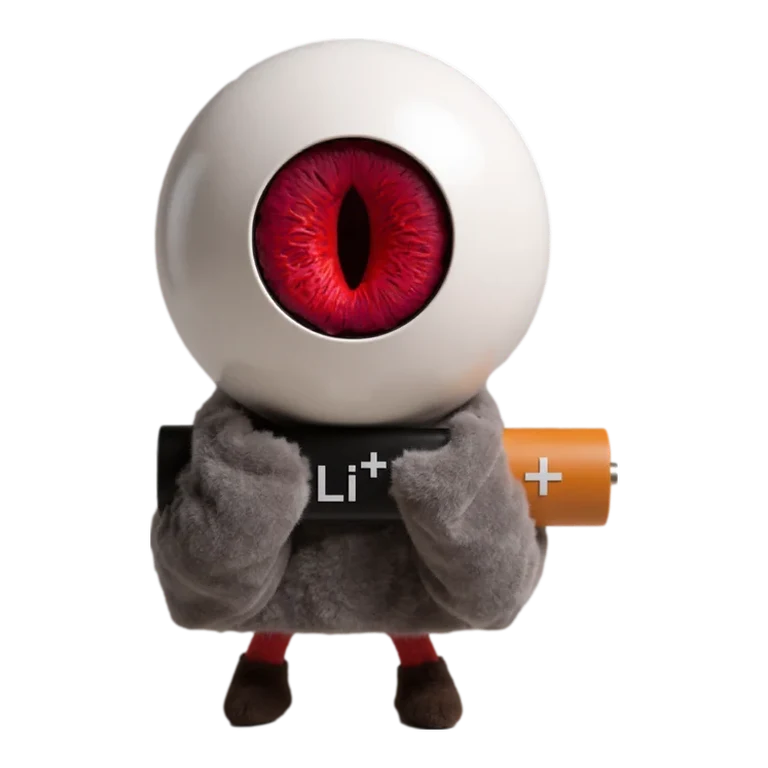
CYP2C9 substrate
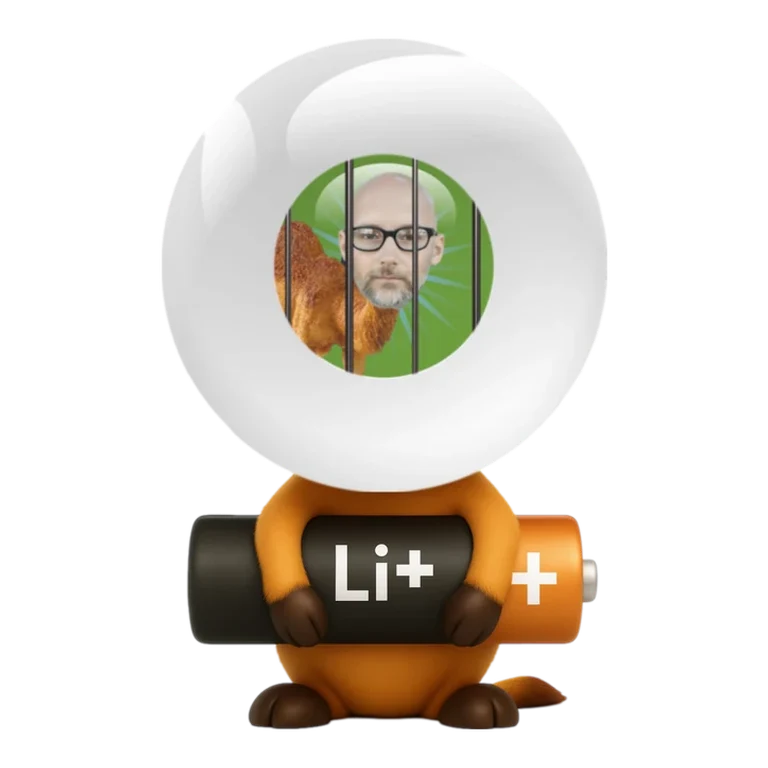
CYP2C9 substrate

CYP2C9 substrate

CYP2C9 substrate

CYP2C9 substrate

CYP2C9 substrate

CYP2C9 substrate

CYP2C9 substrate

CYP2C9 substrate

CYP2C9 substrate

CYP2C9 substrate

CYP2C9 substrate
CYP2C9 substrate

CYP2C9 substrate

CYP2C9 substrate