Oxybutynin patch
OXYTROL mnemonic
Pronunciation: ox-i-BYOO-ti-nin
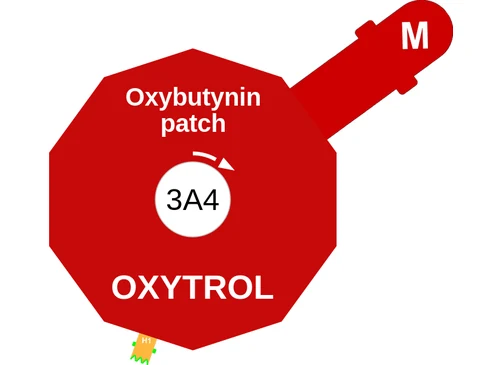
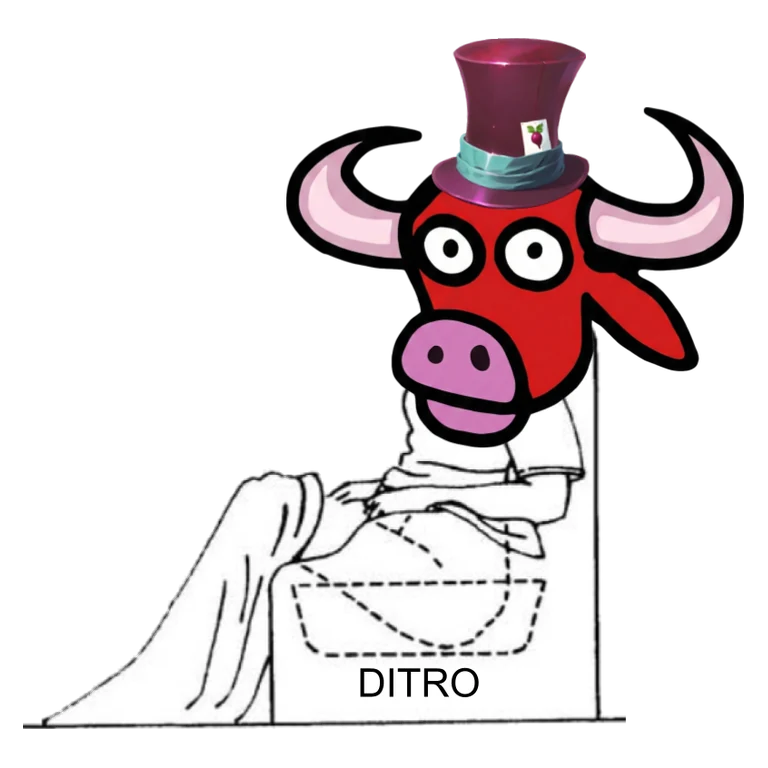
“Ox’s booty in a (ditro)pan”
“Mad as a hatter” → BBB-crossing anticholinergic
What it isOxybutynin transdermal system (OXYTROL), 3.9 mg/24 h, applied to the abdomen, hip or buttock twice weekly for overactive bladder.
Why this oneThrough the skin it bypasses the first-pass metabolism that generates N-desethyloxybutynin, the metabolite behind oral oxybutynin’s dry mouth — so dry mouth on the patch runs close to placebo, which is the whole reason to choose it.
What limits itItching and redness at the application site take dry mouth’s place and are the usual reason to stop. Sites are rotated, never reused within 7 days, and the patch is not cut. The antimuscarinic cautions still hold: bladder outflow obstruction, gastrointestinal obstruction or slow motility, reflux, somnolence, and reported angioedema.

Principal riskApplication-site reactions, in place of oral oxybutynin’s dry mouth
Classes and tags
Clinical profile
Legacy pregnancy category: C
Defining liabilityAntimuscarinic burden: dry mouth, constipation, urinary retention, blurred vision; confusion or delirium in older adults and in overdose.
FDA label
Read the full label on DailyMed ↗
NO BOXED WARNINGS
| FDA dosing | Population | Start | Target | Max |
|---|---|---|---|---|
| Overactive bladder (urge urinary incontinence, urgency, frequency) | Adult men | 3.9 mg/day patch twice weekly (every 3 to 4 days) | 3.9 mg/day patch twice weekly | 3.9 mg/day |
Renal Undefined
Hepatic Undefined
Rx label is indicated for men; safety and efficacy not established in pediatric patients
Instructions
- Apply to dry, intact skin on the abdomen, hip or buttock
- Use a new site each time; do not reapply to the same site within 7 days
- Do not cut or divide the patch; do not use if damaged
Available strengths
- patch 3.9 mg/24 hr
Contraindications
- Urinary retention
- Gastric retention
- Uncontrolled narrow-angle glaucoma
Cautions
- Urinary retention (bladder outflow obstruction)
- Gastrointestinal disorders (gastric retention, reflux/esophagitis)
- Central nervous system effects (somnolence)
- Angioedema
- Skin hypersensitivity
- Exacerbation of myasthenia gravis
Adverse reactions
- Application site pruritus
- Application site erythema
- Dry mouth
- Application site vesicles
- Diarrhea
- Dysuria
- Constipation
Pregnancy No human data; no adverse developmental outcomes in rats and rabbits during organogenesis
Lactation No information on presence in human milk, effects on the breastfed child, or milk production
Dose response
Open Oxybutynin patch in the interactive console ↗
Open Oxybutynin patch in slides ↗
Memory aids: interaction avatars

Open Oxybutynin patch in the interactive console ↗
Open Oxybutynin patch in slides ↗