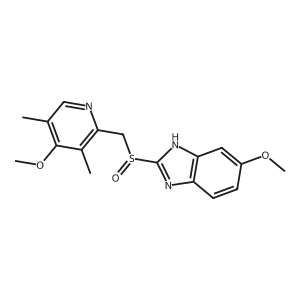
Omeprazole
PRILOSEC
Pronunciation: oe-ME-pra-zoel (PRYE-loe-sek)
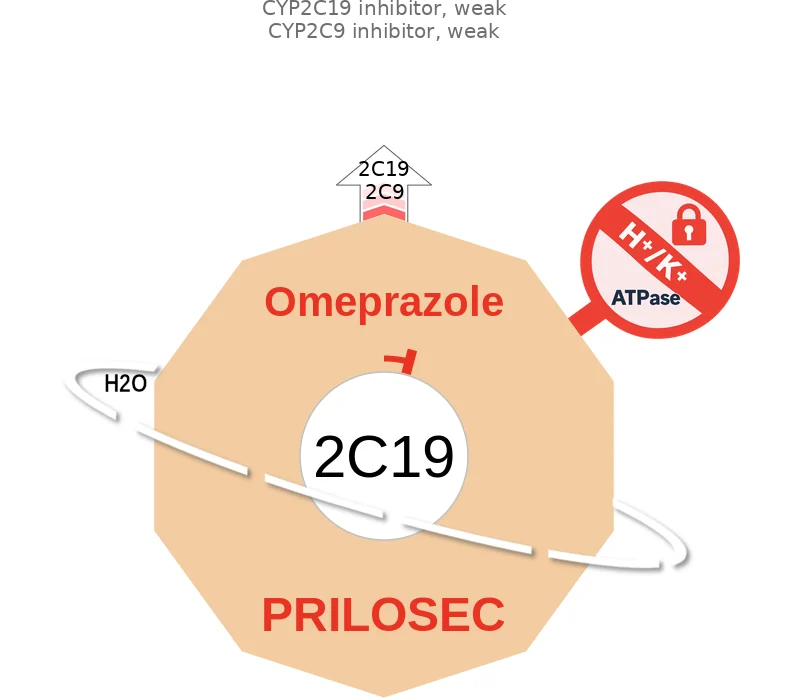
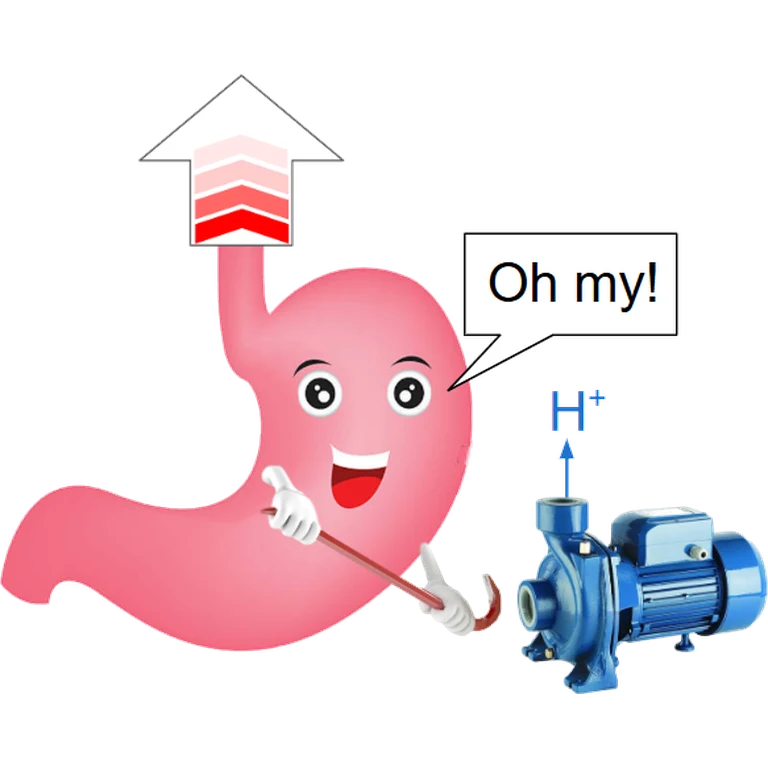
“Ome pries Loose – Oh my!”
What it isIrreversible proton-pump inhibitor for GERD, peptic ulcer disease and H. pylori regimens.
Why this oneThe most interaction-prone common PPI; pantoprazole is preferred when clopidogrel must remain effective.
What limits itLong-term use can deplete magnesium and B12 and raise fracture or enteric-infection risk; reassess the indication.
Omeprazole prescription history
Animated chart of estimated U.S. prescriptions per year, Acid-suppressing meds (1977–2026). Omeprazole enters in 1989 (estimated).
FDA-approved for
- GERD/ulcers (1989)
Off-label
- functional dyspepsia
Principal riskLong-term use: B12 deficiency, hypomagnesemia, fracture
Classes and tags
Clinical profile
Legacy pregnancy categoryC
Defining liabilityLong-term infection, magnesium/B12 and bone risks; selected agents have clinically important CYP interactions.
FDA label
Read the full label on DailyMed ↗
NO BOXED WARNINGS
| FDA dosing | Population | Start | Target | Max |
|---|---|---|---|---|
| Active duodenal ulcer (short-term) | Adults | 20 mg QD × 4 weeks | 20 mg QD; some patients need an additional 4 weeks | 20 mg QD |
| H. pylori eradication to reduce duodenal ulcer recurrence — triple therapy | Adults | 20 mg + amoxicillin 1000 mg + clarithromycin 500 mg, all BID × 10 days | If ulcer present at start: then 20 mg QD × 18 days | 20 mg BID |
| H. pylori eradication to reduce duodenal ulcer recurrence — dual therapy | Adults | 40 mg QD + clarithromycin 500 mg TID × 14 days | If ulcer present at start: then 20 mg QD × 14 days | 40 mg QD |
| Active benign gastric ulcer (short-term) | Adults | 40 mg QD | 40 mg QD × 4 to 8 weeks | 40 mg QD |
| Symptomatic GERD | Adults | 20 mg QD | 20 mg QD up to 4 weeks | 20 mg QD |
| Erosive esophagitis (EE) due to acid-mediated GERD | Adults | 20 mg QD | 20 mg QD × 4 to 8 weeks; additional 4 weeks if no response at 8 weeks; further 4 to 8 week courses for recurrence | 20 mg QD |
| Maintenance of healing of EE due to acid-mediated GERD | Adults | 20 mg QD | 20 mg QD (controlled studies do not extend beyond 12 months) | 20 mg QD |
| Pathological hypersecretory conditions (e.g., Zollinger-Ellison syndrome) | Adults | 60 mg QD | Adjust to patient needs, as long as clinically indicated; >80 mg/day in divided doses | Up to 120 mg TID has been administered |
| Symptomatic GERD (up to 4 weeks); EE due to acid-mediated GERD (4 to 8 weeks); maintenance of healing of EE | Peds 2–16 yr, 10 to <20 kg | 10 mg QD | 10 mg QD | 10 mg QD |
| Symptomatic GERD (up to 4 weeks); EE due to acid-mediated GERD (4 to 8 weeks); maintenance of healing of EE | Peds 2–16 yr, ≥20 kg | 20 mg QD | 20 mg QD | 20 mg QD |
Renal No adjustment stated; disposition in chronic renal impairment similar to healthy subjects (not clinically meaningful)
Hepatic Child-Pugh A, B or C: reduce to 10 mg QD for maintenance of healing of EE
Asian patients: reduce to 10 mg QD for maintenance of healing of EE. Peds: not established <1 year for GERD/EE, and not established for duodenal ulcer, H. pylori, gastric ulcer or hypersecretory conditions.
Instructions
- Take before meals
- Swallow capsule whole; do not chew
- Antacids may be used concomitantly
- Missed dose: take as soon as possible unless the next dose is due; do not take two doses at once
- If unable to swallow the capsule: open it, empty all pellets onto one tablespoon of soft, not-hot applesauce; swallow immediately with a glass of cool water; do not chew or crush the pellets or save the mixture
Available strengths
- DR cap 10, 20, 40 mg
Contraindications
- Patients receiving rilpivirine-containing products
- With clarithromycin/amoxicillin: see their contraindications
Cautions
- Gastric malignancy — symptomatic response does not preclude it
- Acute tubulointerstitial nephritis
- Clostridium difficile-associated diarrhea
- Bone fracture (long-term, multiple daily dose)
- Severe cutaneous adverse reactions
- Cutaneous and systemic lupus erythematosus
- Interaction with clopidogrel — avoid
- Cyanocobalamin (vitamin B-12) deficiency with long-term use
- Hypomagnesemia and mineral metabolism
- Interaction with St. John's Wort or rifampin — avoid
- Increased chromogranin A interferes with neuroendocrine tumor tests — stop at least 14 days before CgA testing
- Interaction with methotrexate (high dose)
- Fundic gland polyps with long-term use
Adverse reactions
- Headache (7%)
- Abdominal pain (5%)
- Nausea (4%)
- Diarrhea (4%)
- Vomiting (3%)
- Flatulence (3%)
- Acid regurgitation (2%)
- Upper respiratory infection (2%)
- Constipation (2%)
- Dizziness (2%)
- Rash (2%)
- Asthenia (1%)
Pregnancy Epidemiologic data fail to show an increased risk of major congenital malformations with first-trimester use; dose-dependent embryo-lethality in rats and rabbits at about 3.4 to 34 times the human dose
Lactation Limited data suggest omeprazole may be present in human milk; no data on effects on the breastfed infant or milk production
Cost
Generic entry2009
Open Omeprazole in the interactive console ↗
Memory aids: interaction avatars



Open Omeprazole in the interactive console ↗
Self-check
- Omeprazole: Which PPI is preferred when clopidogrel must remain effective?
Pantoprazole. - Omeprazole: Which vitamin can long-term use deplete?
B12.