Glimepiride
AMARYL
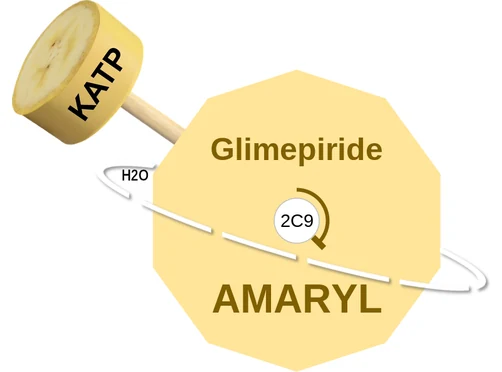
What it isSulfonylurea that closes beta-cell KATP channels to release insulin; type 2 diabetes.
Why this oneIt is inexpensive and once daily, with less persistent hypoglycemia than glyburide but more than many newer agents.
What limits itHypoglycemia can be prolonged in renal impairment; weight gain and progressive loss of efficacy also limit use.
FDA-approved for
- type 2 diabetes (1995)
FDA label
Read the full label on DailyMed ↗
| FDA dosing | Population | Start | Target | Max |
|---|---|---|---|---|
| Type 2 diabetes mellitus (adjunct to diet/exercise) | Adults | 1–2 mg QD | titrate to glycemic response | 8 mg QD |
| Type 2 diabetes mellitus | Elderly or renal impairment | 1 mg QD | 8 mg QD |
Titration Increase in 1–2 mg increments no more frequently than every 1–2 weeks
Renal Start 1 mg QD and titrate slowly (increased hypoglycemia risk)
Hepatic Undefined (increased susceptibility to hypoglycemia; no specific dose adjustment stated)
Instructions
- Take with breakfast or the first main meal of the day
- Administer at least 4 hours before colesevelam
Contraindications
- Hypersensitivity to sulfonamide derivatives (cross-reactivity)
Cautions
- Hypoglycemia (may be severe), especially in elderly and renal impairment
- Hypersensitivity reactions: anaphylaxis, angioedema, Stevens-Johnson syndrome
- Hemolytic anemia in G6PD deficiency
- Possible increased cardiovascular mortality with sulfonylureas
Adverse reactions
- Hypoglycemia
- Headache
- Nausea
- Dizziness
- Asthenia
Pregnancy No clear teratogenic risk in humans; discontinue at least 2 weeks before expected delivery (sulfonylureas cross placenta → neonatal hypoglycemia).
Lactation Undefined
NO BOXED WARNINGS
Principal riskHypoglycemia, prolonged in renal impairment
Cost, est. cash$5–$150/month
Generic entry2005
Classes and tags
Clinical profile
Legacy pregnancy categoryMultiple / indication-, trimester- or formulation-dependent
Defining liabilitySevere and sometimes prolonged hypoglycemia, particularly with renal impairment or missed meals.
Mechanism of action: Glimepiride ballicule
Open Glimepiride in the interactive console ↗
Memory aids: mascots and interaction avatars
“amarilla” (= yellow)