Chlordiazepoxide
LIBRIUM
What it isLong-acting benzodiazepine; alcohol withdrawal and anxiety.
Why this oneActive metabolites self-taper, which is why it is the classic agent for a fixed-dose withdrawal regimen.
What limits itAccumulates in the elderly and in liver disease; lorazepam is preferred there. Dependence as for the class.
FDA-approved for
- anxiety (1960)
- alcohol withdrawal (~1960)
FDA label
Read the full label on DailyMed ↗
| FDA dosing | Population | Start | Target | Max |
|---|---|---|---|---|
| Mild to moderate anxiety disorder / symptoms of anxiety | Adults | 5 mg TID–QID | 5–10 mg TID–QID | Not stated |
| Severe anxiety disorder / symptoms of anxiety | Adults | 20 mg TID–QID | 20–25 mg TID–QID | Not stated |
| Anxiety | Geriatric patients, or debilitating disease | 5 mg BID | 5 mg BID–QID | Not stated |
| Preoperative apprehension and anxiety | Adults | 5 mg PO TID–QID on days preceding surgery | 5–10 mg PO TID–QID on days preceding surgery; if used as preoperative medication, 50–100 mg IM 1 hour before surgery | Not stated |
| Withdrawal symptoms of acute alcoholism | Adults | 50–100 mg PO initially, repeated as needed until agitation is controlled (parenteral form usually used initially) | Reduce to maintenance level once agitation is controlled | 300 mg/day |
| Anxiety | Children ≥6 y | 5 mg BID | 5 mg BID–QID; may be increased in some patients to 10 mg BID–TID | Not stated |
Renal Undefined
Hepatic Undefined
Acute alcohol withdrawal: repeat the oral dose as needed until agitation is controlled, up to 300 mg/day, then reduce to maintenance.
Instructions
- Individualize the dose to the diagnosis and patient response; initiate at the lowest dose and increase as required.
- Discontinue by gradual taper to reduce the risk of withdrawal reactions. If withdrawal reactions develop, pause the taper or return to the previous dose level, then decrease more slowly.
- Not recommended in children under 6 years of age (limited clinical experience).
- With protracted treatment, periodic blood counts and liver function tests are advisable.
Cautions
- Concomitant opioid use — profound sedation, respiratory depression, coma and death; reserve for patients without adequate alternatives, limit dose and duration, and monitor for sedation and respiratory depression.
- Abuse, misuse and addiction, which can lead to overdose or death — assess risk before prescribing and throughout treatment; risk is increased with concomitant alcohol, other medications or illicit substances.
- Physical dependence and withdrawal — risk rises with longer duration and higher daily dose; abrupt discontinuation or rapid reduction may precipitate life-threatening acute withdrawal.
- Drowsiness, ataxia and confusion, particularly in elderly and debilitated patients — usually avoidable with dose adjustment but reported even at lower doses.
- Blood dyscrasias (including agranulocytosis), jaundice and hepatic dysfunction reported — monitor CBC and liver function with protracted therapy.
Adverse reactions
- Drowsiness, ataxia, confusion — especially in elderly and debilitated patients.
- Syncope (a few instances).
- Skin eruptions, edema, minor menstrual irregularities, nausea, constipation.
- Extrapyramidal symptoms; increased or decreased libido.
- EEG changes (low-voltage fast activity) during and after treatment.
- Blood dyscrasias including agranulocytosis; jaundice and hepatic dysfunction (occasional).
Pregnancy Undefined
Lactation Undefined
⚠ BOXED WARNINGS
- Risk from concomitant use with opioids
- Abuse, misuse and addiction
- Dependence and withdrawal reactions
Cost, est. cash$10–$300/month
Generic entry1982
Classes and tags
Clinical profile
Legacy pregnancy categoryD
Defining liabilitySedation, falls, dependence and additive respiratory depression with opioids or other CNS depressants.
Active metabolites
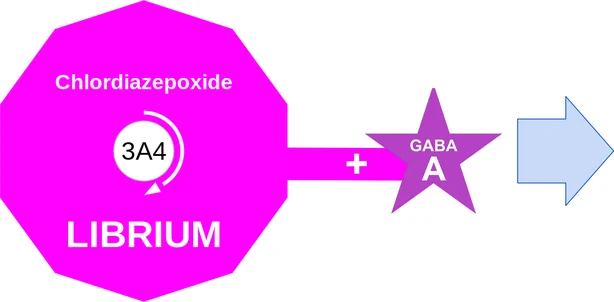
Mechanism of action: Chlordiazepoxide ballicule
Open Chlordiazepoxide in the interactive console ↗
Memory aids: mascots and interaction avatars

“dies of pox” → just a sound-alike for diazepox; unrelated to medication properties
approved for alcohol withdrawal
hot pink → benzo theme