Warfarin
COUMADIN
What it isVitamin K antagonist blocking factors II, VII, IX and X; mechanical valves, atrial fibrillation and VTE.
Why this oneIt remains the oral anticoagulant for mechanical prosthetic valves and is readily reversed with vitamin K and factor concentrate.
What limits itNarrow therapeutic index with INR monitoring, CYP2C9 and VKORC1 variation, and interactions with diet, antibiotics and amiodarone.
FDA-approved for
- thromboembolism prophylaxis/treatment (1954)
FDA label
Read the full label on DailyMed ↗
| FDA dosing | Population | Start | Target | Max |
|---|---|---|---|---|
| Thromboembolism prophylaxis/treatment (VTE/DVT/PE, atrial fibrillation, post-MI, valve replacement) | adult | 2-5 mg QD (no genotype) | 2-10 mg QD, adjust to INR (target INR 2.5 [2.0-3.0]; 3.0 [2.5-3.5] for mechanical mitral/caged valves) | INR-guided (INR >4.0 no added benefit) |
Renal No adjustment needed; monitor INR more frequently
Hepatic Response may be potentiated; monitor more frequently for bleeding
Routine loading doses not recommended
Instructions
- Individualize dose to INR; obtain daily INR until stable, then every 1-4 weeks
- Missed dose: take same day; do not double the next day
- When converting from heparin, overlap 4-5 days until INR therapeutic
- Interrupt/adjust for surgery per INR; consider lower doses in elderly/debilitated/Asian patients
Contraindications
- Pregnancy (except women with mechanical heart valves at high thromboembolism risk)
- Hemorrhagic tendencies or blood dyscrasias
- Recent or contemplated CNS or eye surgery, or traumatic surgery with large open surfaces
- Active bleeding (GI/GU/respiratory tract, CNS hemorrhage, cerebral aneurysm, dissecting aorta, pericarditis/effusion, bacterial endocarditis)
- Threatened abortion, eclampsia, preeclampsia
- Unsupervised patients with high potential for non-compliance
- Spinal puncture / procedures with potential for uncontrollable bleeding
- Major regional or lumbar block anesthesia
- Malignant hypertension
Cautions
- Tissue necrosis/gangrene
- Calciphylaxis
- Acute kidney injury during excessive anticoagulation/hematuria
- Systemic atheroemboli and cholesterol microemboli (purple toes syndrome)
- Do not use as initial therapy in HIT/HITTS
- Protein C/S deficiency
- Fetal harm in pregnancy
Adverse reactions
- Fatal and nonfatal hemorrhage from any tissue/organ
- Tissue necrosis
- Hypersensitivity/allergic reactions
- Hepatitis/elevated liver enzymes
Pregnancy Contraindicated except in women with mechanical heart valves; causes warfarin embryopathy, fetal hemorrhage, fetal death
Lactation Not detected in human milk; monitor breastfed infants for bruising or bleeding
⚠ BOXED WARNING
- Bleeding risk
Cost, est. cash$4–$300/month
Generic entry1982
Classes and tags
Clinical profile
Legacy pregnancy categoryX
Defining liabilityMajor bleeding with extensive food, disease and drug interactions; INR monitoring is required.
Mechanism of action: Warfarin ballicule
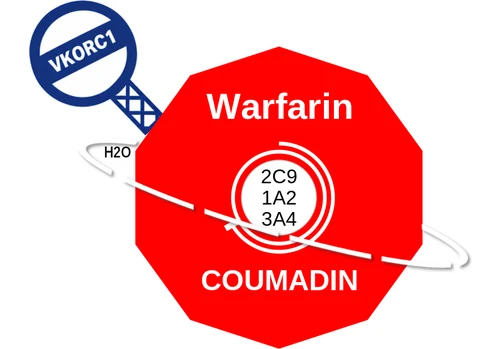
Open Warfarin in the interactive console ↗
Memory aids: mascots and interaction avatars

Vitamin K is warfarin mechanism/antidote