Tramadol ER
ULTRAM ER
Pronunciation: TRA-ma-doel (UL-tram)
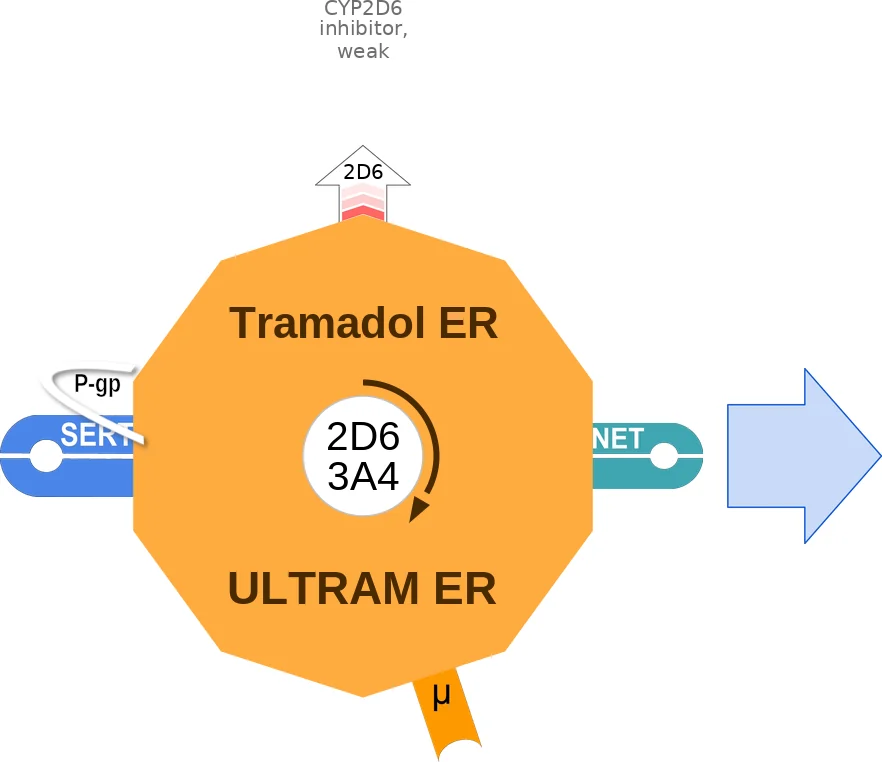

“Ultra-ram Trauma doll”
What it isExtended-release mu-opioid agonist and serotonin-norepinephrine reuptake inhibitor (ULTRAM ER, 2005); around-the-clock chronic pain.
Why this oneOnce-daily delivery is unsuitable for as-needed pain or rapid titration; apparent half-life ~8 h (vs ~6 h IR).
What limits itCYP2D6 inhibition can blunt analgesia while seizures and serotonin toxicity remain. It retains full opioid dependence and respiratory risk.
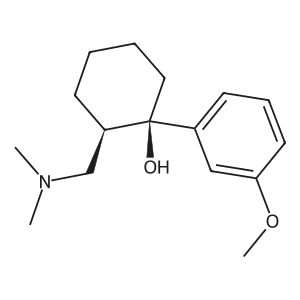
FDA-approved for
- chronic pain (around-the-clock) (2005)
Classes and tags
Clinical profile
Legacy pregnancy categoryC
Defining liabilityRespiratory depression, dependence and overdose; risk rises sharply with sedatives or impaired clearance.
FDA label
Read the full label on DailyMed ↗
| FDA dosing | Population | Start | Target | Max |
|---|---|---|---|---|
| Severe and persistent pain requiring an opioid, not adequately treated by alternatives (incl. IR opioids); not for PRN use | Adults | 100 mg QD (tramadol IR: 24-hr IR dose rounded down to next lower 100 mg increment QD) | Titrate by 100 mg every 5 days to adequate analgesia | 300 mg/day |
Titration Increase by 100 mg every 5 days
Renal Severe (CLcr <30 mL/min): do not use (not studied; limited dose flexibility)
Hepatic Severe (Child-Pugh C): do not use (not studied; limited dose flexibility)
Some patients on tramadol IR may not be able to convert (limited dose flexibility); elderly: titrate slowly, extra caution >75 y
Instructions
- Once daily at about the same time each day
- Swallow whole with liquid; do not crush, chew, split, or dissolve
- Take with or without food, but consistently
- Do not use with other tramadol products
- Do not abruptly discontinue — taper by ≤10% to 25% of total daily dose every 2 to 4 weeks
- Discuss access to an opioid overdose reversal agent (e.g., naloxone, nalmefene)
Available strengths
- ER tab 100, 200, 300 mg
Contraindications
- Children younger than 12 years of age
- Postoperative management in children younger than 18 years of age following tonsillectomy and/or adenoidectomy
- Significant respiratory depression
- Acute or severe bronchial asthma in an unmonitored setting or in the absence of resuscitative equipment
- Known or suspected gastrointestinal obstruction, including paralytic ileus
- Concurrent use of monoamine oxidase inhibitors (MAOIs) or use within the last 14 days
Cautions
- Addiction, abuse, and misuse
- Life-threatening respiratory depression
- Risks with benzodiazepines/other CNS depressants
- Neonatal opioid withdrawal syndrome
- Opioid Analgesic REMS
- Ultra-rapid metabolism / respiratory depression risk in children
- CYP450 (3A4/2D6) interactions
- Opioid-induced hyperalgesia and allodynia
- Serotonin syndrome
- Seizures
- Suicide risk
- Respiratory depression in chronic pulmonary disease, elderly, cachectic, debilitated
- Adrenal insufficiency
- Severe hypotension
- Increased intracranial pressure, brain tumors, head injury, impaired consciousness
- GI complications (sphincter of Oddi spasm)
- Anaphylaxis and hypersensitivity
- Withdrawal
- Driving and operating machinery
- Hyponatremia
- Hypoglycemia
Adverse reactions
- Dizziness
- Nausea
- Constipation
- Headache
- Somnolence
- Flushing
- Pruritus
- Vomiting
- Insomnia
- Dry mouth
Pregnancy Prolonged use may cause NOWS; animal data suggest fetal risk; not recommended during or immediately before labor
Lactation Tramadol and M1 present in milk; breastfeeding not recommended (risk of infant sedation/respiratory depression)
Cost
| Strength | #/mo | generic $/mo | CostPlus | |
|---|---|---|---|---|
| 100 mg | ER tab | 30 qd | $26.83 | not offered |
| 200 mg | ER tab | 30 qd | $37.52 | not offered |
| 300 mg | ER tab | 30 qd | $64.81 | not offered |
Other forms: Tramadol (ULTRAM)
Serotonin and MAOI
Provisional washout figures
Elevating mechanismSRI
Exposure dependenceTherapeutic exposure; severe toxicity requires meaningful MAO-A inhibition
Evidence confidenceHigh
InterpretationOpioid with clinically significant SRI activity; dangerous with meaningful MAO-A inhibition. A second SRI generally represents therapeutic duplication/additive adverse effects, not the classic life-threatening interaction.
Active metabolites
Open Tramadol ER in the interactive console ↗
Memory aids: interaction avatars
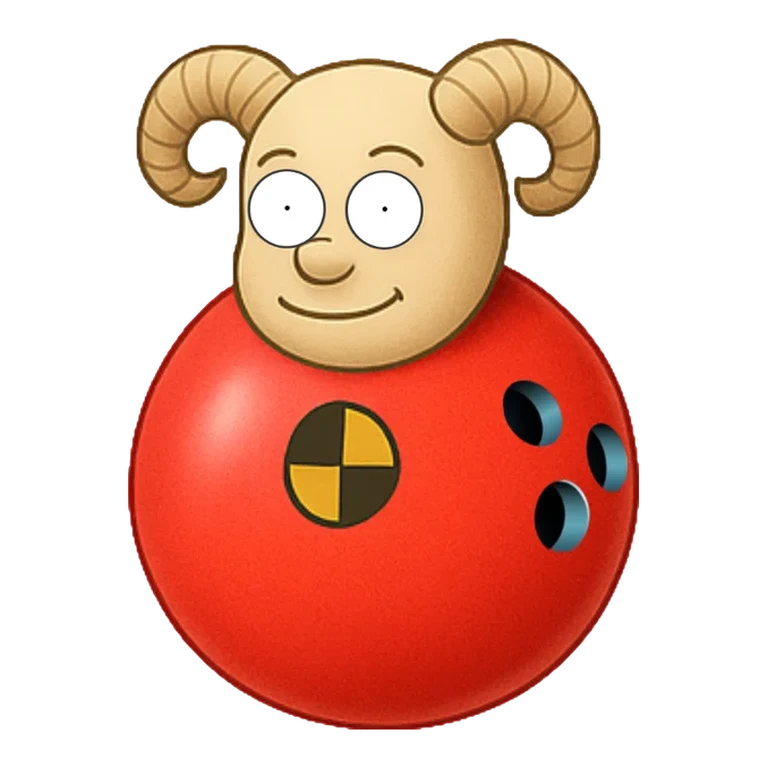

Open Tramadol ER in the interactive console ↗
Self-check
- Is Ultram ER suitable for as-needed pain?
No. - What can CYP2D6 inhibition do to Ultram ER analgesia?
Blunt it.