Trimethoprim
in BACTRIM
Pronunciation: trye-METH-oe-prim
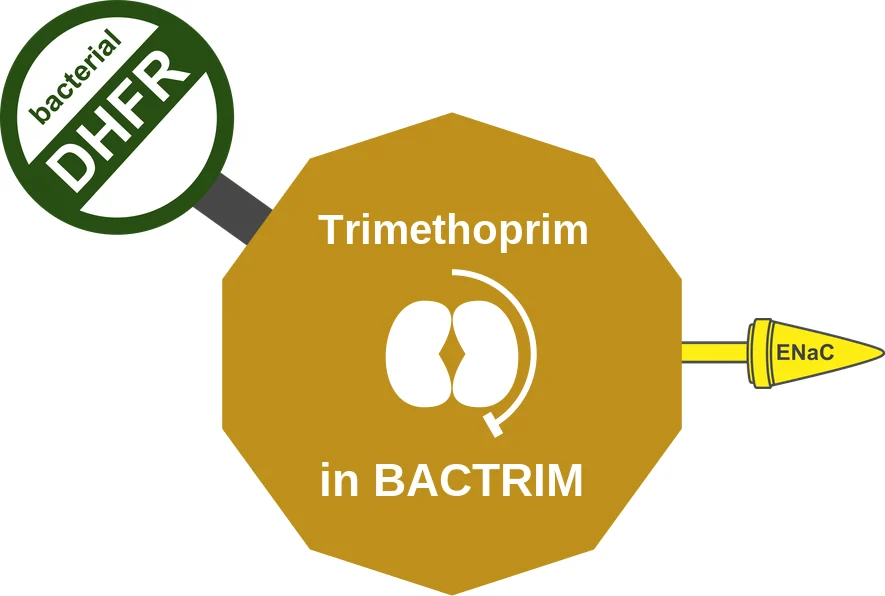

“Trim & prim”
Bananas in bunches → ↑ serum potassium
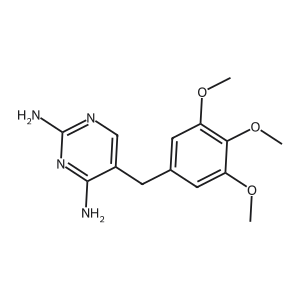
What it isDihydrofolate reductase inhibitor, usually paired with sulfamethoxazole; urinary infection.
Why this oneThe sequential folate blockade with sulfamethoxazole is synergistic.
What limits itRaises creatinine by blocking tubular secretion without changing GFR, and causes hyperkalemia by blocking the epithelial sodium channel.
Trimethoprim prescription history
Animated chart of estimated U.S. prescriptions per year, Antibacterials (systemic) (1938–2026). Trimethoprim enters in 1980 (estimated).
FDA-approved for
- UTIs (~1980)
Principal riskHyperkalemia; raises creatinine without lowering GFR
Sulfonamide
Sulfonamide partner (not a sulfonamide)
A diaminopyrimidine, not a sulfonamide — but after a reaction to TMP-SMX it should still be avoided: nobody knows which component reacted, and trimethoprim itself causes hypersensitivity reactions including anaphylaxis.
Open the sulfonamide hypersensitivity presentation → · sources [n] are on its References slide.
Classes and tags
Clinical profile
Legacy pregnancy categoryC
Defining liabilityAllergy, gastrointestinal effects and agent-specific renal, hepatic, hematologic or interaction risks.
FDA label
Read the full label on DailyMed ↗
NO BOXED WARNINGS
| FDA dosing | Population | Start | Target | Max |
|---|---|---|---|---|
| Uncomplicated UTI, initial episodes (susceptible organisms) | Adults | 100 mg BID or 200 mg QD x 10 days | 100 mg BID or 200 mg QD x 10 days | 200 mg/day |
Renal CrCl 15-30: 50 mg q12h; CrCl <15: not recommended
Hepatic No dose guidance; give with caution in hepatic impairment
Instructions
- Complete the full 10-day course even if feeling better
Available strengths
- tab 100 mg
Contraindications
- Documented megaloblastic anemia due to folate deficiency
Cautions
- Hematologic toxicity: may interfere with hematopoiesis (esp. large doses/prolonged use); sore throat, fever, pallor, or purpura may herald serious blood disorder — obtain CBC and discontinue if a formed element significantly reduced
- Give with caution in possible folate deficiency (folates may be co-administered without loss of antibacterial effect)
- Rare serious hypersensitivity reactions (exfoliative dermatitis, SJS, TEN, anaphylaxis)
- C. difficile-associated diarrhea (mild to fatal colitis), up to >2 months post-treatment
- Caution in renal or hepatic impairment
- Elderly: greater renal-impairment risk; consider monitoring potassium and creatinine clearance (hyperkalemia case reports)
- Effectiveness as single agent not established in children <12 y; safety not established <2 months
Adverse reactions
- Rash and pruritus (most common; 2.9-6.7% at recommended doses), phototoxic skin eruptions
- GI: epigastric distress, nausea, vomiting, glossitis; rare cholestatic jaundice; transaminase/bilirubin elevation
- Hematologic: thrombocytopenia, leukopenia, neutropenia, megaloblastic anemia, methemoglobinemia
- Hyperkalemia, hyponatremia
- Rare: SJS/TEN, anaphylaxis, aseptic meningitis; fever, BUN/creatinine increases
Pregnancy Category C; teratogenic in animals at high doses; may interfere with folate metabolism — use only if potential benefit justifies fetal risk
Lactation Excreted in human milk; caution (folate metabolism interference)
Cost
| Strength | #/mo | generic $/mo | CostPlus | |
|---|---|---|---|---|
| 100 mg | tab | 60 BID | $78.41 | offered |
Available combined with: trimethoprim / sulfamethoxazole
Generic entry1985
Open Trimethoprim in the interactive console ↗
Memory aids: interaction avatars


Open Trimethoprim in the interactive console ↗
Self-check
- Why can trimethoprim raise creatinine without changing GFR?
It blocks tubular secretion. - How does trimethoprim cause hyperkalemia?
ENaC blockade.