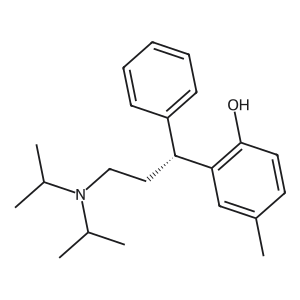
Tolterodine
DETROL
Pronunciation: toel-TER-a-deen (DEE-trol)
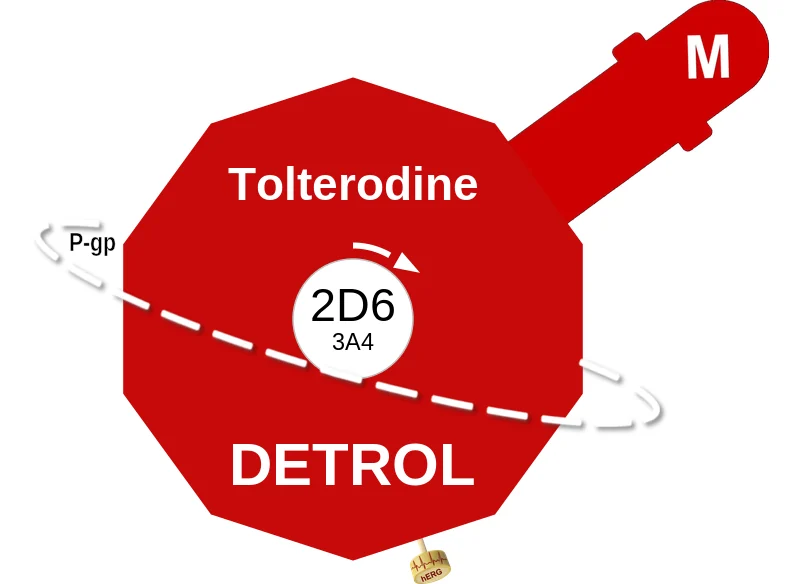
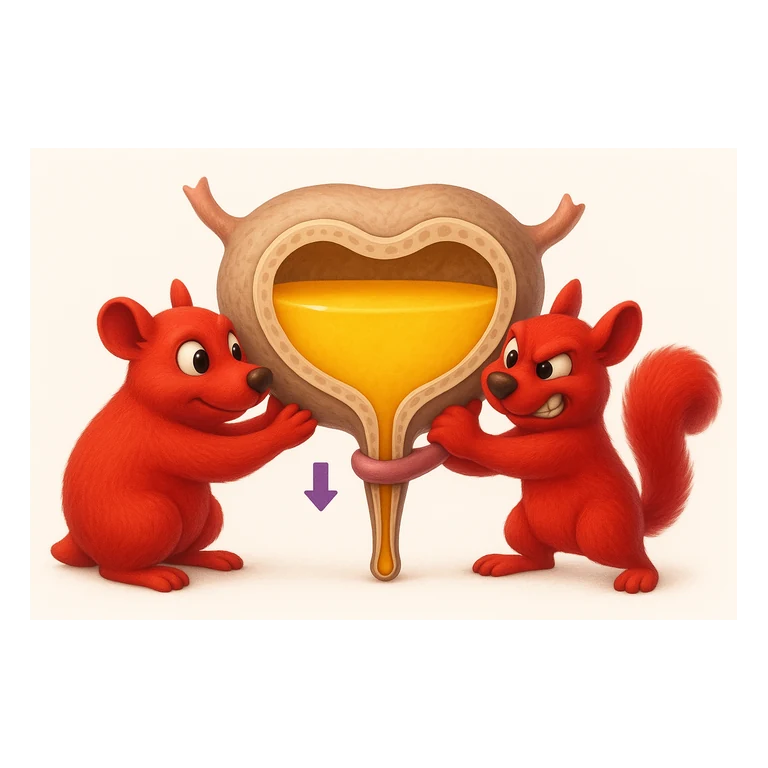
“Total rodent Detrusor control”
treatment for overactive bladder (OAB)
“red as a beet” → anticholinergic
What it isMuscarinic antagonist; overactive bladder.
Why this oneIts extended-release capsule causes less dry mouth than the immediate-release tablet, making formulation choice its practical edge.
What limits itAnticholinergic burden persists, so caution in the elderly. CYP2D6 substrate with CYP3A4 backup; QT prolongation.
Tolterodine prescription history
Animated chart of estimated U.S. prescriptions per year, Overactive bladder meds (1970–2026). Tolterodine enters in 1998 (estimated).
FDA-approved for
- overactive bladder (1998)
Principal riskAnticholinergic burden
Classes and tags
Clinical profile
Legacy pregnancy categoryC
Defining liabilityGenerally tolerated at therapeutic doses; clinically important risks are agent-specific and increase with interactions or organ impairment.
FDA label
Read the full label on DailyMed ↗
NO BOXED WARNINGS
| FDA dosing | Population | Start | Target | Max |
|---|---|---|---|---|
| Overactive bladder (urge incontinence, urgency, frequency) | Adults | 2 mg BID | 2 mg BID (may lower to 1 mg BID) | 2 mg BID |
Renal Significantly reduced renal function: 1 mg BID.
Hepatic Significantly reduced hepatic function: 1 mg BID.
Instructions
- Reduce to 1 mg BID with potent CYP3A4 inhibitors
Available strengths
- tab 1, 2 mg
- ER cap 2, 4 mg
Contraindications
- Urinary retention
- Gastric retention
- Uncontrolled narrow-angle glaucoma
Cautions
- Angioedema/anaphylaxis
- Anticholinergic CNS effects (dizziness, somnolence)
- Bladder outflow/GI obstructive disorders
- QT prolongation
- Myasthenia gravis
Adverse reactions
- Dry mouth
- Headache
- Constipation
- Vertigo/dizziness
- Abdominal pain
- Abnormal vision
Pregnancy Pregnancy Category C; use only if potential benefit justifies risk (animal fetal abnormalities at high doses).
Lactation Undefined.
Cost
Generic entry2012
Open Tolterodine in the interactive console ↗
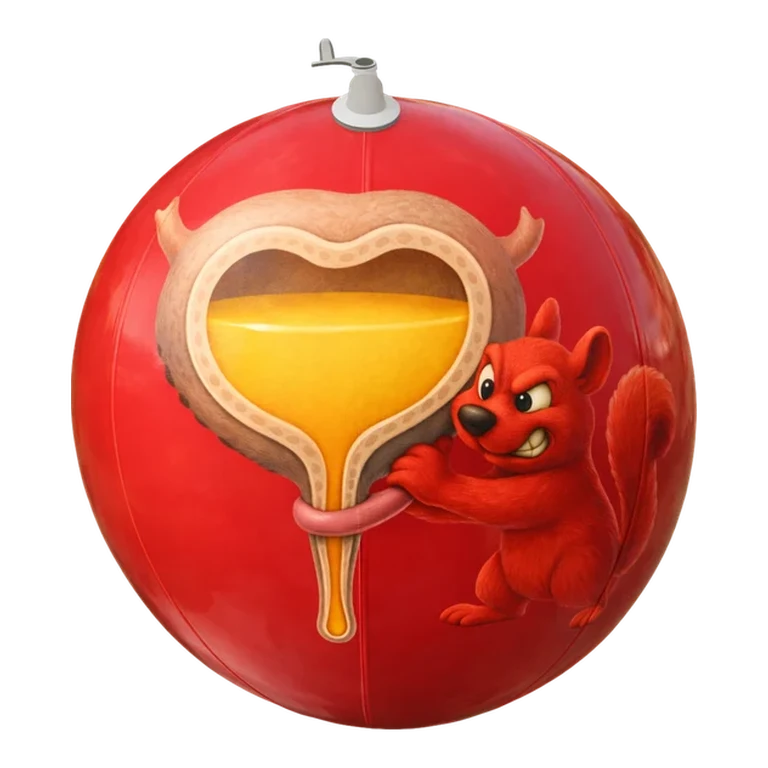
Memory aids: interaction avatars

Open Tolterodine in the interactive console ↗
Self-check
- Which tolterodine formulation causes less dry mouth?
Extended-release capsule. - Which pathway backs up CYP2D6 for tolterodine?
CYP3A4.