Silver sulfadiazine
SILVADENE
Pronunciation: SIL-ver sul-fa-DYE-a-zeen
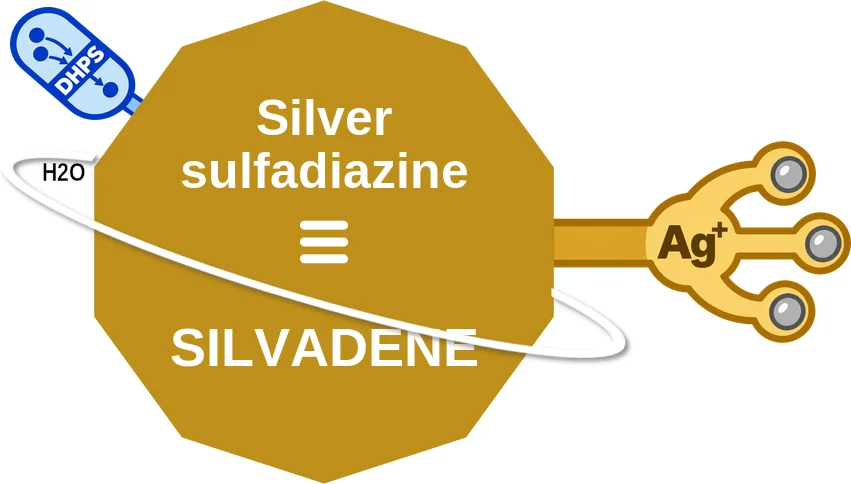
What it isTopical sulfonamide releasing antimicrobial silver; prevention of burn-wound sepsis.
Why this oneDespite broad activity, it is no longer routine because modern dressings allow faster healing and easier wound assessment.
What limits itIt delays re-epithelialization and creates pseudo-eschar that hides the wound; leukopenia and sulfonamide reactions also occur.
FDA-approved for
- prevention of burn wound sepsis
Principal riskIt impairs re-epithelialization and hides the wound
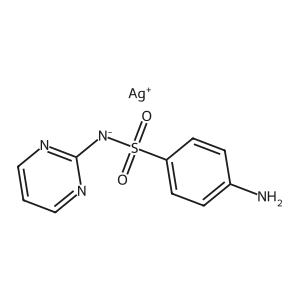
Sulfonamide
Sulfonamide antimicrobial
A topical sulfonamide antimicrobial (N4 arylamine, N1 pyrimidine). Khan’s avoid list after a TMP-SMX reaction names it explicitly, route notwithstanding.
Open the sulfonamide hypersensitivity presentation → · sources [n] are on its References slide.
Classes and tags
Clinical profile
Legacy pregnancy categoryC
Defining liabilityLocal irritation or hypersensitivity; systemic toxicity is minimal with correct local use.
FDA label
Read the full label on DailyMed ↗
NO BOXED WARNINGS
| FDA dosing | Population | Start | Target | Max |
|---|---|---|---|---|
| Burn wounds — prevention/treatment of wound sepsis | Adults & children ≥2 months | Apply ~1/16-inch layer QD–BID | Apply ~1/16-inch layer QD–BID; keep burn covered at all times | Not specified in label |
Renal Undefined
Hepatic Undefined
Instructions
- Control shock and pain first; cleanse and debride burn wound before applying.
- Apply under sterile conditions to a thickness of about one sixteenth of an inch; burn areas must stay covered with cream at all times.
- Reapply to any area from which cream has been removed by patient activity; reapply immediately after hydrotherapy.
- Dressings not required; may be used if individual patient needs require them.
- Continue until satisfactory healing or until burn site is ready for grafting; do not withdraw while possibility of infection remains, except for a significant adverse reaction.
Available strengths
- cream 1 %
Contraindications
- Pregnant women approaching or at term — sulfonamides increase risk of kernicterus.
- Premature infants, and newborns during the first 2 months of life — kernicterus risk.
Cautions
- Transient leukopenia (chiefly decreased neutrophils); WBC nadir 2–4 days after start, rebound within 2–3 days; recovery not affected by continuing therapy.
- Higher incidence of leukopenia with concurrent cimetidine.
- Sulfonamide class — kernicterus risk at term, in premature infants, and in infants <2 months.
- Reduced bacterial colonization can delay eschar separation, occasionally requiring escharotomy to prevent contracture.
- Safety and effectiveness in children not established.
Adverse reactions
- Transient leukopenia (decreased neutrophil count)
- Skin necrosis
- Erythema multiforme
- Skin discoloration
- Burning sensation, rashes
- Interstitial nephritis
- Delayed eschar separation
Pregnancy Category B; no adequate human studies — use only if clearly justified, especially approaching or at term (contraindicated at/near term).
Lactation Excretion in human milk unknown; sulfonamides are excreted in milk and can cause kernicterus — decide whether to stop nursing or the drug.
Cost
| Strength | #/mo | generic $/unit | CostPlus | |
|---|---|---|---|---|
| 1 % | cream | per unit | not offered |
Generic entryPre-1982
Open Silver sulfadiazine in the interactive console ↗
Self-check
- How does silver sulfadiazine affect re-epithelialization?
It delays it. - What silver sulfadiazine effect hides the wound?
Pseudo-eschar.