Olanzapine SubQ LAI
WELTRUZA
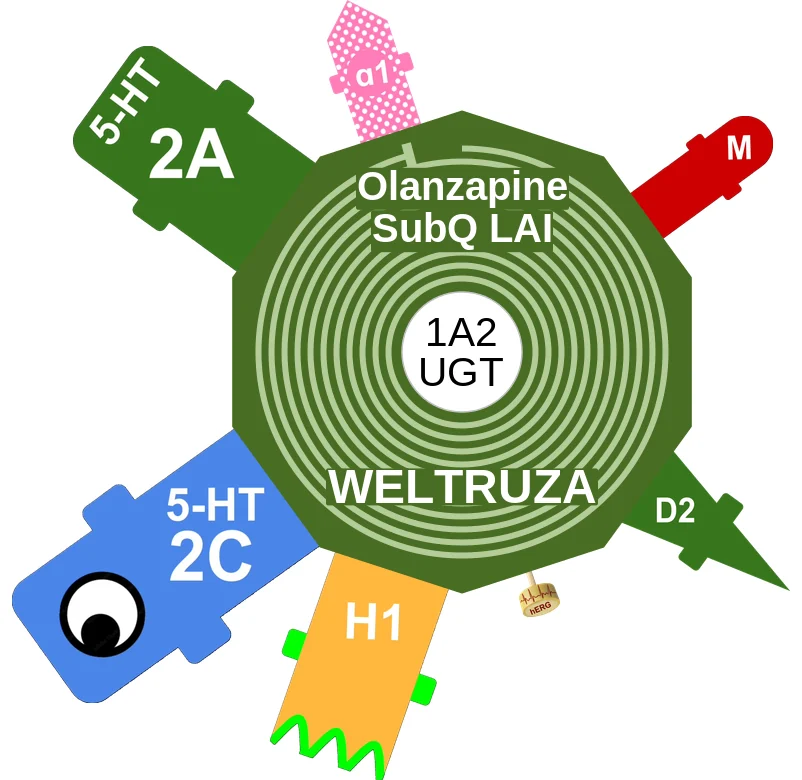

“Whale trousers”
Whale-size trousers → weight gain
What it isOlanzapine as a monthly subcutaneous depot into the abdomen; schizophrenia in adults.
Why this oneDesigned around the problem that limited the intramuscular depot: in vitro, with the depot exposed to blood, it released nothing measurable at one and three hours against 50% and 63% for the intramuscular formulation, and its boxed warning carries no post-injection syndrome and no observation period.
What limits itAn apparent half-life of 46.5 days means a bad reaction is a long reaction, and the metabolic burden is olanzapine’s own — weight gain is the commonest adverse effect in trials.
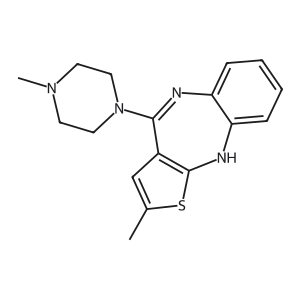
FDA label
Read the full label (manufacturer PI) ↗
| FDA dosing | Population | Start | Target | Max |
|---|---|---|---|---|
| Schizophrenia | Adults | SC once monthly by established oral dose: 10 mg/day → 318 mg; 15 mg/day → 425 mg; 20 mg/day → 531 mg | Once monthly | 531 mg once monthly (highest labeled dose) |
Renal Undefined
Hepatic Undefined
Label carries no REMS and no mandatory post-injection observation; no PDSS cases in premarketing WELTRUZA trials (risk unknown — PDSS reported with an IM extended-release olanzapine product).
Instructions
- Establish tolerability with oral olanzapine before initiating
- Subcutaneous injection into the abdomen only, by a healthcare provider; do not administer by any other route
- Switching from oral olanzapine: give the first dose on the next consecutive day; no loading dose or supplemental oral olanzapine
- Missed dose: may be given 1 week before or after the scheduled date; if more than 5 weeks since the last dose, give as soon as possible and re-time subsequent monthly doses
- Let the kit sit in its packaging at room temperature (20°C to 25°C) for at least 30 minutes before preparation; warm the prefilled diluent syringe
Available strengths
- inj 318, 425, 531 mg (monthly)
Cautions
- Post-injection delirium/sedation syndrome (PDSS)
- Cerebrovascular adverse reactions, including stroke, in elderly patients with dementia-related psychosis
- Neuroleptic malignant syndrome
- Drug reaction with eosinophilia and systemic symptoms (DRESS)
- Metabolic changes (hyperglycemia/diabetes, dyslipidemia, weight gain)
- Tardive dyskinesia
- Orthostatic hypotension
- Falls
- Leukopenia, neutropenia, and agranulocytosis
- Dysphagia
- Seizures
- Potential for cognitive and motor impairment
- Body temperature regulation
- Anticholinergic (antimuscarinic) effects
- Hyperprolactinemia
Adverse reactions
- Weight increased
- Somnolence
- Headache
- Constipation
- Injection site reactions (induration, pain, erythema, pruritus, swelling)
Pregnancy Third-trimester exposure risks neonatal extrapyramidal and/or withdrawal symptoms; epidemiologic data have not established a drug-associated risk of major birth defects
Lactation Olanzapine is present in human milk; excess sedation, irritability, poor feeding and extrapyramidal symptoms reported in exposed infants
⚠ BOXED WARNING
- Increased mortality in elderly patients with dementia-related psychosis
Principal riskOlanzapine’s metabolic burden, now un-stoppable for months — apparent half-life 46.5 days
Classes and tags
Clinical profile
Legacy pregnancy categoryC
Defining liabilityPost-injection delirium/sedation syndrome requires monitored administration; metabolic toxicity is substantial.
Open Olanzapine SubQ LAI in the interactive console ↗
Memory aids: interaction avatars