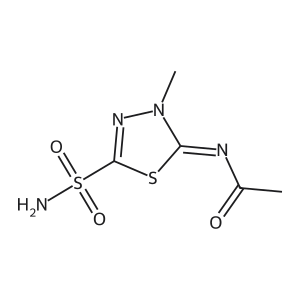
Methazolamide
NEPTAZANE
Pronunciation: meth-a-ZOL-a-mide
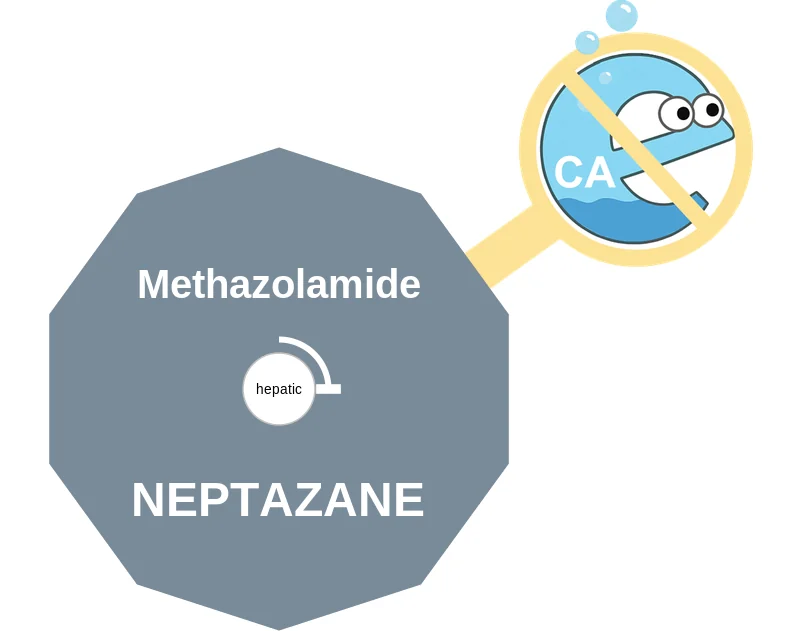

“Neptune Zane’s Meat hazard”
carbonated soda → carbonic anhydrase inhibitor
What it isCarbonic anhydrase inhibitor; glaucoma.
Why this oneHas less renal effect and is often better tolerated than acetazolamide at equivalent pressure reduction.
What limits itParesthesia, fatigue and metabolic acidosis persist; it is a sulfonamide.
Methazolamide prescription history
Animated chart of estimated U.S. prescriptions per year, Glaucoma medicines (1900–2026). Methazolamide enters in 1959 (estimated).
FDA-approved for
- glaucoma
Principal riskParaesthesia and metabolic acidosis
Sulfonamide
Sulfonamide-derived drug (non-antibacterial) — label warns
No N4 aromatic amine, no N1 heterocycle: cross-reactivity after a sulfonamide-antimicrobial reaction is unlikely — sulfa-allergic patients reacted to sulfonamide non-antibiotics at 9.9% vs 1.6%, less often than to penicillin. The label warns anyway.
Open the sulfonamide hypersensitivity presentation → · sources [n] are on its References slide.
Classes and tags
Clinical profile
Legacy pregnancy categoryUnknown / historical label unavailable
Defining liabilityGenerally tolerated at therapeutic doses; clinically important risks are agent-specific and increase with interactions or organ impairment.
FDA label
Read the full label on DailyMed ↗
NO BOXED WARNINGS
| FDA dosing | Population | Start | Target | Max |
|---|---|---|---|---|
| Glaucoma (elevated intraocular pressure) | adult | 50 mg BID-TID | 50-100 mg BID-TID | 100 mg TID |
Renal Contraindicated in marked kidney disease or dysfunction
Hepatic Contraindicated in marked liver disease/dysfunction; may precipitate hepatic encephalopathy in cirrhosis
Instructions
- May be used concomitantly with miotic and osmotic agents
Available strengths
- tab 25, 50 mg
Contraindications
- Depressed serum sodium and/or potassium
- Marked kidney or liver disease or dysfunction
- Adrenal gland failure
- Hyperchloremic acidosis
- Long-term use in angle-closure glaucoma (organic angle closure may occur)
Cautions
- Sulfonamide-type reactions incl. Stevens-Johnson syndrome, TEN, fulminant hepatic necrosis, agranulocytosis, aplastic anemia, other blood dyscrasias (rarely fatal)
- Metabolic acidosis and electrolyte imbalance
- Transient myopia
Adverse reactions
- Paresthesias (tingling in extremities)
- Hearing dysfunction/tinnitus
- Fatigue, malaise, anorexia, taste alteration
- GI disturbance (nausea, vomiting, diarrhea)
- Polyuria
- Drowsiness, confusion
Pregnancy Category C; teratogenic (skeletal anomalies) in rats; use only if benefit justifies fetal risk
Lactation Undefined
Cost
Generic entry1993
Open Methazolamide in the interactive console ↗
Memory aids: interaction avatars

Open Methazolamide in the interactive console ↗
Self-check
- How does methazolamide’s renal effect compare with acetazolamide’s?
Less renal effect. - What acid-base adverse effect persists with methazolamide?
Metabolic acidosis.