Meperidine
DEMEROL
What it isMu-opioid agonist; acute pain and postoperative shivering.
Why this oneIts unusually strong anti-shivering effect is the main niche that survives its abandonment as a routine analgesic.
What limits it⚑ Normeperidine accumulates in renal disease and can provoke seizures; avoid repeated dosing. MAO inhibitors can trigger serotonin syndrome.
FDA-approved for
- pain (~1942)
Off-label
- postoperative shivering
FDA label
Read the full label on DailyMed ↗
| FDA dosing | Population | Start | Target | Max |
|---|---|---|---|---|
| Acute pain | Adults | 50–150 mg PO q3–4h PRN | Lowest effective dose | ≤600 mg/day (discontinue if inadequate) |
| Acute pain | Pediatric | 1.1–1.8 mg/kg PO q3–4h PRN (up to adult dose) | Lowest effective dose | Up to adult dose |
Renal Use with caution; titrate slowly (meperidine/normeperidine accumulation)
Hepatic Use with caution; titrate slowly (meperidine/normeperidine accumulation)
Dose q3–4h as needed
Instructions
- Reduce dose 25–50% when given with phenothiazines or other tranquilizers
- Oral solution: prescribe/measure in both mg and mL to avoid dosing errors; use a graduated device
- Do not abruptly discontinue in physically dependent patients; taper by ≤10–25% of daily dose every 2–4 weeks
Contraindications
- Significant respiratory depression
- Acute or severe bronchial asthma in an unmonitored setting or absent resuscitative equipment
- Known or suspected GI obstruction, including paralytic ileus
- MAOIs (concurrently or within 14 days) due to risk of coma, severe respiratory depression, cyanosis, and hypotension
Cautions
- Serotonin syndrome with concomitant serotonergic drugs
- Opioid-induced hyperalgesia and allodynia
- Life-threatening respiratory depression, especially at initiation/titration and in elderly/debilitated/pulmonary disease
- Adrenal insufficiency
- Severe hypotension; avoid in circulatory shock
- Increased intracranial pressure/head injury; avoid in impaired consciousness or coma
- Normeperidine accumulation may cause CNS excitation/seizures
Adverse reactions
- Lightheadedness
- Dizziness
- Sedation
- Nausea
- Vomiting
- Sweating
Pregnancy Insufficient data; prolonged use may cause neonatal opioid withdrawal; not recommended during/immediately before labor
Lactation Meperidine appears in human milk; monitor breastfed infant for excess sedation and respiratory depression
⚠ BOXED WARNINGS
- Addiction, abuse and misuse
- Life-threatening respiratory depression
- Risk from concomitant use with benzodiazepines
Cost, est. cash$10–$300/month
Generic entry1984
Classes and tags
Clinical profile
Legacy pregnancy categoryC
Defining liabilityRespiratory depression, dependence and overdose; risk rises sharply with sedatives or impaired clearance.
Active metabolites
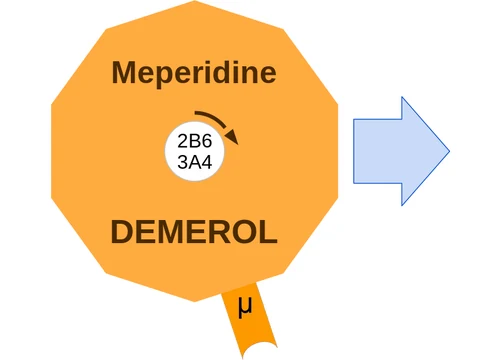
Mechanism of action: Meperidine ballicule
Open Meperidine in the interactive console ↗
Memory aids: mascots and interaction avatars