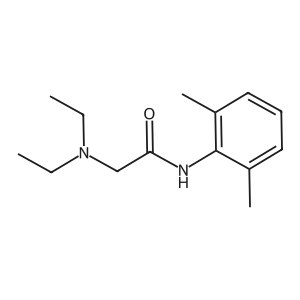
Lidocaine topical
XYLOCAINE
Pronunciation: LYE-doe-kayn
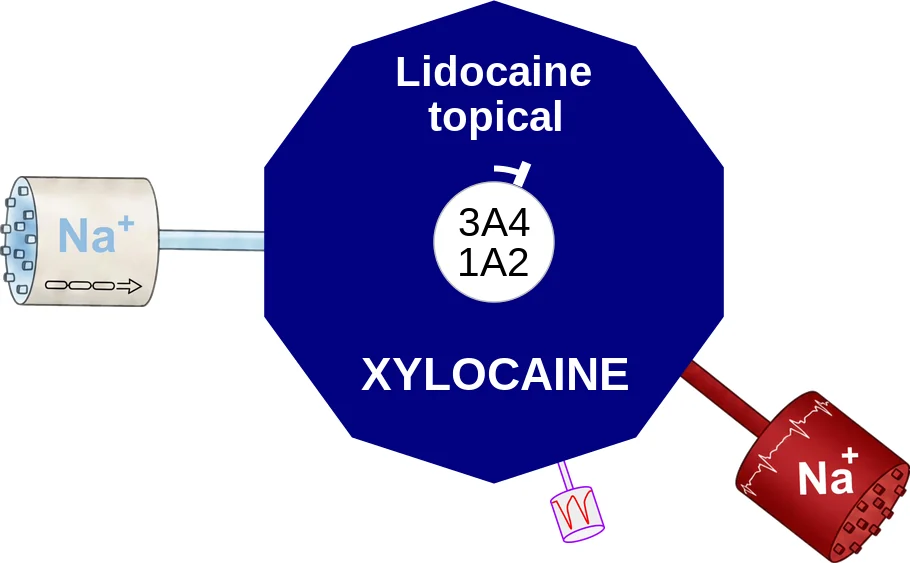

“Lit up Xylo cane”
What it isSodium channel blocker applied to skin or mucosa; localized neuropathic pain (patch) and topical or mucosal anesthesia.
Why this oneThe patch gives segmental pain relief with negligible systemic exposure, which is why it survives in patients who tolerate no systemic analgesic.
What limits itMucosal or large-area use can reach toxic levels — perioral tingling, seizures, arrhythmia — so patch number is capped.
Pearls
- Rx 5% and 1.8% patches labeled for postherpetic neuralgia; 4% is OTC.
- Patch: up to 3 at once, 12 hours on, 12 off.
FDA-approved for
- local anesthesia (~1948)
Principal riskSystemic toxicity: perioral tingling, then seizures
Classes and tags
Clinical profile
Legacy pregnancy categoryC
Defining liabilitySystemic local-anesthetic toxicity causes seizures, conduction block and ventricular dysrhythmia.
FDA label
Read the full label on DailyMed ↗
NO BOXED WARNINGS
| FDA dosing | Population | Start | Target | Max |
|---|---|---|---|---|
| Pain of post-herpetic neuralgia (intact skin only) | Adults | Up to 3 patches once, worn up to 12 h within 24 h | Prescribed number of patches (max 3), once, up to 12 h on / 24 h | 3 patches at once; 12 h per 24 h |
Renal Undefined (smaller treatment areas if impaired elimination)
Hepatic Severe hepatic disease: greater risk of toxic blood levels; use smaller treatment areas if impaired elimination
Smaller treatment areas in debilitated patients; account for other local anesthetics used concomitantly
Instructions
- Apply to intact skin covering the most painful area
- Patches may be cut to size before removing the release liner
- Remove if irritation/burning occurs; do not reapply until it subsides
- Avoid water (bathing, swimming, showering); clothing may be worn over
- Do not place external heat sources over patches
- Wash hands after handling; fold used patches adhesive-side together and discard out of reach of children/pets
Available strengths
- patch 1.8, 5 %
- jelly 2 %
- ointment 5 %
- granules 100 kg/100 kg
- drops 40 mg/mL
- emulsion 5 g/100 mL
- sol 2, 4 %
- cream 0.5 g/10 g
- + 34 other marketed forms not shown
Cautions
- Methemoglobinemia
- Accidental exposure in children/pets (used patch still contains at least 665 mg)
- Excessive dosing (toxicity above 5 mcg/mL)
- Severe hepatic disease
- Allergic reactions
- Non-intact skin
- External heat sources
- Eye exposure
- Class I antiarrhythmics (additive toxicity)
Adverse reactions
- Application-site blisters
- Bruising
- Burning sensation
- Depigmentation/discoloration
- Dermatitis
- Edema
- Erythema
- Exfoliation
- Irritation
- Pruritus
- Allergic/anaphylactoid reactions (rare)
Pregnancy Category B; not studied in pregnancy; no fetal harm in rat studies; use only if clearly needed
Lactation Lidocaine excreted in human milk (milk:plasma 0.4); use with caution
Cost
| Strength | #/mo | generic $/unit | CostPlus | |
|---|---|---|---|---|
| 8 mg/mL | inj | per unit | not offered | |
| 15 mg/mL | inj | per unit | not offered | |
| 40 mg/mL | inj | per unit | not offered | |
| 2 % | jelly | per unit | not offered | |
| 5 % | ointment | per unit | not offered |
Other forms: Lidocaine injection (XYLOCAINE)
Generic entry1982
Open Lidocaine topical in the interactive console ↗
Self-check
- What exposure advantage does the lidocaine patch offer?
Negligible systemic exposure. - Can large-area or mucosal lidocaine reach toxic systemic levels?
Yes.