Latanoprost
XALATAN
Pronunciation: la-TA-noe-prost
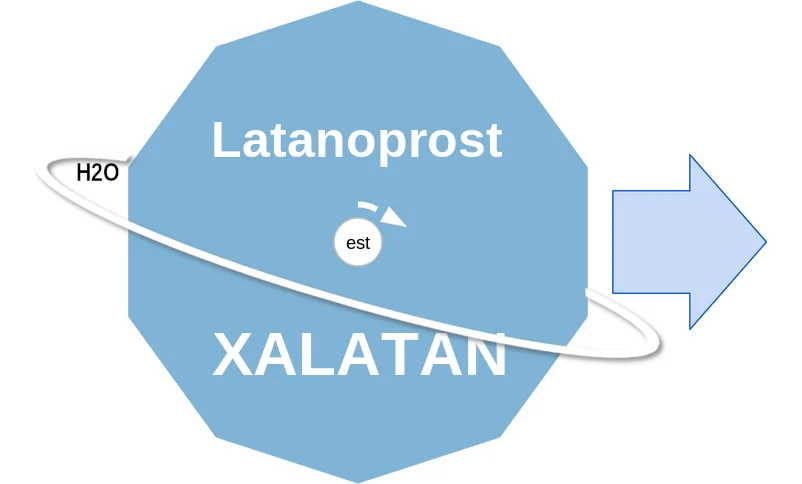
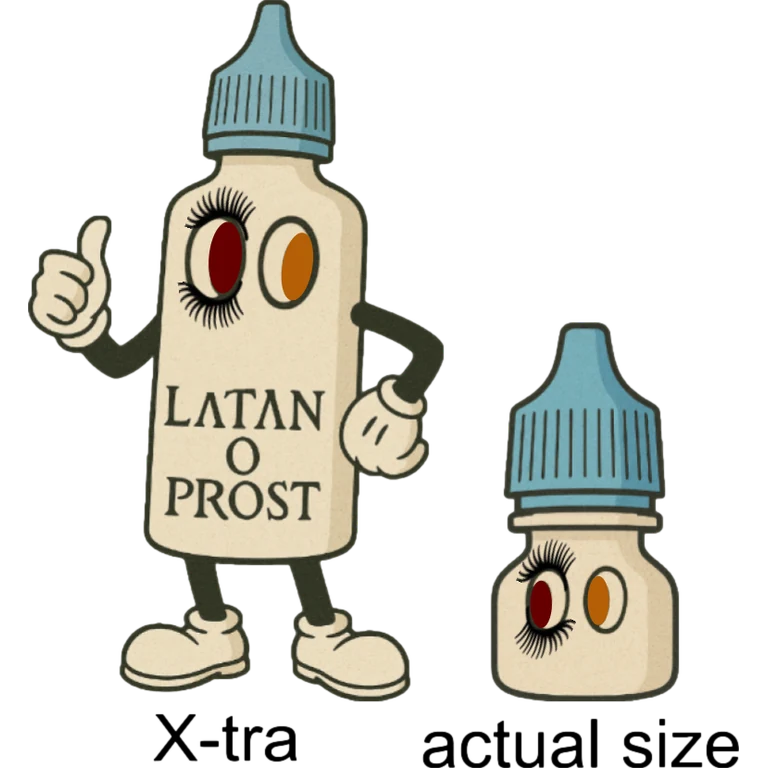
“X-tra Latin prost drops”
May cause iris darkening
May cause eyelash growth
What it isProstaglandin analog that increases uveoscleral outflow; first-line treatment for open-angle glaucoma.
Why this oneGeneric and potent with less hyperemia than bimatoprost, it is the default first prostaglandin drop.
What limits itIris and periocular darkening can be permanent; eyelash growth and orbital fat loss alter appearance. Adherence often determines failure.
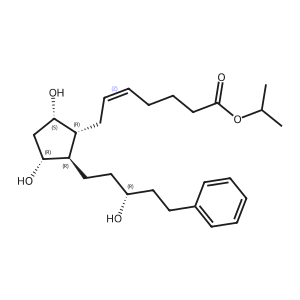
Latanoprost prescription history
Animated chart of estimated U.S. prescriptions per year, Glaucoma medicines (1900–2026). Latanoprost enters in 1996 (estimated).
FDA-approved for
- glaucoma (1996)
Principal riskPermanent iris darkening and eyelash changes
Classes and tags
Clinical profile
Legacy pregnancy categoryUnknown / historical label unavailable
Defining liabilityLocal irritation, sensitization or administration-site injury; negligible systemic toxicity at usual use.
FDA label
Read the full label on DailyMed ↗
NO BOXED WARNINGS
| FDA dosing | Population | Start | Target | Max |
|---|---|---|---|---|
| Elevated IOP (open-angle glaucoma / ocular hypertension) | Adults | 1 drop affected eye(s) QHS (evening) | 1 drop QD (evening) | Once daily |
Renal Undefined
Hepatic Undefined
Exceeding once-daily dosing may reduce IOP-lowering effect or paradoxically raise IOP
Instructions
- One drop in affected eye(s) once daily in the evening; do not exceed once daily
- Remove contact lenses before use; reinsert 15 minutes after
- If using other topical ophthalmics, administer at least 5 minutes apart
- Do not combine with other prostaglandins/prostaglandin analogs
Available strengths
- drops 0.005 %
- sol 50 mcg/mL
Cautions
- Iris, periorbital, and eyelash pigmentation (iris pigmentation likely permanent)
- Eyelash changes (length/thickness/number)
- Intraocular inflammation (iritis/uveitis)
- Macular edema, including cystoid macular edema
Adverse reactions
- Blurred vision
- Burning/stinging
- Conjunctival hyperemia
- Foreign body sensation
- Itching
- Increased iris pigmentation
- Punctate keratitis
Pregnancy No adequate studies; animal data show malformations and embryofetal lethality at clinically relevant doses
Lactation Undefined
Cost
| Strength | #/mo | generic $/unit | CostPlus | |
|---|---|---|---|---|
| 0.005 % | drops | per unit | not offered |
Generic entry2011
Active metabolites
Open Latanoprost in the interactive console ↗
Memory aids: interaction avatars

Open Latanoprost in the interactive console ↗
Self-check
- Which aqueous-humor outflow pathway does latanoprost increase?
Uveoscleral outflow. - Which latanoprost color changes can be permanent?
Iris and periocular darkening.