Morphine ER capsules
KADIAN
What it isExtended-release mu-opioid agonist; severe chronic pain requiring continuous opioid therapy.
Why this oneIts capsules may be opened and the pellets sprinkled on applesauce (never crushed), an option when intact extended-release tablets cannot be swallowed.
What limits itRenal accumulation, respiratory depression, and benzodiazepine co-use markedly increase overdose risk.
FDA-approved for
- chronic pain (around-the-clock) (1996)
FDA label
Read the full label on DailyMed ↗
| FDA dosing | Population | Start | Target | Max |
|---|---|---|---|---|
| Moderate to severe pain requiring continuous around-the-clock opioid (not PRN) | Opioid-naive | 10-20 mg QD or BID | Individualized | No maximum defined |
| Moderate to severe pain (conversion from other oral morphine) | Half total daily oral morphine dose q12h, or total daily dose q24h | Individualized | No maximum defined |
Titration No more frequently than every other day (opioid-naive: increase by ~20 mg every other day)
Renal Use with caution; reduced dosage in severe renal insufficiency
Hepatic Use with caution; reduced dosage in severe hepatic insufficiency
Do not dose more frequently than every 12 hours
Instructions
- Swallow capsules whole; do not chew, crush, or dissolve
- May sprinkle pellets on a small amount of room-temperature applesauce; use immediately, do not divide
- May give via 16 French gastrostomy tube; do NOT give via nasogastric tube
- 100 mg and 200 mg capsules for opioid-tolerant patients only
- Taper gradually on discontinuation to prevent withdrawal
Contraindications
- Respiratory depression (in the absence of resuscitative equipment or in unmonitored settings)
- Acute or severe bronchial asthma or hypercarbia
- Known or suspected paralytic ileus
- Any situation where opioids are contraindicated
Cautions
- Respiratory depression is the chief hazard; extreme caution in COPD, cor pulmonale, decreased respiratory reserve, hypoxia/hypercapnia
- Additive CNS depression with alcohol, sedatives, other opioids, MAOIs (do not use within 14 days of MAOI)
- Severe hypotension/orthostatic hypotension
- Head injury/increased intracranial pressure
- Spasm of sphincter of Oddi; caution in biliary tract/pancreatic disease
- Misuse, abuse, addiction, diversion potential
- Neonatal withdrawal with prolonged maternal use
- Tolerance and physical dependence
Adverse reactions
- Drowsiness
- Constipation
- Nausea
- Dizziness
- Anxiety
- Vomiting
Pregnancy Pregnancy Category C; use only if benefit justifies fetal risk. Prolonged use can cause neonatal opioid withdrawal syndrome.
Lactation Low levels of morphine detected in human milk; withdrawal can occur in breastfed infant when maternal drug stopped; weigh benefits vs discontinuing.
⚠ BOXED WARNINGS
- Addiction, abuse and misuse
- Life-threatening respiratory depression
- Risk from concomitant use with benzodiazepines
Classes and tags
Clinical profile
Active metabolites
Mechanism of action: Morphine ER capsules ballicule
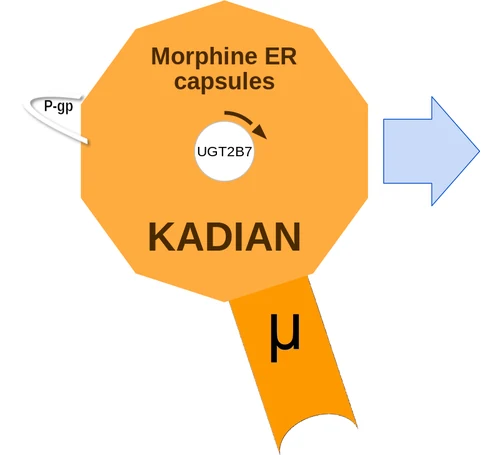
Open Morphine ER capsules in the interactive console ↗
Memory aids: mascots and interaction avatars

opioids constrict pupils