Ibrutinib
IMBRUVICA
What it isBruton tyrosine kinase inhibitor; CLL, mantle cell lymphoma and Waldenstrom disease.
Why this oneAs the first-generation covalent BTK inhibitor, it has the deepest experience but more atrial fibrillation than newer agents.
What limits itBleeding and atrial fibrillation complicate anticoagulation. CYP3A4 interactions and treatment-emergent hypertension require review.
FDA-approved for
- B-cell malignancies (2013)
FDA label
Read the full label on DailyMed ↗
| FDA dosing | Population | Start | Target | Max |
|---|---|---|---|---|
| CLL/SLL | Adults | 420 mg QD | 420 mg QD | |
| Waldenström's macroglobulinemia | Adults | 420 mg QD | 420 mg QD | |
| Chronic GVHD | ≥12 yr | 420 mg QD | 420 mg QD | |
| Chronic GVHD | 1 to <12 yr | 240 mg/m² QD | 240 mg/m² QD (up to 420 mg) | 420 mg |
Renal Undefined
Hepatic B-cell malignancies: 140 mg QD if mild (Child-Pugh A), 70 mg QD if moderate (B), avoid if severe (C). cGVHD: reduce dose if total bilirubin >1.5–3× ULN; avoid if >3× ULN
Instructions
- Take at about the same time each day with a glass of water
- Swallow capsules/tablets whole; do not open, break, cut, crush, or chew
- Missed dose: take same day, resume normal schedule next day; do not double up
Cautions
- Hemorrhage (fatal bleeding reported; higher risk with anticoagulant/antiplatelet)
- Infections (incl. PML, PJP; fatal and non-fatal)
- Cardiac arrhythmias, cardiac failure, sudden death
- Hypertension
- Cytopenias (monitor CBC monthly)
- Second primary malignancies (esp. skin cancers)
- Hepatotoxicity, including drug-induced liver injury
- Tumor lysis syndrome
- Embryo-fetal toxicity
Adverse reactions
- Thrombocytopenia
- Diarrhea
- Fatigue
- Musculoskeletal pain
- Neutropenia
- Rash
- Anemia
- Bruising
- Nausea
- (cGVHD also) pyrexia, muscle spasms, stomatitis, hemorrhage, pneumonia, headache
Pregnancy Can cause fetal harm (animal embryofetal toxicity/malformations); advise effective contraception
Lactation No data; do not breastfeed during treatment and for 1 week after last dose
NO BOXED WARNINGS
Principal riskAtrial fibrillation and bleeding
Cost, est. cash$5,000–$30,000+/month or cycle
Generic entry2031+ est.
Classes and tags
Clinical profile
Legacy pregnancy categoryD
Defining liabilityMyelosuppression and agent-specific hepatic, cardiac, pulmonary, neurologic or reproductive toxicity require oncology monitoring.
Mechanism of action: Ibrutinib ballicule
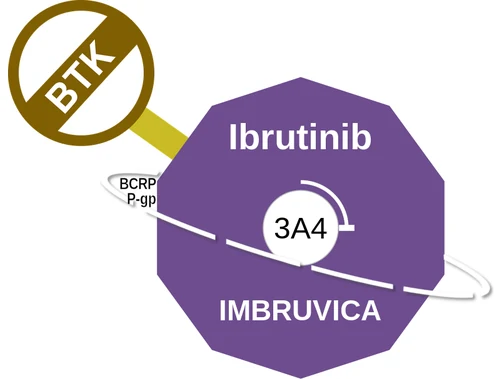
Open Ibrutinib in the interactive console ↗
Memory aids: mascots and interaction avatars