Hydrochloro thiazide
MICROZIDE
What it isNCC-inhibiting thiazide diuretic; hypertension and edema.
Why this oneIt lowers urinary calcium, but a large trial found no recurrence benefit for calcium stones; chlorthalidone lasts longer.
What limits itCheck sodium, potassium, glucose and uric acid. Hyponatremia often ends treatment, and lithium exposure can rise sharply.
FDA-approved for
- hypertension/edema (~1959)
FDA label
Read the full label on DailyMed ↗
| FDA dosing | Population | Start | Target | Max |
|---|---|---|---|---|
| Edema | Adults | 25 mg QD | 25-100 mg/day QD or divided BID | 100 mg/day |
| Hypertension | Adults | 25 mg QD | 25-50 mg/day QD or divided BID | 50 mg/day (doses >50 mg often cause marked hypokalemia) |
| Diuresis and hypertension | Infants and children <2 y | 1-2 mg/kg/day (0.5-1 mg/lb) QD or divided BID | 1-2 mg/kg/day QD or divided BID | 37.5 mg/day |
| Diuresis and hypertension | Children 2-12 y | 1-2 mg/kg/day (0.5-1 mg/lb) QD or divided BID | 1-2 mg/kg/day QD or divided BID | 100 mg/day |
| Diuresis and hypertension | Infants <6 months | 1-2 mg/kg/day divided BID | Up to 3 mg/kg/day (1.5 mg/lb) divided BID may be required | 37.5 mg/day |
Renal Undefined
Hepatic Undefined
Patients usually do not require more than 50 mg/day when hydrochlorothiazide is used with other antihypertensives.
Instructions
- Individualize therapy to patient response; use the smallest dose necessary to achieve the required response.
- For edema, intermittent therapy (alternate days, or 3-5 days per week) makes excessive response and electrolyte imbalance less likely.
- Reduce the thiazide dose or withdraw therapy whenever adverse reactions are moderate or severe.
- Doses above 50 mg/day are often associated with marked reductions in serum potassium — monitor electrolytes.
Contraindications
- Anuria
- Hypersensitivity to other sulfonamide-derived drugs
Cautions
- Electrolyte imbalance — hypokalemia especially above 50 mg/day; also hyponatremia and hypochloremic alkalosis. Monitor serum electrolytes.
- Hypotension including orthostatic hypotension; may be aggravated by alcohol, barbiturates, narcotics, or other antihypertensives.
- Non-melanoma skin cancer — increased risk, predominantly squamous cell carcinoma, in white patients on large cumulative doses.
- Renal dysfunction, renal failure, and interstitial nephritis.
- Metabolic effects: hyperglycemia, glycosuria, hyperuricemia.
- Hypersensitivity reactions including anaphylaxis, necrotizing angiitis, pneumonitis/pulmonary edema, and photosensitivity.
- Serious dermatologic reactions: erythema multiforme/Stevens-Johnson syndrome and exfoliative dermatitis/toxic epidermal necrolysis.
- Hematologic: aplastic anemia, agranulocytosis, leukopenia, hemolytic anemia, thrombocytopenia.
Adverse reactions
- Cardiovascular: hypotension including orthostatic hypotension.
- Metabolic: electrolyte imbalance, hyperglycemia, glycosuria, hyperuricemia.
- GI: nausea, anorexia, cramping, constipation, diarrhea, vomiting, gastric irritation, sialadenitis, pancreatitis, intrahepatic cholestatic jaundice.
- CNS: dizziness, vertigo, headache, paresthesias, restlessness; weakness; muscle spasm.
- Skin/hypersensitivity: photosensitivity, rash, urticaria, purpura, fever, anaphylaxis, necrotizing angiitis, Stevens-Johnson syndrome, toxic epidermal necrolysis, alopecia.
- Hematologic: aplastic anemia, agranulocytosis, leukopenia, hemolytic anemia, thrombocytopenia.
- Renal: renal failure, renal dysfunction, interstitial nephritis. Urogenital: impotence.
- Special senses: transient blurred vision, xanthopsia.
- Postmarketing: increased risk of non-melanoma skin cancer (~1 extra SCC per 16,000 patients/year overall; ~1 per 6,700/year in white patients with cumulative dose >=50,000 mg).
Pregnancy No adequate, well-controlled studies in pregnant women; no evidence of fetal harm in mice or rats. Thiazides cross the placenta and appear in cord blood — risk of fetal/neonatal jaundice and thrombocytopenia. Use only if clearly needed.
Lactation Undefined
NO BOXED WARNINGS
Principal riskHyponatremia and hypokalemia
Cost, est. cash$4–$80/month
Generic entry1982
Classes and tags
Clinical profile
Legacy pregnancy categoryB
Defining liabilityHyponatremia, hypokalemia and substantial elevation of lithium concentrations.
Mechanism of action: Hydrochloro thiazide ballicule
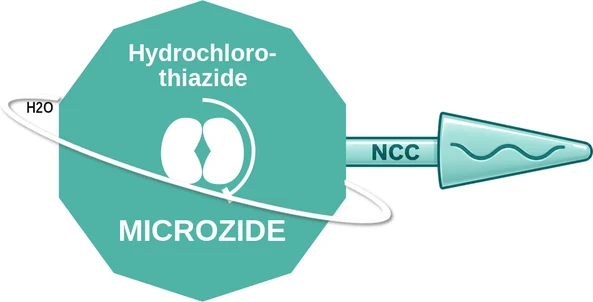
Open Hydrochloro thiazide in the interactive console ↗
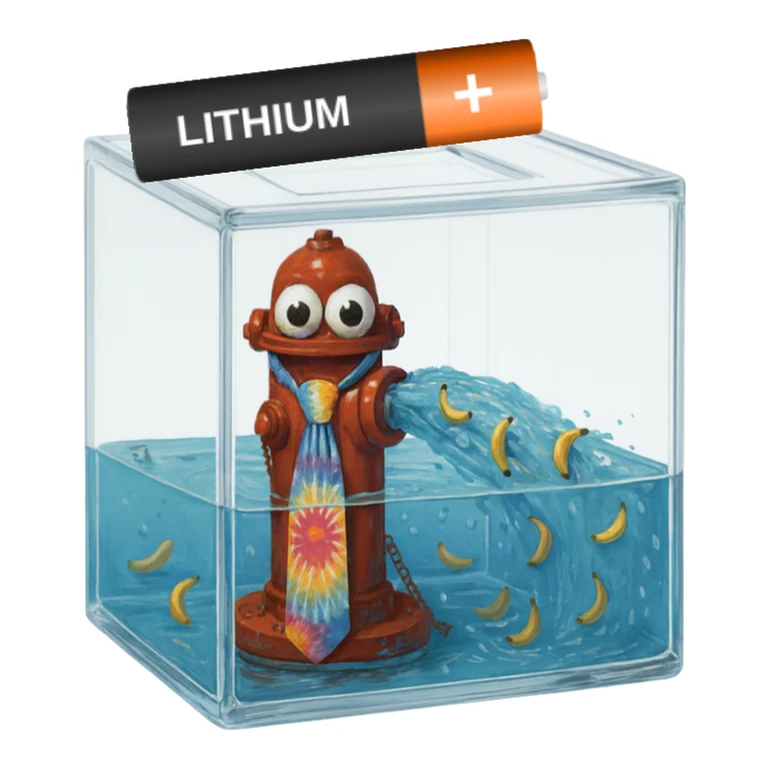
Memory aids: mascots and interaction avatars

Bananas dispersing → ↓ serum potassium