Glyburide
DIABETA
What it isLong-acting sulfonylurea closing beta-cell potassium channels; type 2 diabetes.
Why this oneUnlike glipizide, its active metabolite is renally cleared and can sustain glucose lowering far beyond the intended window.
What limits itAvoid in older adults and CKD: hypoglycemia can be severe and prolonged; weight gain is common.
FDA-approved for
- type 2 diabetes (1984)
FDA label
Read the full label on DailyMed ↗
| FDA dosing | Population | Start | Target | Max |
|---|---|---|---|---|
| Type 2 diabetes mellitus (adjunct to diet and exercise) | Adults | 2.5–5 mg QD with breakfast or first main meal; 1.25 mg QD if sensitive to hypoglycemic drugs | Maintenance 1.25–20 mg/day, QD or divided | 20 mg/day (>10 mg/day may respond better BID) |
Titration Increase in increments of no more than 2.5 mg at weekly intervals based on blood glucose response.
Renal Conservative initial and maintenance dosing — renal insufficiency elevates glyburide levels and increases risk of serious hypoglycemia.
Hepatic Conservative initial and maintenance dosing — hepatic insufficiency elevates glyburide levels, may diminish gluconeogenic capacity, and increases risk of serious hypoglycemia.
Instructions
- Take with breakfast or the first main meal.
- Administer at least 4 hours before colesevelam (colesevelam reduces glyburide exposure).
- Transfer from other oral agents needs no transition period, EXCEPT chlorpropamide: exercise care for 2 weeks (prolonged retention, overlapping effect may provoke hypoglycemia).
- Insulin conversion: insulin <20 units/day → substitute 2.5–5 mg QD; 20–40 units/day → 5 mg QD directly; >40 units/day → cut insulin 50%, start 5 mg QD, then withdraw insulin progressively while raising glyburide 1.25–2.5 mg every 2–10 days.
- Not recommended in pregnancy or in pediatric patients; if used in pregnancy, discontinue at least 2 weeks before the expected delivery date.
Contraindications
- Diabetic ketoacidosis, with or without coma (treat with insulin)
- Type 1 diabetes mellitus
- Concomitant administration of bosentan
Cautions
- Special warning: oral hypoglycemics associated with increased cardiovascular mortality vs diet alone or diet plus insulin (UGDP study).
- Hypoglycemia — all sulfonylureas can produce severe hypoglycemia; risk ↑ with renal or hepatic insufficiency, elderly/debilitated/malnourished patients, adrenal or pituitary insufficiency, deficient caloric intake, severe or prolonged exercise, alcohol, or >1 glucose-lowering drug; beta-blockers may mask symptoms.
- Loss of glycemic control under stress (fever, trauma, infection, surgery) — may need to stop glyburide and give insulin temporarily.
- Secondary failure (loss of response over time) may occur.
- Hemolytic anemia with sulfonylureas in G6PD deficiency — consider a non-sulfonylurea alternative; also reported without known G6PD deficiency.
Adverse reactions
- Hypoglycemia.
- GI disturbances — nausea, epigastric fullness, heartburn (1.8%; dose-related).
- Cholestatic jaundice and hepatitis (rare), may progress to liver failure — discontinue; liver function abnormalities incl. isolated transaminase elevations.
- Allergic skin reactions (1.5%): pruritus, erythema, urticaria, morbilliform/maculopapular eruptions; porphyria cutanea tarda and photosensitivity reported with sulfonylureas.
- Hematologic (sulfonylureas): leukopenia, agranulocytosis, thrombocytopenia, hemolytic anemia, aplastic anemia, pancytopenia.
- Hyponatremia and SIADH; disulfiram-like reactions (very rare).
- Changes in accommodation/blurred vision (glucose fluctuation); angioedema, arthralgia, myalgia, vasculitis.
Pregnancy Not recommended — many experts recommend insulin to keep glucose near normal in pregnancy. Animal studies (500× human dose) show no teratogenicity; no adequate human studies. Prolonged severe neonatal hypoglycemia reported with sulfonylureas at delivery — discontinue ≥2 weeks before expected delivery date.
Lactation Unknown if glyburide is excreted in human milk (some sulfonylureas are). Potential hypoglycemia in nursing infants — decide whether to discontinue nursing or the drug; if discontinued and diet alone is inadequate, consider insulin.
NO BOXED WARNINGS
Principal riskThe most prolonged hypoglycemia of the sulfonylureas in CKD
Cost, est. cash$5–$150/month
Generic entry1995
Classes and tags
Clinical profile
Legacy pregnancy categoryMultiple / indication-, trimester- or formulation-dependent
Defining liabilityAgent-specific hypoglycemia, ketoacidosis, volume, renal or gastrointestinal toxicity.
Mechanism of action: Glyburide ballicule
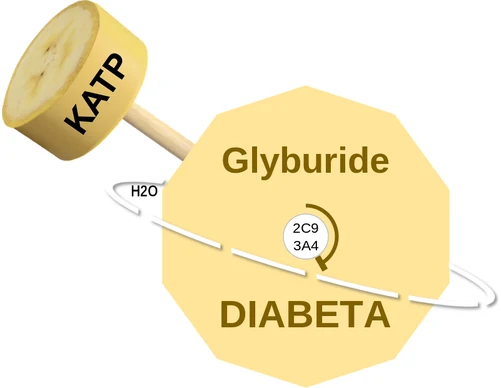
Open Glyburide in the interactive console ↗
Memory aids: mascots and interaction avatars