Flurbiprofen
ANSAID
What it isNonselective COX inhibitor; arthritis and ophthalmic prevention of surgical miosis.
Why this oneThe eye-drop formulation preserves dilation during surgery, a niche distinct from its systemic arthritis use.
What limits itSystemic use retains NSAID gastrointestinal, renal, and cardiovascular toxicity and can raise lithium levels.
FDA-approved for
- arthritis (1988)
FDA label
Read the full label on DailyMed ↗
| FDA dosing | Population | Start | Target | Max |
|---|---|---|---|---|
| Rheumatoid arthritis or osteoarthritis | Adult | 200-300 mg/day divided BID-QID | 200-300 mg/day divided BID-QID | 300 mg/day (single dose ≤100 mg) |
Renal Avoid in advanced renal disease unless benefit outweighs risk; monitor renal function in renal impairment
Hepatic Discontinue if abnormal liver tests persist or worsen
Instructions
- Use lowest effective dosage for shortest duration
- Largest recommended single dose in a multiple-dose regimen is 100 mg
Contraindications
- History of asthma, urticaria, or allergic-type reaction after aspirin or other NSAIDs
- Setting of coronary artery bypass graft (CABG) surgery
Cautions
- Cardiovascular thrombotic events
- GI bleeding, ulceration, perforation
- Hepatotoxicity
- Hypertension
- Heart failure and edema
- Renal toxicity and hyperkalemia
- Anaphylactic reactions
- Serious skin reactions
- Hematologic toxicity
Adverse reactions
- Abdominal pain
- Dyspepsia
- Nausea
- Diarrhea
- Constipation
- Headache
- Edema
- UTI-like symptoms
Pregnancy Avoid at about 30 weeks gestation and later (risk of premature closure of fetal ductus arteriosus); limit use 20-30 weeks (risk of oligohydramnios/neonatal renal impairment).
Lactation Poorly excreted into human milk (~0.1 mg/day to infant at maternal 200 mg/day); consider benefits of breastfeeding against clinical need.
⚠ BOXED WARNINGS
- Cardiovascular thrombotic events
- Gastrointestinal bleeding, ulceration and perforation
Cost, est. cash$10–$300/month
Generic entry1995
Classes and tags
Clinical profile
Legacy pregnancy categoryMultiple / indication-, trimester- or formulation-dependent
Defining liabilityGI bleeding, kidney injury, hypertension and fluid retention; many agents increase lithium concentrations.
Mechanism of action: Flurbiprofen ballicule
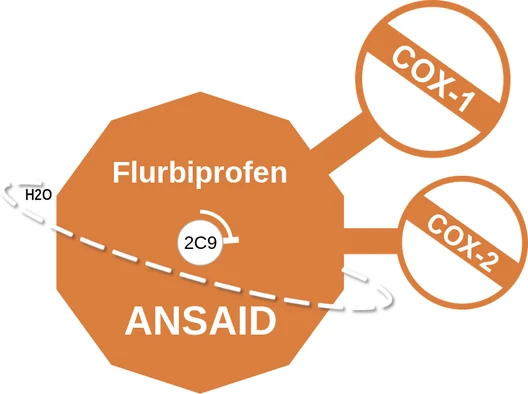
Open Flurbiprofen in the interactive console ↗
Memory aids: mascots and interaction avatars

“The N said... NSAID”
-profen suffix for propionic class of NSAIDs