Erythromycin
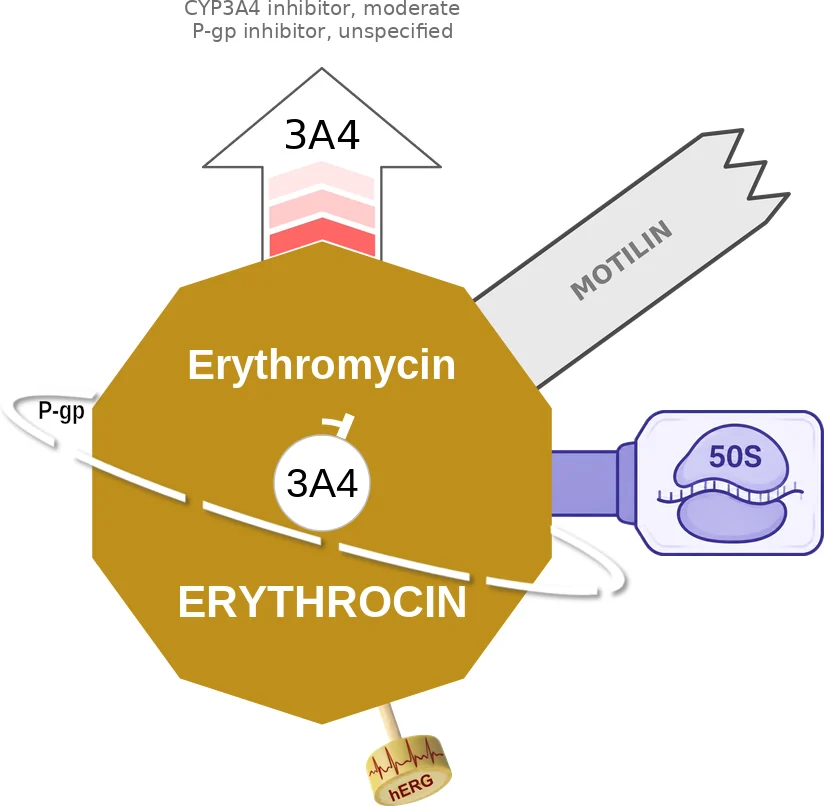
ERYTHROCIN
Pronunciation: er-ith-roe-MYE-sin
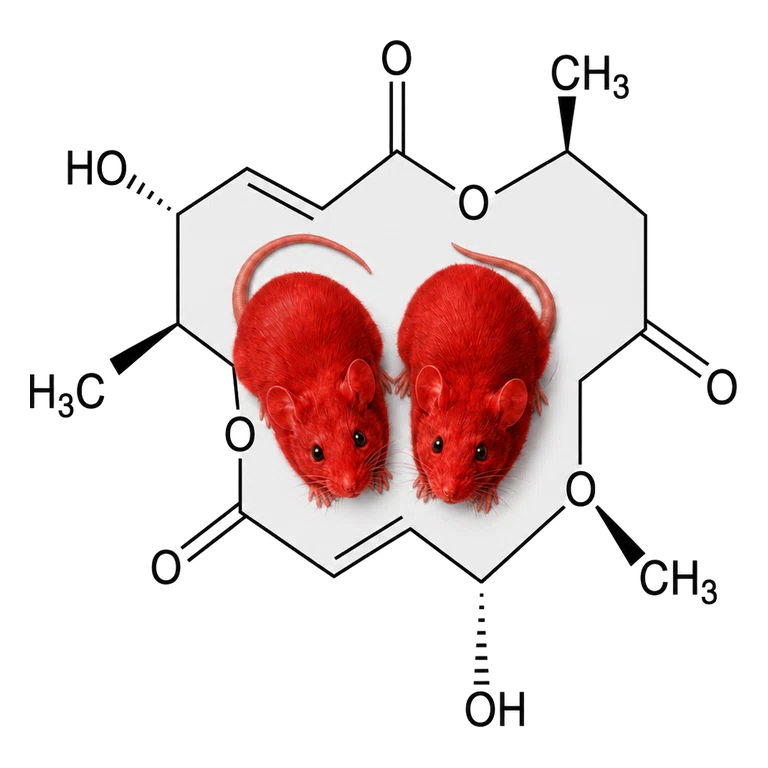
“(Eryth) throw your mice in here”
macrolide ring
erythro = red
What it isMacrolide inhibiting the 50S ribosomal subunit; atypical infection, and used off-label as a prokinetic.
Why this oneIts motilin agonism makes it useful for gastroparesis, which no other antibiotic offers.
What limits itStrong CYP3A4 inhibitor and QT prolonger, so interactions are constant. GI upset limits the dose; tachyphylaxis develops in prokinetic use.
Erythromycin prescription history
Animated chart of estimated U.S. prescriptions per year, Antibacterials (systemic) (1938–2026). Erythromycin enters in 1952 (estimated).
FDA-approved for
- bacterial infections (1952)
- pertussis (1952)
Principal riskA strong CYP3A4 inhibitor; QT prolongation
Classes and tags
Clinical profile
Legacy pregnancy categoryC
Defining liabilityAllergy, gastrointestinal effects and agent-specific renal, hepatic, hematologic or interaction risks.
FDA label
Read the full label on DailyMed ↗
NO BOXED WARNINGS
| FDA dosing | Population | Start | Target | Max |
|---|---|---|---|---|
| Susceptible infections (usual) | Adults | 250 mg QID (equally spaced) or 500 mg q12h | Increase per severity of infection | 4 g/day (BID dosing not recommended >1 g/day) |
| Streptococcal URTI (tonsillitis/pharyngitis); prevention of initial rheumatic fever attacks (penicillin-allergic) | Adults | Usual therapeutic dose | ≥10 days | 4 g/day |
| Long-term prophylaxis of recurrent rheumatic fever (allergic to penicillin and sulfonamides) | Adults | 250 mg BID | 250 mg BID | 250 mg BID |
| Urogenital C. trachomatis infection during pregnancy | Pregnant women | 500 mg QID on empty stomach ×≥7 days | If not tolerated: 500 mg q12h or 250 mg QID ×≥14 days | 500 mg QID |
| Uncomplicated urethral/endocervical/rectal C. trachomatis; nongonococcal urethritis (U. urealyticum) — when tetracycline contraindicated/not tolerated | Adults | 500 mg QID ×≥7 days | 500 mg QID | 500 mg QID |
| Primary syphilis (penicillin-allergic) | Adults | 30–40 g total in divided doses over 10–15 days | 40 g total course | |
| Acute PID caused by N. gonorrhoeae | Adult females (penicillin-sensitive) | 500 mg erythromycin lactobionate IV q6h ×3 days | then 500 mg base PO q12h ×7 days | Undefined |
| Intestinal amebiasis | Adults | 500 mg q12h or 250 mg q6h ×10–14 days | Undefined | |
| Legionnaires' disease | Adults | 1–4 g/day in divided doses (optimal dose not established) | 4 g/day | |
| Susceptible infections (usual) | Children | 30–50 mg/kg/day in equally divided doses | May double for more severe infections | 4 g/day |
| Intestinal amebiasis | Children | 30–50 mg/kg/day divided ×10–14 days | Undefined | |
| Pertussis | Children | 40–50 mg/kg/day divided ×5–14 days (optimal dose not established) | Undefined | |
| Conjunctivitis of the newborn (C. trachomatis) | Newborns | Oral suspension 50 mg/kg/day in 4 divided doses ×≥2 weeks | Undefined | |
| Pneumonia of infancy (C. trachomatis) | Infants | Oral suspension 50 mg/kg/day in 4 divided doses ×≥3 weeks | Undefined |
Renal Undefined
Hepatic Use with caution in impaired hepatic function (principally excreted by the liver); no dose adjustment stated
Instructions
- May be taken without regard to meals; optimal levels when fasting (at least 1/2 hour, preferably 2 hours before meals)
- Streptococcal URTI: treat for at least 10 days
Available strengths
- tab 250, 500 mg (base/stearate)
- tab 400 mg (EES)
Contraindications
- Concomitant terfenadine, astemizole, cisapride, pimozide, ergotamine, or dihydroergotamine
- Concomitant CYP3A4-metabolized statins (lovastatin, simvastatin) — myopathy/rhabdomyolysis risk
Cautions
- Hepatotoxicity
- QT prolongation / torsades de pointes
- Syphilis in pregnancy — may not prevent congenital syphilis
- C. difficile-associated diarrhea
- Serious CYP3A4 drug interactions (colchicine toxicity, statin rhabdomyolysis, CCB hypotension)
Adverse reactions
- Nausea
- Vomiting
- Abdominal pain
- Diarrhea
- Anorexia
- Hepatic dysfunction/abnormal LFTs
- Allergic reactions (urticaria to anaphylaxis)
- Reversible hearing loss (renal insufficiency, high doses)
Pregnancy No teratogenicity in animal studies; observational human studies reported cardiovascular malformations after early-pregnancy exposure
Lactation Excreted in human milk; use with caution in nursing women
Cost
| Strength | #/mo | generic $/mo | CostPlus | |
|---|---|---|---|---|
| 250 mg | tab | 120 QID | not offered | |
| 500 mg | tab | 120 QID | not offered | |
| 400 mg | tab | 120 QID | not offered |
Generic entry1982
Open Erythromycin in the interactive console ↗
Memory aids: interaction avatars

Open Erythromycin in the interactive console ↗
Self-check
- Which receptor explains erythromycin’s prokinetic effect?
Motilin receptor. - What limits sustained erythromycin prokinetic benefit?
Tachyphylaxis.