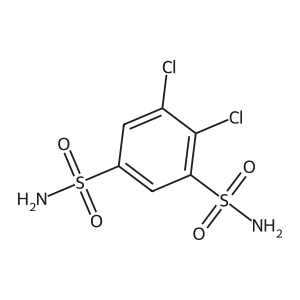
Dichlorphenamide
KEVEYIS
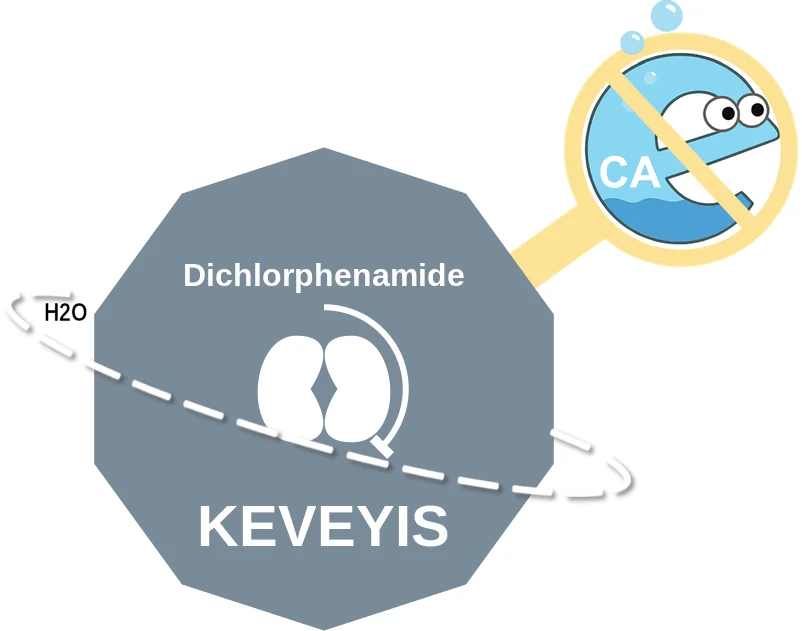

“Kevin’s Dice cooler”
What it isCarbonic anhydrase inhibitor; primary periodic paralysis.
Why this oneReduces attack frequency in both hyperkalemic and hypokalemic periodic paralysis, which no other agent covers.
What limits itParaesthesia, cognitive slowing and kidney stones. It is a sulfonamide.
Dichlorphenamide prescription history
Animated chart of estimated U.S. prescriptions per year, Diuretics (1953–2026). Dichlorphenamide enters in 1958 (estimated).
FDA-approved for
- periodic paralysis (2015)
Principal riskParaesthesia and kidney stones
Sulfonamide
Sulfonamide-derived drug (non-antibacterial) — label warns
No N4 aromatic amine, no N1 heterocycle: cross-reactivity after a sulfonamide-antimicrobial reaction is unlikely — sulfa-allergic patients reacted to sulfonamide non-antibiotics at 9.9% vs 1.6%, less often than to penicillin. The label warns anyway.
Open the sulfonamide hypersensitivity presentation → · sources [n] are on its References slide.
Classes and tags
Clinical profile
Legacy pregnancy categoryUnknown / historical label unavailable
Defining liabilityGenerally tolerated at therapeutic doses; clinically important risks are agent-specific and increase with interactions or organ impairment.
FDA label
Read the full label on DailyMed ↗
NO BOXED WARNINGS
| FDA dosing | Population | Start | Target | Max |
|---|---|---|---|---|
| Primary hyper-/hypokalemic periodic paralysis and related variants | Adults | 50 mg QD or BID | individualized | 200 mg/day |
Titration Adjust at weekly intervals (or sooner if adverse reaction).
Renal Undefined
Hepatic Contraindicated in hepatic insufficiency.
Instructions
- Evaluate response after 2 months of treatment to decide whether to continue
- Monitor serum potassium and bicarbonate at baseline and periodically
Available strengths
- tab 50 mg
Contraindications
- Hypersensitivity to dichlorphenamide or other sulfonamides
- Concomitant use with high-dose aspirin
- Severe pulmonary disease limiting compensation to metabolic acidosis
- Hepatic insufficiency
Cautions
- Hypersensitivity / immune-mediated reactions; discontinue at first sign of rash
- Hypokalemia; monitor and correct
- Metabolic acidosis; monitor serum bicarbonate
- Falls; consider dose reduction/discontinuation
Adverse reactions
- Paresthesias
- Cognitive disorder
- Dysgeusia
- Confusional state
Pregnancy No adequate human data; teratogenic in rats; may cause fetal harm.
Lactation No data on presence in human milk or effects on the breastfed infant.
Cost
| Strength | #/mo | generic $/mo | CostPlus | |
|---|---|---|---|---|
| 50 mg | tab | 30 qd | not offered |
Generic entry2022
Open Dichlorphenamide in the interactive console ↗
Memory aids: interaction avatars

Open Dichlorphenamide in the interactive console ↗
Self-check
- Which periodic-paralysis potassium phenotypes benefit from dichlorphenamide?
Both hyperkalemic and hypokalemic. - Which renal complication can limit dichlorphenamide?
Kidney stones.