Clozapine
CLOZARIL
What it isSecond-generation antipsychotic with weak D2 and broad receptor activity; treatment-resistant schizophrenia.
Why this oneThe only antipsychotic with proven efficacy after two others have failed, and the only one that reduces suicidality in schizophrenia.
What limits itMandatory ANC monitoring, and it is the most anticholinergic antipsychotic — constipation causes ileus and death more often than agranulocytosis. Smoking cessation raises levels through CYP1A2.
FDA-approved for
- treatment-resistant schizophrenia (1989)
- recurrent suicidal behavior in schizophrenia (2002)
Off-label
- aggression
- Parkinson psychosis
FDA label
Read the full label on DailyMed ↗
| FDA dosing | Population | Start | Target | Max |
|---|---|---|---|---|
| Treatment-resistant schizophrenia; reducing suicidal behavior in schizophrenia/schizoaffective disorder | Adult | 12.5 mg QD or BID | 150-225 mg BID by end of 2 weeks | 450 mg BID (900 mg/day) |
Titration Increase total daily dose by 25-50 mg/day if tolerated to target by ~2 weeks; then increase by up to 100 mg once or twice weekly
Renal Dose reduction may be necessary in significant renal impairment
Hepatic Dose reduction may be necessary in significant hepatic impairment
ANC-based dosage interruption/discontinuation per label Tables 1-2
Instructions
- May be taken with or without food
- Obtain baseline ANC before initiation (not recommended if ANC <1500/uL, or <1000/uL in benign ethnic neutropenia); monitor ANC per schedule
- After interruption: 1 day missed resume 40-50% of prior dose; 2 days missed resume ~25%; longer interruptions restart at 12.5 mg QD-BID
- Discontinue gradually over 1-2 weeks (reduce cholinergic rebound and psychosis recurrence)
- CYP2D6 poor metabolizers or strong CYP1A2 inhibitors: reduce dose
Cautions
- Gastrointestinal hypomotility (constipation to ileus, may be fatal)
- Eosinophilia with organ involvement
- QT interval prolongation
- Metabolic changes (hyperglycemia/diabetes, dyslipidemia, weight gain)
- Neuroleptic malignant syndrome
- Hepatotoxicity (may be fatal)
- Fever
- Pulmonary embolism
- Anticholinergic toxicity
- Falls
- Tardive dyskinesia; cerebrovascular events; cognitive/motor impairment
Adverse reactions
- Sedation/drowsiness
- Dizziness/vertigo
- Headache
- Tremor
- Tachycardia
- Hypotension; syncope
- Hypersalivation
- Sweating; dry mouth
- Constipation; nausea
- Fever
- Weight gain
Pregnancy Third-trimester exposure: neonatal extrapyramidal and/or withdrawal symptoms; National Pregnancy Registry for Atypical Antipsychotics available
Lactation Clozapine present in human milk; reports of sedation and agranulocytosis in exposed infants - monitor for sedation and neutropenia
⚠ BOXED WARNINGS
- Severe neutropenia
- Orthostatic hypotension, bradycardia and syncope
- Seizures
- Myocarditis and cardiomyopathy
- Increased mortality in elderly patients with dementia-related psychosis
Cost, est. cash$5–$150/month
Generic entry1996
Classes and tags
Clinical profile
Legacy pregnancy categoryB
Defining liabilitySevere neutropenia, myocarditis, seizures and potentially fatal gastrointestinal hypomotility.
Active metabolites
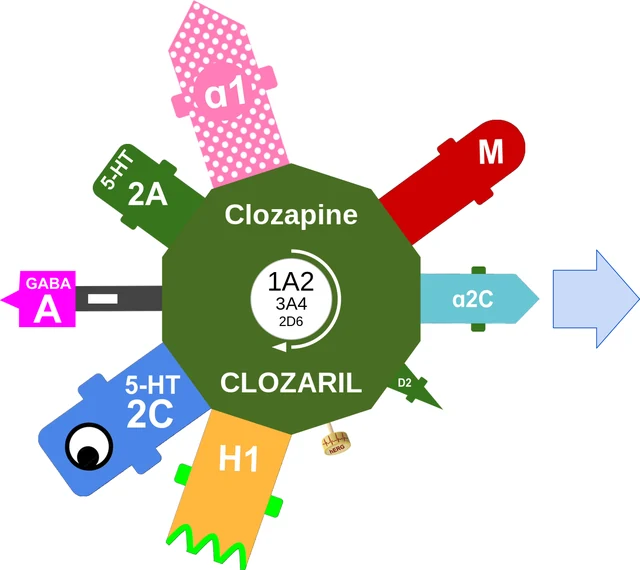
Mechanism of action: Clozapine ballicule
Open Clozapine in the interactive console ↗
Memory aids: mascots and interaction avatars

“Red as a beet” crimson color theme → anticholinergic
Blind as a bat → dilated pupils and cycloplegia (M3 antimuscarinic)
“Mad as a hatter” → BBB-crossing anticholinergic
“Dry as a bone” → risk of severe constipation (M3)
Tachycardia (M2 antimuscarinic); myocarditis risk
Neutrophil in mouth → risk of agranulocytosis
Polka dots on pink → α1 blocker → syncope if titrated too quickly (hit the floor)