Chlorothiazide
DIURIL
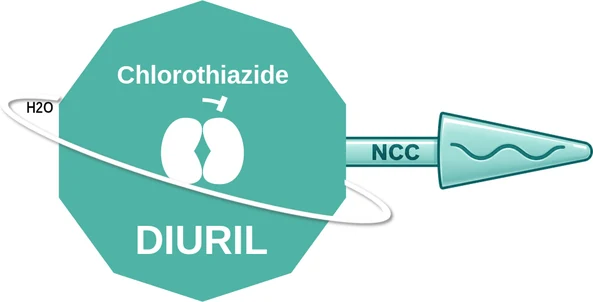
What it isThiazide diuretic that inhibits the distal convoluted-tubule Na/Cl cotransporter; treats hypertension and edema.
Why this oneThe IV formulation is useful when enteral absorption is impossible, and the short action allows rapid adjustment.
What limits itWeak effect in advanced renal failure and frequent hyponatremia, hypokalemia, volume depletion, and hyperuricemia; avoid combining with lithium.
FDA-approved for
- hypertension/edema (1958)
FDA label
Read the full label on DailyMed ↗
| FDA dosing | Population | Start | Target | Max |
|---|---|---|---|---|
| Edema / hypertension | Adult | 500 mg-1 g IV QD or BID | 500 mg-1 g QD-BID (intermittent dosing option: alternate days or 3-5 days/week) |
Renal Use with caution in severe renal disease — may precipitate azotemia; cumulative effects in impairment; consider withholding/discontinuing if progressive renal impairment
Hepatic Use with caution in impaired hepatic function or progressive liver disease — may precipitate hepatic coma
Instructions
- Reserve IV for patients unable to take oral medication or emergencies
- Reconstitute with >=18 mL Sterile Water for Injection (final 28 mg/mL); give slow IV push or infusion
- Avoid extravasation; do NOT give subcutaneously or intramuscularly
- IV use in infants/children not generally recommended
- Switch to oral tablets/suspension at same dosage when tolerated
Contraindications
- Anuria
- Hypersensitivity to sulfonamide-derived drugs
Cautions
- Fluid/electrolyte imbalance (hyponatremia, hypochloremic alkalosis, hypokalemia) — periodic serum electrolytes; hypokalemia may cause arrhythmias and sensitize to digitalis toxicity.
- Use with caution in severe renal disease — may precipitate azotemia; cumulative effects in renal impairment.
- Use with caution in impaired hepatic function/progressive liver disease — minor fluid/electrolyte shifts may precipitate hepatic coma.
- May add to or potentiate other antihypertensives; lithium generally should not be given with diuretics.
- Sensitivity reactions with or without allergy/asthma history; possible exacerbation or activation of systemic lupus erythematosus.
- Hyperuricemia/acute gout; hyperglycemia — latent diabetes may become manifest (antidiabetic dose adjustment may be needed).
- Hypomagnesemia; decreased calcium excretion (marked hypercalcemia may indicate hidden hyperparathyroidism — stop before parathyroid tests).
- IV use in infants and children not generally recommended.
Adverse reactions
- Electrolyte imbalance
- Orthostatic hypotension
- Pancreatitis; cholestatic jaundice
- Blood dyscrasias
- Anaphylaxis/necrotizing angiitis
- Photosensitivity
- Hyperglycemia/glycosuria
- Hyperuricemia
- Renal failure/interstitial nephritis
- Erythema multiforme (SJS)/TEN
Pregnancy Category C; thiazides cross placenta; may cause fetal/neonatal jaundice and thrombocytopenia; use only if clearly needed
Lactation Potential for serious adverse reactions in nursing infants — decide whether to discontinue nursing or drug, weighing importance of drug to mother.
NO BOXED WARNINGS
Principal risksevere sodium and potassium depletion
Cost, est. cash$300–$2,500/month
Generic entry1982
Classes and tags
Clinical profile
Legacy pregnancy categoryB
Defining liabilityHyponatremia, hypokalemia and substantial elevation of lithium concentrations.
Mechanism of action: Chlorothiazide ballicule
Open Chlorothiazide in the interactive console ↗
Memory aids: mascots and interaction avatars

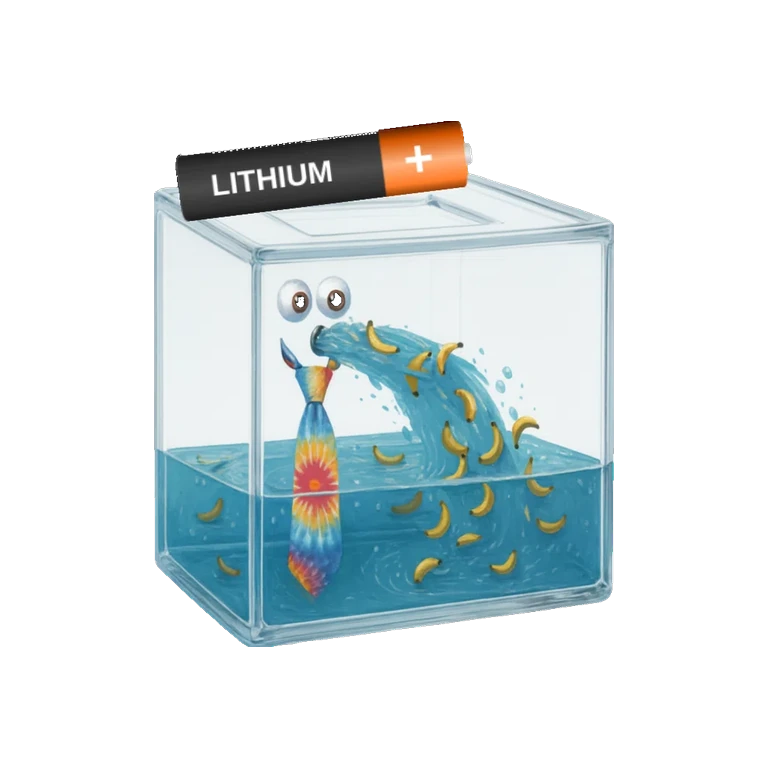
Bananas dispersing → ↓ serum potassium