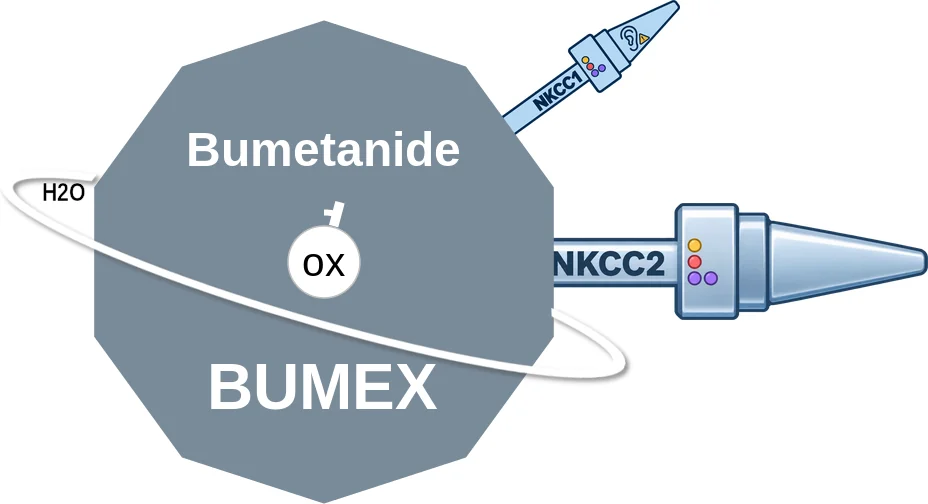
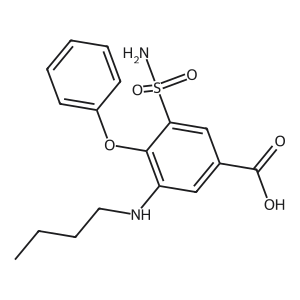
Bumetanide
BUMEX
Pronunciation: byoo-MET-a-nide
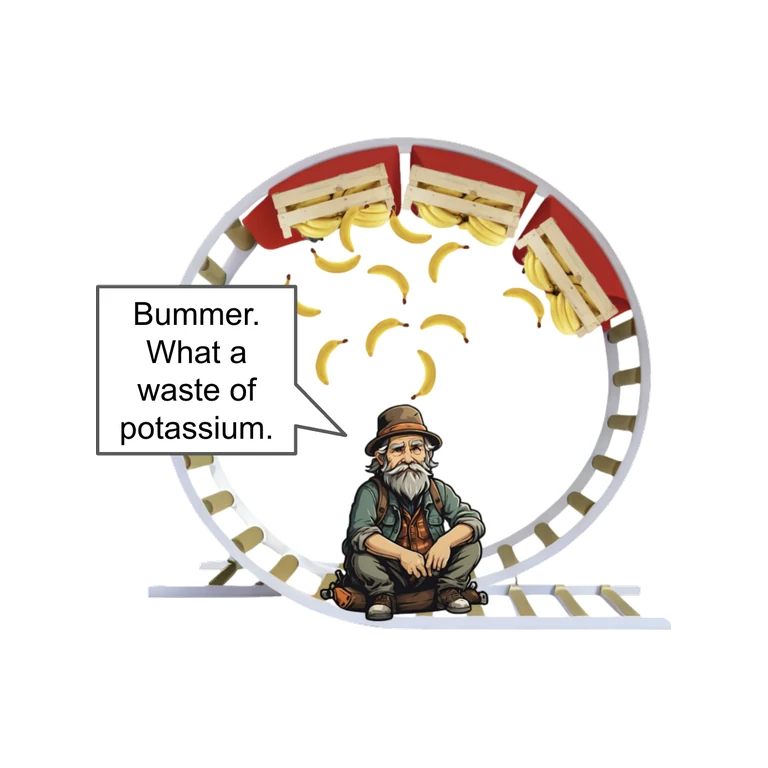
“Bum Bummer”
Bananas dispersing → ↓ serum potassium
What it isNKCC2-inhibiting loop diuretic; edema and volume overload in heart failure or kidney disease.
Why this oneOral bioavailability near 80%, far more reliable than furosemide, and it is about 40 times more potent milligram for milligram.
What limits itSame electrolyte losses as the class. The potency ratio is the usual source of dosing error when converting from furosemide.
Bumetanide prescription history
Animated chart of estimated U.S. prescriptions per year, Diuretics (1953–2026). Bumetanide enters in 1983 (estimated).
FDA-approved for
- edema (1983)
Principal riskVolume depletion with hypokalemia
Sulfonamide
Sulfonamide-derived drug (non-antibacterial) — label warns
No N4 aromatic amine, no N1 heterocycle: cross-reactivity after a sulfonamide-antimicrobial reaction is unlikely — sulfa-allergic patients reacted to sulfonamide non-antibiotics at 9.9% vs 1.6%, less often than to penicillin. The label warns anyway. Ethacrynic acid is the loop diuretic without a sulfonamide.
Open the sulfonamide hypersensitivity presentation → · sources [n] are on its References slide.
Classes and tags
Clinical profile
Legacy pregnancy categoryC
Defining liabilityVolume depletion, electrolyte loss, kidney injury and ototoxicity at high exposure.
FDA label
Read the full label on DailyMed ↗
| FDA dosing | Population | Start | Target | Max |
|---|---|---|---|---|
| Edema | Adults | 0.5–2 mg QD | 0.5–2 mg QD (single dose) | 10 mg/day |
Renal Contraindicated in anuria; discontinue if marked rise in BUN/creatinine or oliguria in progressive renal disease
Hepatic Keep dosage to a minimum in hepatic failure
If initial dose inadequate, a 2nd or 3rd dose may be given at 4–5 hour intervals up to max 10 mg/day
Instructions
- Individualize dose with careful monitoring of response and electrolytes
- Intermittent schedule (alternate days, or 3–4 days on with 1–2 day rest) recommended for continued edema control
- Bumetanide:furosemide substitution ratio approximately 1:40
- May be given IV/IM when oral not practical; switch to oral as soon as possible
Available strengths
- tab 0.5, 1, 2 mg
- inj 0.25 mg/mL
- nasal spray 500 mcg/spray
Contraindications
- Anuria
- Hepatic coma or severe electrolyte depletion (until corrected)
Cautions
- Profound diuresis with fluid/electrolyte depletion
- Ototoxicity (impaired hearing)
- Serious skin reactions (SJS, TEN)
- Electrolyte abnormalities: hypokalemia, hyponatremia, hypochloremia, azotemia, hyperuricemia
Adverse reactions
- Muscle cramps
- Dizziness
- Hypotension
- Headache
- Nausea
- Encephalopathy (in pre-existing liver disease)
Pregnancy No adequate human studies; use only if potential benefit justifies fetal risk
Lactation Undefined
Cost
Generic entry1994
Open Bumetanide in the interactive console ↗
Self-check
- How does bumetanide potency compare with furosemide milligram for milligram?
About 40 times greater. - What oral bioavailability is stated for bumetanide?
Near 80%.