Baxdrostat
BAXFENDY
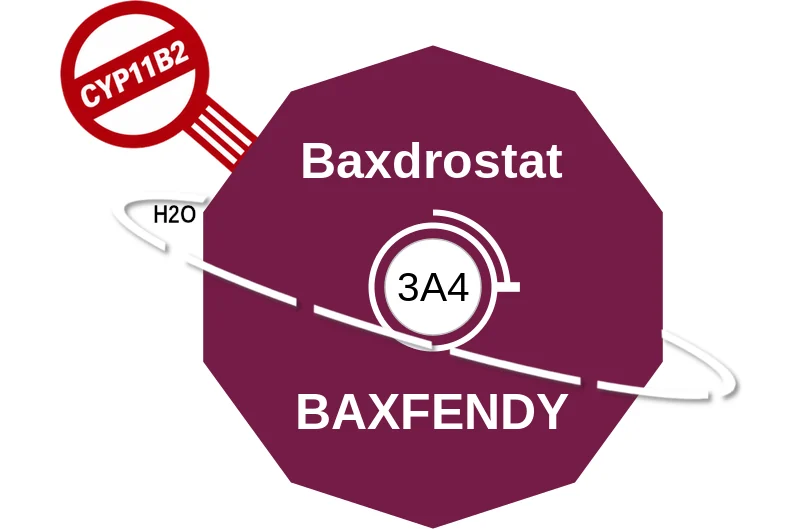

“Backster’s fender static”
What it isAldosterone synthase inhibitor; resistant hypertension.
Why this oneBlocks aldosterone production rather than its receptor, avoiding spironolactone's antiandrogen effects.
What limits itHyperkalemia requires monitoring and combination with other potassium-raising drugs needs caution; long-term outcome data remain limited.
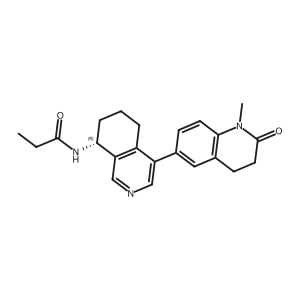
FDA-approved for
- hypertension (2026)
Principal riskHyperkalemia; limited long-term data
Classes and tags
Clinical profile
Legacy pregnancy categoryNot assigned — PLLR-era drug
Defining liabilityGenerally tolerated at therapeutic doses; clinically important risks are agent-specific and increase with interactions or organ impairment.
FDA label
Read the full label on DailyMed ↗
NO BOXED WARNINGS
| FDA dosing | Population | Start | Target | Max |
|---|---|---|---|---|
| Hypertension not adequately controlled (add-on) | Adult | 2 mg QD (1 mg QD if increased risk of hyperkalemia or hyponatremia) | 2 mg QD | 2 mg QD |
Renal No adjustment if eGFR ≥45 mL/min (unless at increased hyperkalemia risk); not established for eGFR <45
Hepatic Undefined
Instructions
- Swallow tablets whole; do not cut, crush, or chew
- Take with or without food
- Correct serum potassium and sodium abnormalities before initiation
- Do not take a double dose if a dose is missed
Available strengths
- tab 1, 2 mg
Cautions
- Hyperkalemia — assess serum potassium before and during treatment; monitor more often if at risk (≥65 y, diabetes, CKD, K-raising drugs)
- Hyponatremia — assess serum sodium before and during treatment
- Decrease in eGFR (hemodynamic; reversible after discontinuation)
Adverse reactions
- Hyperkalemia (10%)
- Hypotension (4%)
- Hyponatremia (3%)
- Dizziness (3%)
- Muscle spasms (3%)
Pregnancy No human data; animal embryo-fetal toxicity at high exposures; clinical significance unclear
Lactation No human data; baxdrostat transfers to rat milk
Cost
| Strength | #/mo | generic $/mo | CostPlus | |
|---|---|---|---|---|
| 1 mg | tab | 30 qd | not offered | |
| 2 mg | tab | 30 qd | not offered |
Generic entry2040 est.
Open Baxdrostat in the interactive console ↗
Memory aids: interaction avatars
Open Baxdrostat in the interactive console ↗
Self-check
- How does baxdrostat differ from spironolactone’s target?
Blocks aldosterone production, not its receptor. - What electrolyte requires monitoring with baxdrostat?
Potassium; hyperkalemia risk.