Hypothyroidism
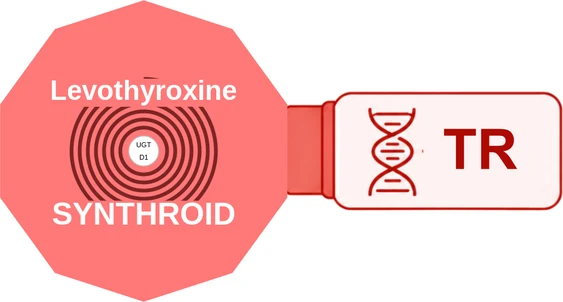
- Levothyroxine is standard replacement
- Dose by age, weight, pregnancy + cardiac status
- Check TSH ~6–8 weeks after dose change
- Take consistently apart from iron/calcium
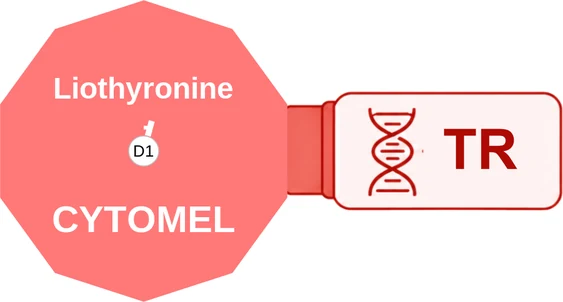
- Most patients do not benefit from routine T3
- Pregnancy needs early dose adjustment
- Avoid treating normal TSH symptoms with excess T4
Use at a glance
- Levothyroxine is standard replacement
Practical pearls
- Take consistently apart from iron/calcium
Other practical pearls
- Dose by age, weight, pregnancy + cardiac status
- Pregnancy needs early dose adjustment
Safety / pitfalls
- Check TSH ~6–8 weeks after dose change
- Most patients do not benefit from routine T3
- Avoid treating normal TSH symptoms with excess T4
Key points
- LT4 drug of choice; full dose 1.5-1.8 mcg/kg/day (~100-125 mcg/day at 70 kg)
- Range 50 to ≥200 mcg/day; lower doses if older or coronary heart disease
- Water, empty stomach, 60 min before breakfast; goal TSH 0.4-4.5 mIU/L
- Recheck TSH 6 wk after start/dose change; stable → q6-12 months
- Symptomatic despite LT4 + normal TSH: LT4 + liothyronine (LT3) option, evidence weak
- Healthy older adults, TSH above range, normal free T4: LT4 may not help
- Subclinical: ≥65 treat TSH ≥10 (consider 7-9.9); <65 treat ≥7 (consider 4.5-6.9 if symptomatic)
Nonpharmacologic therapies
- Thyroid function monitoring
- Avoid soy, fiber, coffee
Pearls
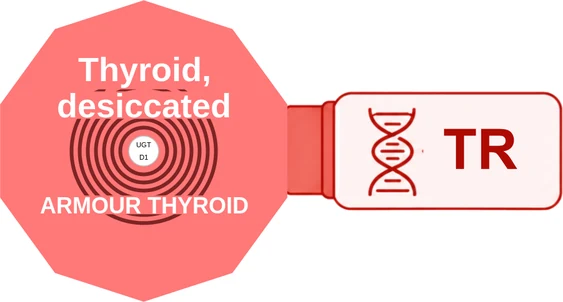
- Desiccated thyroid: no advantage over levothyroxine
Self-check
- What is checked after a hypothyroidism dose change, and when?
TSH ~6–8 weeks after dose change. - What does pregnancy require in hypothyroidism management?
Early dose adjustment.
Drugs used for this (3)
All clinical uses · Open Hypothyroidism in the interactive console ↗