Keppra rage
Keppra rage (levetiracetam irritability and aggression)
- Mechanism unknown
- The other SV2A modulator (brivaracetam) does not cause prominent irritability
- Pyridoxine hypothesis: levetiracetam may interfere with vitamin B6 metabolism → ↓ GABA synthesis → ↓ inhibitory tone
What Keppra rage is
Irritability, anger, aggression and mood change on levetiracetam
- Irritability, hostility, aggression, anxiety and depression — the most common reason levetiracetam is stopped [3]
- About one patient in seven; largely independent of dose [2][3]
- More likely with a prior psychiatric history, intellectual disability or fast titration [3][4]
- Usually appears in the first weeks and reverses on withdrawal [3]
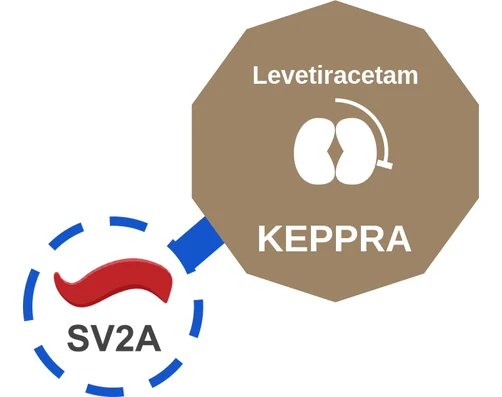
How common — the numbers
Levetiracetam vs brivaracetam, the same target
- Pooled data: aggression 4.2% vs 1.2%, irritability 6.2% vs 2.5%, nervousness 3.2% vs 0.7% (levetiracetam vs brivaracetam) [2]
- Epi2020 (486 adults): levetiracetam correlated with aggression, nervousness, restlessness and depression on the Liverpool Adverse Events Profile; brivaracetam correlated negatively with all of them [1]
- Mean adverse-event score 41.9 on levetiracetam vs 35.9 on brivaracetam [1]
- Switching to brivaracetam resolves the behavioral effects in roughly two thirds [4]
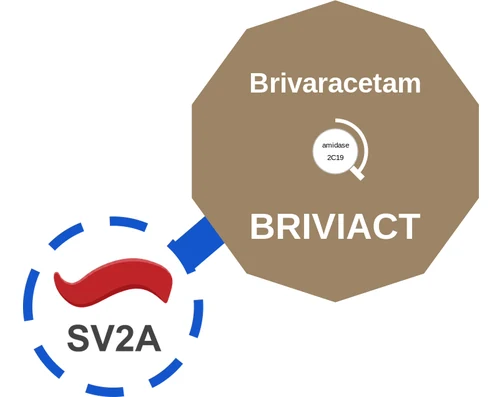
Mechanism unknown
Even the antiseizure mechanism is not fully characterized [12]
- Levetiracetam’s target is SV2A, a synaptic-vesicle protein involved in calcium-dependent transmitter release; binding damps epileptiform bursting without changing normal excitability [12]
- SV2A sits on GABA and glutamate terminals alike — the same action that stops seizures can shift the excitatory–inhibitory balance in limbic and prefrontal circuits that govern mood and impulse control [3][13]
- No single validated mechanism explains the behavioral effect; three hypotheses follow
Hypothesis 1 — SV2A engagement in normal brain
Where the drug binds may matter as much as what it binds
- SV2A is expressed throughout the brain, not only at the seizure focus [13]
- In glioma patients, tumors with LOW SV2A expression left more drug to bind normal peritumoral brain — and neuropsychiatric adverse events were far more frequent; high tumoral SV2A appeared protective [6]
- Consistent with the behavioral effect arising from SV2A engagement in healthy limbic and cortical circuitry [6]
Hypothesis 2 — off-target AMPA modulation
Levetiracetam does more than bind SV2A
- Levetiracetam also negatively modulates postsynaptic AMPA glutamate receptors, opposes negative modulators of GABA and glycine currents, and partially inhibits N-type calcium channels [3][12]
- The leading synthesis: SV2A binding plus this GABA/glutamate modulation is what raises aggression above other antiseizure drugs [3]
- Perampanel, a selective AMPA antagonist, also causes aggression — support for glutamate modulation as the culprit, though the region- and dose-dependence is complex [1][3]
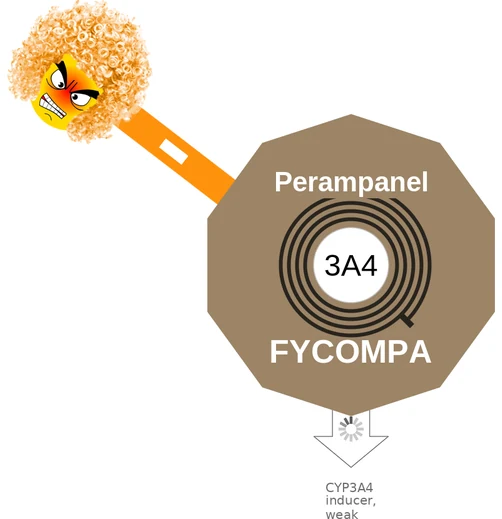
The brivaracetam contrast
The most informative single piece of evidence
- Brivaracetam binds SV2A 15–30× more tightly than levetiracetam and lacks the AMPA action [3][13]
- If SV2A occupancy alone drove aggression, the higher-affinity drug should be worse; it is gentler — pointing at the non-SV2A actions [3]
- Rat model: levetiracetam-treated animals attacked twice as fast and showed five times more aggressive behaviors than controls; brivaracetam-treated animals behaved like saline [5]
- Indirect meta-analytic comparisons have not reached significance, so the difference is consistent rather than proven [2]
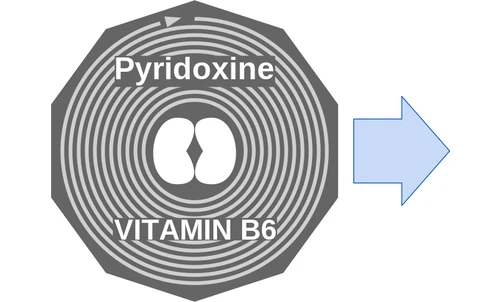
Hypothesis 3 — pyridoxine (vitamin B6)
Less cofactor, less GABA?
- Pyridoxal-5-phosphate is the cofactor of glutamic acid decarboxylase, the enzyme that makes GABA [7][8]
- Proposed: levetiracetam interferes with pyridoxine metabolism → ↓ GABA synthesis → ↓ inhibitory tone → irritability [7][8]
- Retrospective series: about 72% improved on adjunctive pyridoxine [7]
- The randomized trials missed their primary between-group endpoints, with secondary analyses favoring pyridoxine [9][10][11]
- Biologically plausible; unproven
What to do about it
Practical handling
- Screen for psychiatric history before starting; warn the patient and family what to watch for [3]
- Titrate slowly; behavioral effects are largely dose-independent, so dose reduction helps less than expected [2][3]
- Adjunctive pyridoxine is low-risk with mixed evidence [8]
- Switching to brivaracetam is the intervention with the best evidence and can be done overnight [1][4]
Behavioral side effects across antiseizure drugs
Epi2020 adverse-event profiles [1] and the class review [3]
- Perampanel (AMPA antagonist): the least tolerated — aggression, nervousness and the highest overall adverse-event burden; the only independent drug predictor of a poor profile [1][3]
- Levetiracetam: aggression, nervousness, restlessness, depression [1]
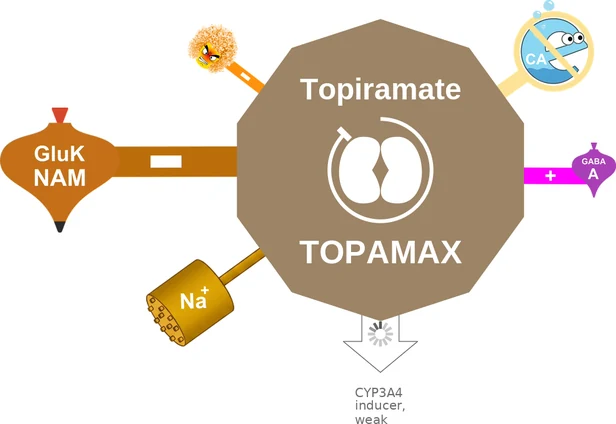
- Topiramate and zonisamide: concentration and memory problems, word-finding difficulty, depression; psychosis rarely [1][3]
- Phenobarbital and primidone: depression; hyperactivity in children [3]
- Benzodiazepines: disinhibition and paradoxical agitation, mostly in children and the elderly [3]
- Valproate: tremor, hair loss, weight gain — but mood-stabilizing, not behaviorally toxic [1]
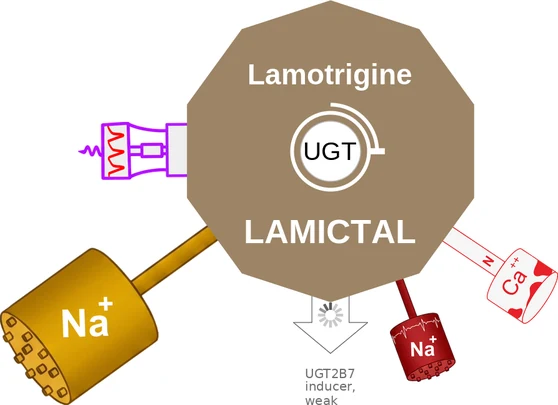
- Lamotrigine, lacosamide, carbamazepine, oxcarbazepine and brivaracetam: favorable behavioral profiles (lamotrigine: concentration and skin; carbamazepine family: memory) [1]
References
Numbered as cited on the slides
- [1] Willems LM, et al. Adverse event profiles of antiseizure medications and the impact of coadministration on drug tolerability in adults with epilepsy (Epi2020). CNS Drugs 2023;37:531–544
- [2] Fröling E, et al. Reassessing the adverse event profiles of levetiracetam and brivaracetam: a systematic review and meta-analysis. J Neurol 2026
- [3] Lyndon S, Dworetzky BA, Baslet G. Psychiatric and behavioural side effects of antiseizure medications in epilepsy. J Neurol 2025
- [4] Watkins LV, et al. Rapid switching from levetiracetam to brivaracetam in pharmaco-resistant epilepsy: a naturalistic case control study. J Neurol 2023
- [5] Sanon NT, et al. Favorable adverse effect profile of brivaracetam vs levetiracetam in a preclinical model. Epilepsy Behav 2018
- [6] Romoli M, et al. Synaptic vesicle protein 2A tumoral expression predicts levetiracetam adverse events. J Neurol 2019
- [7] Romoli M, Perucca E, Sen A. Pyridoxine supplementation for levetiracetam-related neuropsychiatric adverse events: a systematic review. Epilepsy Behav 2020
- [8] Besag FMC, Vasey MJ, Sen A. Current evidence for adjunct pyridoxine (vitamin B6) for the treatment of behavioral adverse effects associated with levetiracetam: a systematic review. Epilepsy Behav 2023
- [9] Mahmoud A, et al. Amelioration of levetiracetam-induced behavioral side effects by pyridoxine: a randomized double-blind controlled study. Pediatr Neurol 2021
- [10] Cheraghmakani H, et al. Pyridoxine for treatment of levetiracetam-induced behavioral adverse events: a randomized double-blind placebo-controlled trial. Epilepsy Behav 2022
- [11] Thananowan P, et al. Pyridoxine supplementation for levetiracetam-related neuropsychiatric adverse events in pediatric and adolescent epilepsy: a prospective, double-blind, randomized, placebo-controlled trial. Epilepsy Behav 2025
- [12] Levetiracetam prescribing information (DailyMed): the mechanism of the antiepileptic effect is unknown
- [13] Strzelczyk A, Schubert-Bast S. Psychobehavioural and cognitive adverse events of anti-seizure medications for the treatment of developmental and epileptic encephalopathies. CNS Drugs 2022
Drugs with this mechanism (1)
- Levetiracetam — Widely used, kinetically clean anticonvulsant; irritability and mood effects common.
All mechanisms · Open Keppra rage in the interactive console ↗