UGT2B15 interactions
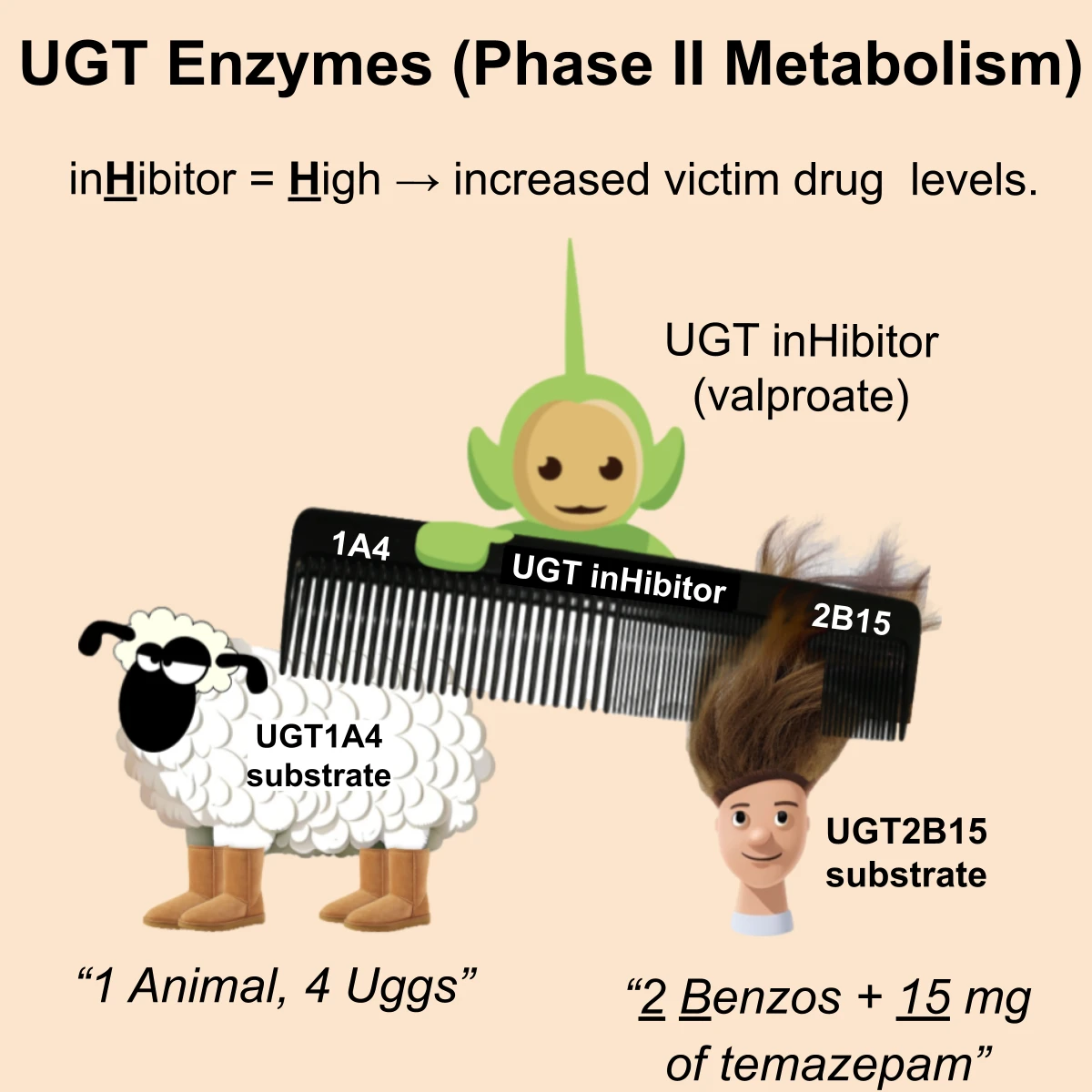
UGT2B15 glucuronidates lorazepam, oxazepam and temazepam — the three benzodiazepines that need no CYP enzyme at all.
Conjugation is a single step to an inactive, water-soluble metabolite, with no oxidation first and no active intermediates. That is why these three are the benzodiazepines of choice in liver disease and in the frail elderly: their clearance is comparatively preserved when oxidative capacity is not, and nothing accumulates behind them. Their initials spell LOT, which is the usual way the group is remembered.
The same reasoning explains their absence from the CYP interaction pages. A patient on several CYP3A4 or CYP2C19 perturbers can generally be given lorazepam without recalculating anything.
The one interaction that does apply is valproate, shown here as divalproex, a moderate UGT2B15 inhibitor. It raises lorazepam exposure, and the labeled advice is to reduce the lorazepam dose by about half when the two are combined, and to watch for added sedation.
UGT2B15 inhibitors (1)

UGT2B15 inhibitor