BCRP interactions
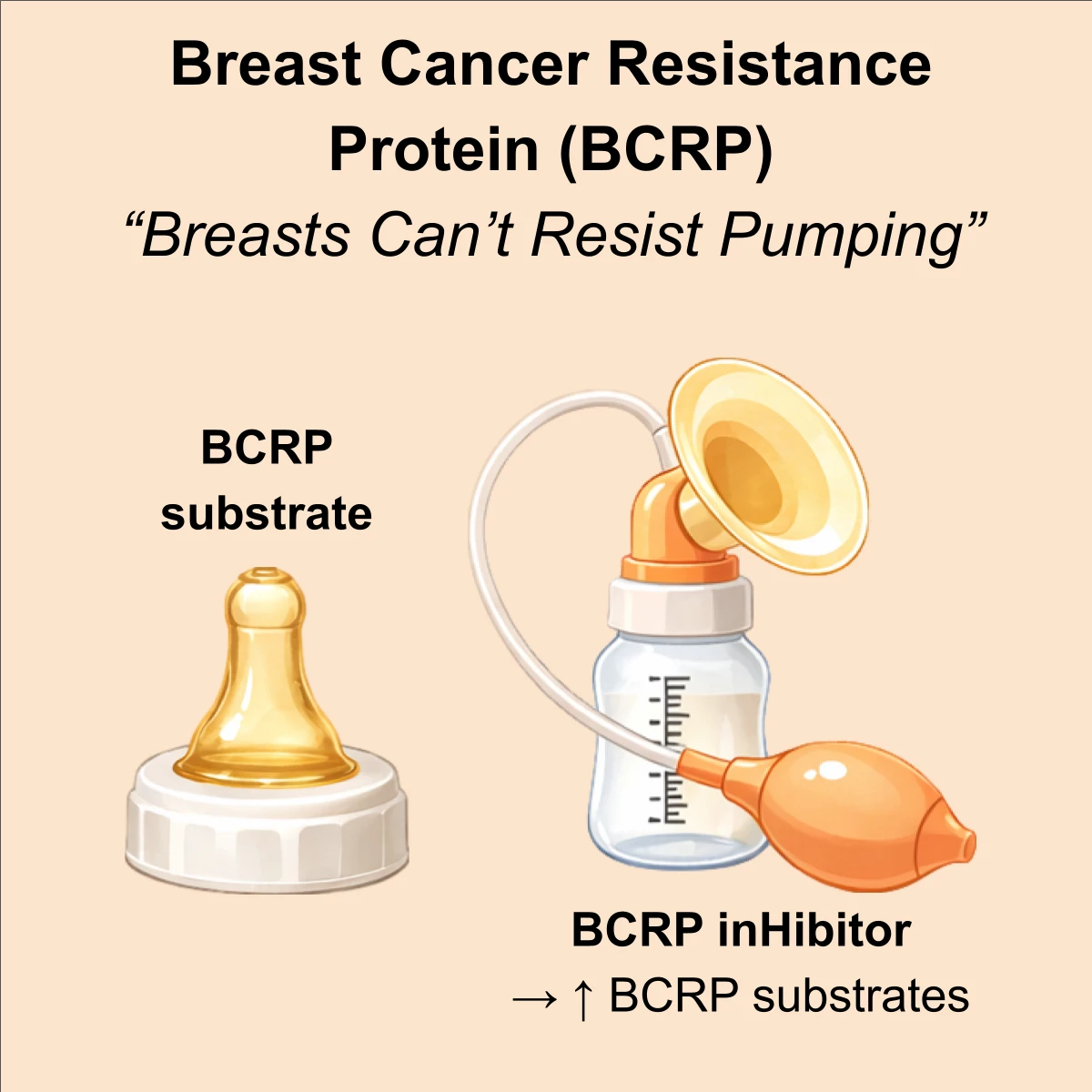
BCRP is an efflux pump in the gut wall, liver, kidney and blood–brain barrier — and rosuvastatin is the substrate where blocking it shows up.
Because most of the clinically relevant BCRP sits at the apical membrane of the intestine, inhibition mainly raises exposure to orally dosed substrates.
Cyclosporine is the inhibitor that matters most, and it is a double hit: it blocks BCRP efflux and OATP1B1 hepatic uptake at the same time, raising rosuvastatin exposure roughly sevenfold and with it the risk of myopathy. Imatinib, dasatinib and the hepatitis C agents ledipasvir and velpatasvir are the other inhibitors shown.
Colchicine, sulfasalazine and topotecan are the remaining substrates. Sulfasalazine depends on BCRP more completely than the others, so its exposure moves furthest when the pump is inhibited.
BCRP rarely matters in psychiatric prescribing. Most psychotropics are lipophilic enough to cross the blood–brain barrier by passive diffusion rather than being transporter-limited, so BCRP at the barrier seldom changes their CNS exposure.
BCRP inhibitors (5)

BCRP inhibitor

BCRP inhibitor

BCRP inhibitor

BCRP inhibitor

BCRP inhibitor