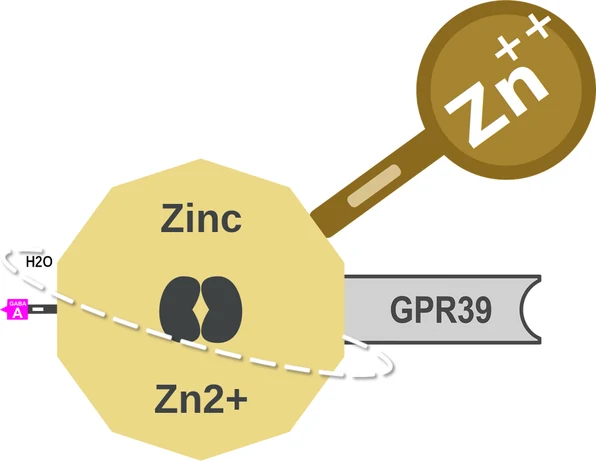
Zinc
Zn2+
What it isEssential trace element with NMDA, GPR39, and GABA-A effects; deficiency replacement and Wilson disease.
Why this oneIn Wilson disease it induces intestinal metallothionein, blocking copper absorption without chelation.
What limits itChronic excess causes copper deficiency with anemia and myeloneuropathy; it also reduces quinolone and tetracycline absorption.
FDA label
Read the full label on DailyMed ↗
| FDA dosing | Population | Start | Target | Max |
|---|---|---|---|---|
| Zinc source in parenteral nutrition (oral/enteral not possible, insufficient, or contraindicated) | Adults | 3 mg/day IV (in PN admixture) | 3 mg/day; higher daily dose may be needed (monitored) with small-bowel fluid loss, excess stool, or ileostomy output | Individualized |
| Zinc source in parenteral nutrition | Peds ≥10 kg | 50 mcg/kg/day IV | 50 mcg/kg/day | 3 mg/day |
| Zinc source in parenteral nutrition | Peds 5 to <10 kg | 100 mcg/kg/day IV | 100 mcg/kg/day | Individualized |
| Zinc source in parenteral nutrition | Term neonates 3 to <5 kg | 250 mcg/kg/day IV (higher needs first 3 months of life) | 250 mcg/kg/day | Individualized |
| Zinc source in parenteral nutrition | Preterm neonates <3 kg | 400 mcg/kg/day IV | 400 mcg/kg/day | Individualized |
Renal Undefined
Hepatic Undefined
Individualize by clinical condition, nutritional requirements, and oral/enteral zinc intake
Instructions
- NOT for direct IV infusion — pharmacy bulk package; must be diluted and admixed into a parenteral nutrition solution before infusion
- Final PN solutions ≥900 mOsmol/L must infuse through a central catheter
- 1 mg/mL concentration recommended for pediatric patients, especially <12 kg
- Correct severe fluid, electrolyte, and acid-base disorders before administration
- Monitor zinc concentrations and signs/symptoms of zinc deficiency (hemolyzed samples falsely elevate zinc)
Cautions
- Pulmonary embolism from pulmonary vascular precipitates in PN — stop infusion if pulmonary distress
- Vein damage/thrombosis: ≥900 mOsmol/L solutions require central catheter
- Aluminum toxicity risk with prolonged use in renal impairment, incl. preterm infants (keep total Al ≤5 mcg/kg/day)
- Copper deficiency (anemia, cytopenias, myeloneuropathy) with prolonged high-dose zinc — check zinc/copper/ceruloplasmin if suspected
- Hypersensitivity reactions — discontinue if they occur
- Monitor fluid/electrolytes, serum osmolarity, glucose, liver and kidney function, blood count, coagulation throughout treatment
Adverse reactions
- No zinc-related adverse reactions reported within recommended dosage range
- PN-associated: pulmonary embolism (vascular precipitates), vein damage/thrombosis, aluminum toxicity
- Other-route zinc products: copper deficiency, hypersensitivity reactions
Pregnancy Recommended doses in PN not expected to cause major birth defects or adverse maternal/fetal outcomes; zinc deficiency itself is associated with adverse pregnancy outcomes
Lactation Zinc present in human milk; recommended doses not expected to harm a breastfed infant
NO BOXED WARNINGS
Principal riskChronic excess causes COPPER deficiency with anemia and myeloneuropathy
Classes and tags
Clinical profile
Mechanism of action: Zinc ballicule