Trimethobenzamide
TIGAN
What it isCentrally acting antiemetic, probably through chemoreceptor-trigger-zone dopamine antagonism; used in adults for postoperative nausea and vomiting and gastroenteritis-associated nausea.
Why this oneAn alternative when common antiemetics are ineffective or contraindicated, though evidence and use are limited.
What limits itDrowsiness and acute dystonic or other extrapyramidal reactions limit use; avoid pediatric use and reduce dosing when renal clearance is impaired.
FDA-approved for
- nausea (~1959)
FDA label
Read the full label on DailyMed ↗
| FDA dosing | Population | Start | Target | Max |
|---|---|---|---|---|
| Nausea and vomiting | Adults | 300 mg TID–QID | 300 mg TID–QID | 1200 mg/day |
Renal CrCl ≤70 mL/min/1.73m2: reduce daily dose by increasing the dosing interval; monitor renal function
Hepatic Avoid in suspected hepatic impairment (hepatotoxicity risk); discontinue if impaired liver function develops
Instructions
- Oral; select the lowest effective daily dosage and adjust to response/tolerability
Cautions
- Acute dystonic reactions/EPS — reduce dose or discontinue; avoid with other EPS-causing drugs
- May mask CNS signs of undiagnosed disease (e.g., encephalopathy, Reye's syndrome)
- Other serious CNS reactions: coma, mood depression, disorientation, seizures
- Hepatotoxicity — avoid in hepatic impairment, discontinue if liver function worsens
- Drowsiness — may impair driving/operating machinery
Adverse reactions
- Parkinson-like symptoms
- Drowsiness, dizziness, headache
- Blurred vision
- Diarrhea, muscle cramps
- Jaundice
- Blood dyscrasias
- Hypersensitivity (angioedema, skin reactions)
Pregnancy Limited human data insufficient to assess risk; no adverse developmental effects in animal studies
Lactation No human data; weigh benefits of breastfeeding against maternal need
NO BOXED WARNINGS
Principal riskacute dystonia and other extrapyramidal reactions
Cost, est. cash$300–$5,000/dose or month
Generic entry1982
Classes and tags
Clinical profile
Legacy pregnancy categoryB
Defining liabilityGenerally tolerated at therapeutic doses; clinically important risks are agent-specific and increase with interactions or organ impairment.
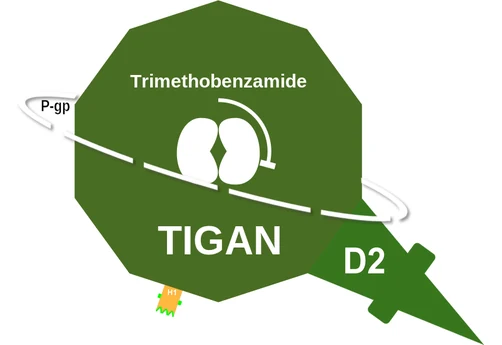
Mechanism of action: Trimethobenzamide ballicule
Open Trimethobenzamide in the interactive console ↗
Memory aids: mascots and interaction avatars

rainbow spray → antiemetic