Thioridazine
MELLARIL
What it isLow-potency first-generation antipsychotic blocking D2, H1, muscarinic, alpha-1, and hERG channels; refractory schizophrenia.
Why this oneLower EPS than with high-potency typicals could not offset its unusually unfavorable cardiac and retinal safety profile.
What limits itQT prolongation and torsades demand ECG and CYP2D6 review; high exposure can cause irreversible retinal pigmentation.
FDA-approved for
- schizophrenia (~1962)
FDA label
Read the full label on DailyMed ↗
| FDA dosing | Population | Start | Target | Max |
|---|---|---|---|---|
| Schizophrenia (refractory to other antipsychotics) | Adults | 50–100 mg TID | 200–800 mg/day divided BID–QID | 800 mg/day |
| Schizophrenia (refractory) in pediatric patients | Pediatric | 0.5 mg/kg/day in divided doses | Titrate to optimum effect | 3 mg/kg/day |
Renal Undefined
Hepatic Undefined
Maximum 800 mg/day (adults); 3 mg/kg/day (pediatric)
Instructions
- Reserve for patients who fail other antipsychotics due to QTc/Torsades risk
- Individualize to the smallest effective dose
- Avoid with QTc-prolonging drugs and with CYP2D6 inhibitors
- After control, reduce gradually to minimum maintenance dose
Contraindications
- Concomitant use with other QTc-prolonging drugs; congenital long QT syndrome or history of cardiac arrhythmias
- Drugs that inhibit CYP2D6 (e.g., fluoxetine, paroxetine, fluvoxamine, propranolol, pindolol), and patients who are CYP2D6 poor metabolizers
- Severe CNS depression or comatose states from any cause (including drug-induced)
- Hypertensive or hypotensive heart disease of extreme degree
Cautions
- QTc prolongation, Torsades de pointes, sudden death
- Increased mortality in elderly patients with dementia-related psychosis
- Tardive dyskinesia
- Neuroleptic malignant syndrome
- Extrapyramidal symptoms
- Sedation
- Hyperprolactinemia / endocrine effects
- Pigmentary skin-eye changes with long-term use
Adverse reactions
- Drowsiness
- Extrapyramidal symptoms / pseudoparkinsonism
- Dry mouth
- Blurred vision
- Constipation
- Galactorrhea / breast engorgement / amenorrhea
- QTc prolongation
Pregnancy Third-trimester exposure risks neonatal extrapyramidal/withdrawal symptoms; use only if potential benefit justifies potential fetal risk
Lactation Undefined
⚠ BOXED WARNINGS
- QT prolongation and torsades de pointes
- Increased mortality in elderly patients with dementia-related psychosis
Cost, est. cash$10–$300/month
Generic entry1983
Classes and tags
Clinical profile
Legacy pregnancy categoryC
Defining liabilityMetabolic effects, extrapyramidal symptoms/tardive dyskinesia and agent-specific QT or orthostatic risk.
Mechanism of action: Thioridazine ballicule
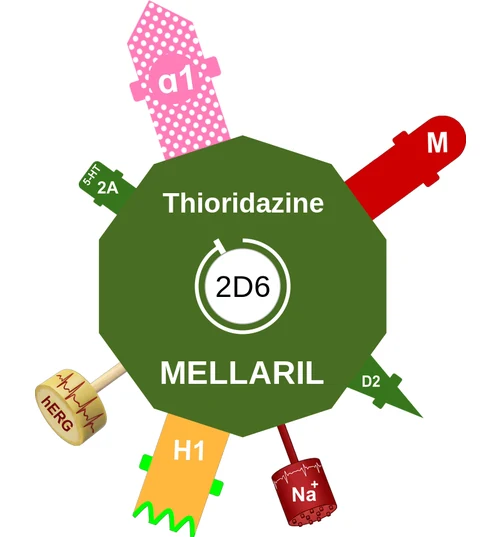
Open Thioridazine in the interactive console ↗
Memory aids: mascots and interaction avatars

Spooky mascot → antipsychotic
Polka dots on pink → α1 blocker → syncope if titrated too quickly (hit the floor)
QT prolongation