Sotalol
BETAPACE
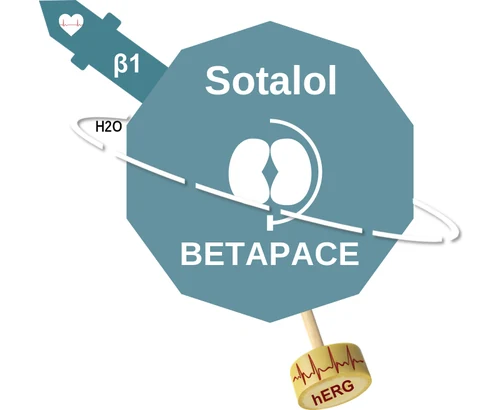
What it isBeta-1 antagonist with hERG blockade; atrial fibrillation and ventricular arrhythmias.
Why this oneUnlike ordinary beta blockers, hERG blockade adds rhythm maintenance — and substantial torsades risk.
What limits itInitiate with continuous ECG monitoring; renal clearance requires dose adjustment, and abrupt withdrawal is unsafe.
FDA-approved for
- ventricular arrhythmias (1992)
- atrial fibrillation (2000)
FDA label
Read the full label on DailyMed ↗
| FDA dosing | Population | Start | Target | Max |
|---|---|---|---|---|
| Ventricular arrhythmias | Adults | 80 mg BID | 160–320 mg/day (2–3 divided doses) | 320 mg/day (up to 480–640 mg/day in refractory cases) |
| Recurrence of AFIB/AFL | Adults | 80 mg BID | 120 mg BID | — |
| SVT/VT | Pediatric | Dose depends on age/BSA (e.g., 30/90/210 mg/m² q8h) | — | — |
Titration Increase in increments of 80 mg/day every 3 days (provided QTc <500 msec)
Renal Adjust the dosing interval based on creatinine clearance
Hepatic Undefined
Monitor QTc 2–4 hours after each dose uptitration; reduce dose or discontinue if QT ≥500 msec
Instructions
- Withdraw other antiarrhythmic therapy before starting
- Hospitalize for at least 3 days (or until steady state) on initiation/reinitiation with continuous ECG monitoring
- Correct hypokalemia and hypomagnesemia before initiating
- Do not abruptly discontinue (risk of coronary artery disease exacerbation)
- If a dose is missed, take the next dose at the usual time; do not double
Contraindications
- Sinus bradycardia, sick sinus syndrome, or 2nd/3rd degree AV block (unless a functioning pacemaker is present)
- Congenital or acquired long QT syndrome
- Cardiogenic shock or decompensated heart failure
- Serum potassium <4 mEq/L
- Bronchial asthma or related bronchospastic conditions
- Baseline QT interval >450 msec (for AFIB/AFL)
Cautions
- QT prolongation and proarrhythmia (Torsade de Pointes)
- Bradycardia / heart block / sick sinus syndrome
- Hypotension
- New-onset or worsening heart failure
- Do not abruptly discontinue (coronary artery disease exacerbation)
- May mask hypoglycemia symptoms or worsen hyperglycemia
- Correct electrolyte disturbances
Adverse reactions
- Fatigue
- Bradycardia (<50 bpm)
- Dyspnea
- Proarrhythmia
- Asthenia
- Dizziness
Pregnancy Crosses placenta; fetal risks incl. growth restriction, bradycardia, hypoglycemia, possible intrauterine death; monitor neonate for beta-blockade
Lactation Present in human milk at high levels; do not breastfeed during treatment
⚠ BOXED WARNING
- Initiate with continuous ECG monitoring; QT prolongation and torsades
Cost, est. cash$5–$150/month
Generic entry2000
Classes and tags
Clinical profile
Legacy pregnancy categoryC
Defining liabilityMarked QT prolongation and torsades risk require renal dosing and monitored initiation in many patients.
Mechanism of action: Sotalol ballicule
Open Sotalol in the interactive console ↗
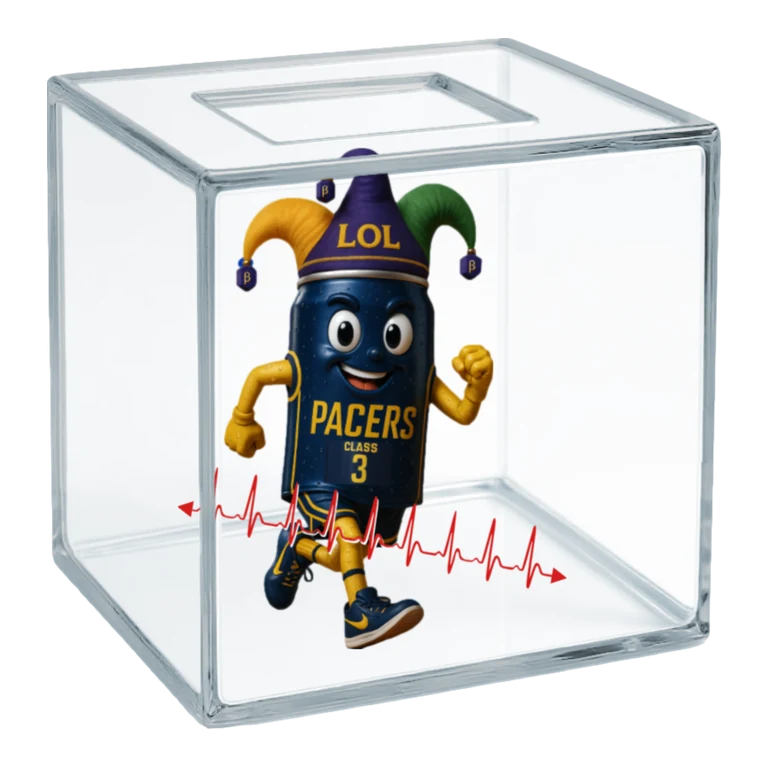
Memory aids: mascots and interaction avatars

LOL hat → beta blocker
QT prolongation