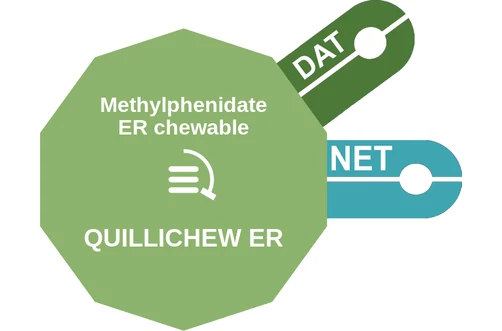
Methylphenidate ER chewable
QUILLICHEW ER
What it isExtended-release methylphenidate blocking dopamine and norepinephrine reuptake (QUILLICHEW ER, 2015); ADHD.
Why this oneThe chewable uses 30% IR / 70% ER, with 8-12 h (Carlat Table 1) of action.
What limits itAppetite loss, insomnia, cardiovascular stimulation, and abuse risk remain those of methylphenidate.
FDA-approved for
- ADHD (2015)
FDA label
Read the full label on DailyMed ↗
| FDA dosing | Population | Start | Target | Max |
|---|---|---|---|---|
| Attention deficit hyperactivity disorder (ADHD) | patients ≥6 years | 20 mg QD in the morning | titrate weekly by 10, 15, or 20 mg/day | 60 mg/day |
Titration Titrate weekly in increments of 10, 15, or 20 mg/day.
Renal Undefined
Hepatic Undefined
Not recommended in pediatric patients younger than 6 years.
Instructions
- Administer orally once daily in the morning, with or without food.
- Do not substitute for other methylphenidate products on a mg-per-mg basis.
- Screen for cardiac disease and for tics/Tourette's before initiating.
Contraindications
- Concurrent treatment with a monoamine oxidase inhibitor (MAOI), or use of an MAOI within the preceding 14 days, because of the risk of hypertensive crisis
Cautions
- Risks in serious cardiac disease
- Increased blood pressure and heart rate
- Psychiatric adverse reactions (new psychotic/manic symptoms)
- Priapism
- Peripheral vasculopathy including Raynaud's phenomenon
- Long-term growth suppression in pediatric patients
- Risks in phenylketonurics (contains phenylalanine)
- Acute angle-closure glaucoma
- Increased intraocular pressure
Adverse reactions
- Decreased appetite
- Insomnia
- Nausea
- Vomiting
- Dyspepsia
- Abdominal pain
- Weight decreased
- Anxiety
- Dizziness
- Irritability
- Affect lability
- Tachycardia
- Increased blood pressure
Pregnancy Limited data insufficient to inform drug-associated risk; no teratogenicity in animal studies at multiples of human dose.
Lactation Methylphenidate present in human milk (infant dose 0.16–0.7% of maternal weight-adjusted dose); monitor infant.
⚠ BOXED WARNING
- Abuse, misuse and addiction
Classes and tags
Clinical profile
Mechanism of action: Methylphenidate ER chewable ballicule
Open Methylphenidate ER chewable in the interactive console ↗
Memory aids: mascots and interaction avatars

Scantron → methylphenidate product
It’s chewable

Open Methylphenidate ER chewable in the interactive console ↗