Prochlorperazine
COMPAZINE
What it isPhenothiazine D2 antagonist; nausea, vomiting and vertigo.
Why this oneStrong central antiemetic effect and it works for migraine-associated nausea and the headache itself.
What limits itAcute dystonia, particularly in young patients, and akathisia is often mistaken for anxiety. Sedation and QT prolongation.
FDA-approved for
- nausea/vomiting (~1956)
Off-label
- migraine
FDA label
Read the full label on DailyMed ↗
| FDA dosing | Population | Start | Target | Max |
|---|---|---|---|---|
| Severe nausea and vomiting | Adults | 5 mg TID–QID (begin at lowest recommended dose) | 5–10 mg TID–QID | 40 mg/day; >40 mg/day only in resistant cases |
| Non-psychotic anxiety | Adults | 5 mg TID–QID | 5 mg TID–QID | 20 mg/day, for no longer than 12 weeks |
| Psychotic disorders incl. schizophrenia — mild (outpatient) | Adults | 5–10 mg TID–QID | 5–10 mg TID–QID | Increase gradually until symptoms controlled or side effects bothersome |
| Psychotic disorders incl. schizophrenia — moderate to severe (hospitalized/supervised) | Adults | 10 mg TID–QID | 50–75 mg/day; 100–150 mg/day in more severe disturbances | Increase gradually until symptoms controlled or side effects bothersome |
| Severe nausea and vomiting | Children 20–29 lb (≥2 yr) | 2.5 mg QD–BID | 2.5 mg QD–BID | 7.5 mg/day |
| Severe nausea and vomiting | Children 30–39 lb (≥2 yr) | 2.5 mg BID–TID | 2.5 mg BID–TID | 10 mg/day |
| Severe nausea and vomiting | Children 40–85 lb (≥2 yr) | 2.5 mg TID or 5 mg BID | 2.5 mg TID or 5 mg BID | 15 mg/day |
| Schizophrenia | Children 2–12 yr | 2.5 mg BID–TID; ≤10 mg on day 1 | Increase per response | Ages 2–5: usually ≤20 mg/day; ages 6–12: usually ≤25 mg/day |
Titration Psychotic disorders: increase in small increments every 2–3 days; increase more gradually in elderly, debilitated or emaciated patients.
Renal Undefined
Hepatic Undefined
Instructions
- Adjust dose to individual response and severity; begin at the lowest recommended dose.
- Elderly: use the lower end of the range and observe closely for hypotension and neuromuscular reactions; increase more gradually.
- Do not use in pediatric surgery.
- Children: use the lowest effective dose; do not exceed the prescribed dose. If restlessness or excitement occurs, do not give additional doses. Take particular care in children with acute illness or dehydration.
- Nausea/vomiting in children: more than 1 day of therapy is seldom necessary.
- Psychiatric use: response is usually seen within 1–2 days but longer treatment is needed for maximal improvement.
- Avoid abrupt discontinuation after long-term therapy — sudden withdrawal may cause transient nausea, vomiting, dizziness and tremulousness; taper.
- Stop the drug and do not reinstitute if extrapyramidal symptoms occur in children or in pregnant patients.
- Discontinue all antipsychotic agents if signs of tardive dyskinesia appear (fine vermicular tongue movements may be the earliest sign).
- Stop treatment if leukocyte depression is found, or if liver studies are abnormal after fever with grippe-like symptoms.
Contraindications
- Comatose states, or the presence of large amounts of CNS depressants (alcohol, barbiturates, narcotics, etc.).
- Pediatric surgery.
- Children under 2 years of age or under 20 lb.
- Children, for any condition for which a pediatric dosage has not been established.
Cautions
- Increased mortality in elderly patients with dementia-related psychosis — not approved for this use (boxed).
- Neuroleptic malignant syndrome.
- Tardive dyskinesia / tardive dystonia — may be irreversible and may appear after discontinuation; highest prevalence in elderly women.
- Extrapyramidal reactions — acute dystonia (neck spasm, throat tightness, dysphagia, dyspnea, tongue protrusion), akathisia, pseudo-parkinsonism; higher risk in males, younger patients and children.
- Leukopenia and agranulocytosis — have patients report sudden sore throat or signs of infection.
- Cholestatic jaundice / hepatic injury — check liver studies if fever with grippe-like symptoms occurs.
- Hypotension (sometimes fatal); severe hypotension reported at usual doses in mitral insufficiency or pheochromocytoma.
- Lowers seizure threshold — grand mal and petit mal convulsions, particularly with EEG abnormalities or a seizure history.
- Potentiates and prolongs CNS depressants (opiates, analgesics, antihistamines, barbiturates, alcohol), atropine, heat and organophosphate insecticides.
- Occasional reports of sudden death (cardiac arrest, or asphyxia from failure of the cough reflex).
Adverse reactions
- Drowsiness, dizziness, blurred vision.
- Hypotension.
- Extrapyramidal reactions: dystonia, akathisia/motor restlessness, pseudo-parkinsonism, dyskinesia, oculogyric crisis.
- Tardive dyskinesia (may be irreversible).
- Neuroleptic malignant syndrome.
- Amenorrhea and other menstrual irregularities, galactorrhea, gynecomastia, false-positive pregnancy test.
- Anticholinergic effects: dry mouth, nasal congestion, constipation/obstipation, adynamic ileus, urinary retention, miosis/mydriasis; ejaculatory disorders, impotence, priapism.
- Skin reactions: photosensitivity, itching, erythema, urticaria, eczema up to exfoliative dermatitis; skin pigmentation with prolonged high doses.
- Cholestatic jaundice, biliary stasis, liver damage.
- Blood dyscrasias: leukopenia, agranulocytosis, thrombocytopenic purpura, eosinophilia, hemolytic or aplastic anemia, pancytopenia.
- Hyperglycemia or hypoglycemia, glycosuria, increased appetite and weight gain.
- Seizures; cerebral edema; catatonic-like states, reactivation of psychosis.
- Nonspecific, usually reversible Q and T wave EKG changes; cardiac arrest.
- Allergic reactions: asthma, laryngeal edema, angioneurotic edema, anaphylactoid reactions; SLE-like syndrome; hyperpyrexia.
- With prolonged substantial doses: epithelial keratopathy, lenticular and corneal deposits, pigmentary retinopathy.
Pregnancy Undefined
Lactation Undefined
⚠ BOXED WARNING
- Increased mortality in elderly patients with dementia-related psychosis
Cost, est. cash$10–$500/month
Generic entry1982
Classes and tags
Clinical profile
Legacy pregnancy categoryC
Defining liabilityMetabolic effects, extrapyramidal symptoms/tardive dyskinesia and agent-specific QT or orthostatic risk.
Mechanism of action: Prochlorperazine ballicule
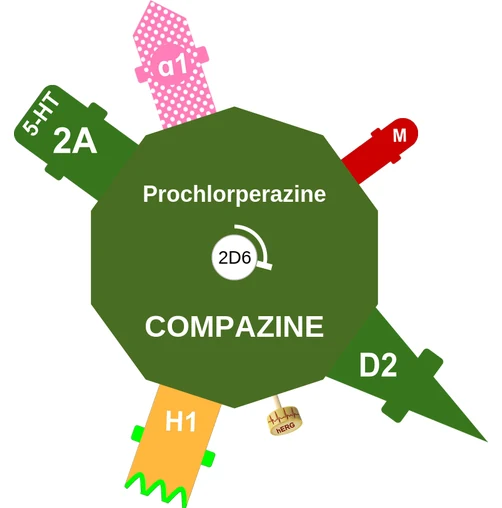
Open Prochlorperazine in the interactive console ↗
Memory aids: mascots and interaction avatars
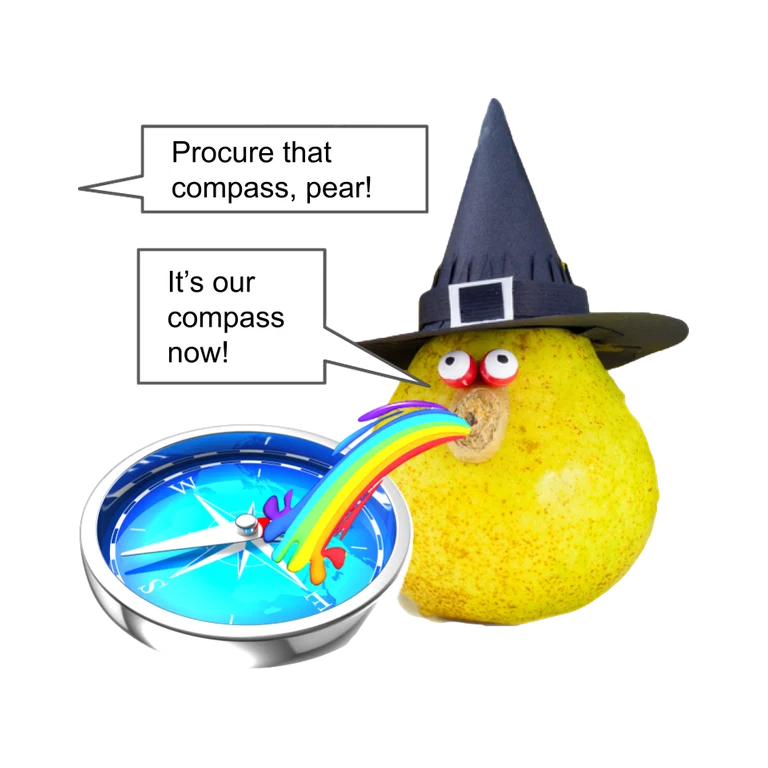
Rainbow spray → antiemetic
Spooky mascot → antipsychotic