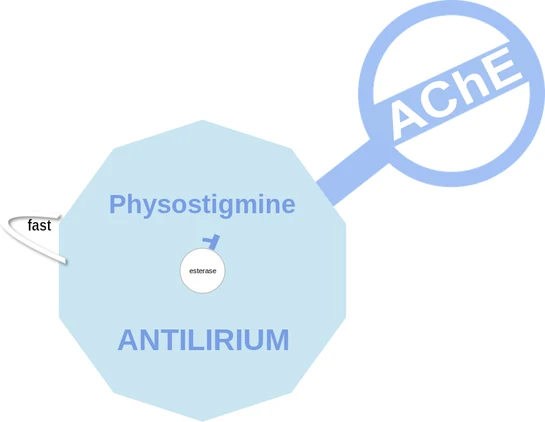
Physostigmine
ANTILIRIUM
What it isReversible acetylcholinesterase inhibitor crossing the blood-brain barrier; severe central antimuscarinic delirium.
Why this oneIt reverses delirium and peripheral anticholinergic findings and can avert intubation when the toxidrome is clear.
What limits itGive slowly with ECG monitoring and atropine ready; avoid sodium-channel-blocker poisoning because arrhythmia and seizures may result.
FDA-approved for
- anticholinergic toxicity (~1970)
FDA label
Read the full label on DailyMed ↗
| FDA dosing | Population | Start | Target | Max |
|---|---|---|---|---|
| Postoperative awakening disorders | Adult | 0.04 mg/kg IV slow (~1 mg/min) | 2 mg per single dose | |
| Anticholinergic intoxication | Adult | 0.04 mg/kg (2 mg) IV slow, then 1-4 mg every 20 min | ||
| Anticholinergic intoxication | Infants/children | 0.5 mg IV, repeat every 5 min up to total 2 mg | 2 mg total |
Renal Undefined
Hepatic Undefined
Repeat the effective dose if intoxication symptoms recur; continuous infusion may be used.
Instructions
- Inject slowly IV (~1 mg/min) or as brief infusion in 50 mL saline over 10-15 min
- As antidote for TCA cardiotoxicity, use only with continuous ECG monitoring (risk of cardiac arrest)
Contraindications
- Bronchial asthma
- Gangrene (ulcers with tissue destruction)
- Coronary heart disease
- Mechanical bowel obstruction
- Urinary retention (mechanical ischuria) or urinary-tract spasms
- Myotonic dystrophy
- Closed traumatic brain injuries
- Depolarization block after depolarizing muscle relaxants
- Intoxication with irreversible cholinesterase inhibitors, organophosphates (phosphoric acid esters), or barbiturates
Cautions
- Life-threatening hypersensitivity reactions possible — keep emergency measures ready
- Caution in diabetes, bradycardia, AV conduction disturbances, Parkinson's disease, ulcerative colitis
- Cardiac arrest possible when used as TCA antidote — continuous ECG monitoring required
Adverse reactions
- Cholinergic effects: hypersalivation, sweating, nausea/vomiting
- Bradycardia/tachycardia, sinoatrial block, hypotension
- Bronchospasm
- Hypersensitivity reactions
Pregnancy No human experience; crosses placenta — use only if absolutely necessary.
Lactation Unknown if excreted in milk; use only if absolutely necessary.
NO BOXED WARNINGS
Principal riskbradyarrhythmia or seizure in sodium-channel-blocker toxicity
Cost, est. cash$50–$500/dose
Generic entryN/A – unapproved legacy product
Classes and tags
Clinical profile
Legacy pregnancy categoryUnknown / historical label unavailable
Defining liabilityAgent-specific cardiovascular, neurologic or metabolic toxicity requires monitored use in poisoning or overload.
Mechanism of action: Physostigmine ballicule