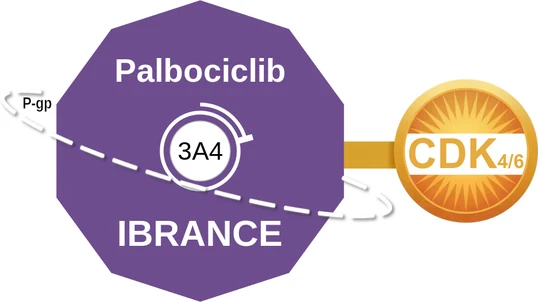
Palbociclib
IBRANCE
What it isCDK4/6 inhibitor blocking cell cycle progression; hormone receptor-positive HER2-negative breast cancer.
Why this oneUnlike abemaciclib, it uses interrupted treatment and is limited by neutropenia rather than diarrhea.
What limits itNeutropenia governs treatment holds, though it rarely causes infection. CYP3A4 interactions can markedly alter exposure.
FDA-approved for
- HR-positive HER2-negative advanced breast cancer (2015)
FDA label
Read the full label on DailyMed ↗
| FDA dosing | Population | Start | Target | Max |
|---|---|---|---|---|
| HR+/HER2- advanced/metastatic breast cancer (+ endocrine therapy) | Adults | 125 mg QD, 21 days on / 7 days off (28-day cycle) | 125 mg QD | 125 mg QD |
Renal No adjustment for CrCl >15 mL/min (mild-severe)
Hepatic No adjustment for mild-moderate (Child-Pugh A/B); severe (Child-Pugh C): 75 mg QD
Instructions
- Swallow tablets whole; do not chew, crush, or split
- Take with or without food at approximately the same time each day
- Missed dose or vomiting: do not take an extra dose; take next dose at usual time
Cautions
- Neutropenia (monitor CBC)
- Interstitial lung disease/pneumonitis (severe and fatal cases)
- Embryo-fetal toxicity
Adverse reactions
- Decreased WBC/neutrophils/hemoglobin/platelets
- Infections
- Increased blood creatinine, AST, ALT
- Fatigue
- Nausea
- Stomatitis
- Diarrhea
- Alopecia
Pregnancy Can cause fetal harm based on mechanism and animal findings
Lactation No data; do not breastfeed during treatment and for 3 weeks after last dose
NO BOXED WARNINGS
Principal riskNeutropenia, which governs dosing
Cost, est. cash$5,000–$30,000+/month or cycle
Generic entry2036 est.
Classes and tags
Clinical profile
Legacy pregnancy categoryUnknown / historical label unavailable
Defining liabilityMyelosuppression and agent-specific hepatic, cardiac, pulmonary, neurologic or reproductive toxicity require oncology monitoring.
Mechanism of action: Palbociclib ballicule