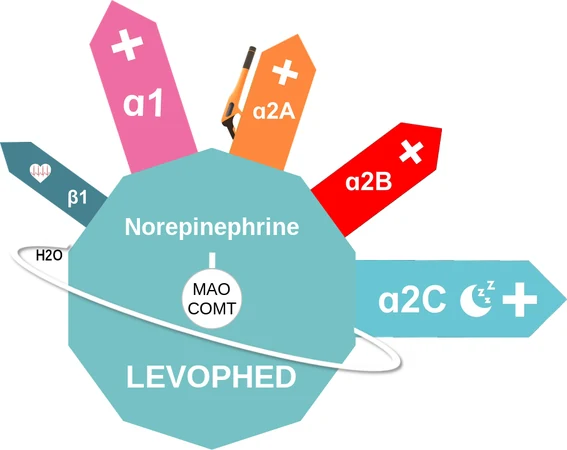
Norepinephrine
LEVOPHED
What it isEndogenous alpha- and beta-adrenergic agonist; septic and other vasodilatory shock.
Why it mattersIt is the first-line vasopressor in septic shock, with better outcomes than dopamine.
What it changesExtravasation causes tissue necrosis and needs prompt phentolamine infiltration; monitor for ischemia and arrhythmia.
FDA-approved for
- septic/vasodilatory shock (1950)
FDA label
Read the full label on DailyMed ↗
| FDA dosing | Population | Start | Target | Max |
|---|---|---|---|---|
| Blood pressure restoration/maintenance (hypotension) | Adults | 8–12 mcg/min IV infusion (0.25–0.375 mL/min of 4 mcg/mL dilution) | Maintenance 2–4 mcg/min IV; adjust rate to maintain low-normal BP (usually 80–100 mm Hg systolic) | Undefined |
Titration After initial dose, assess response and adjust; monitor BP every 2 minutes until desired hemodynamic effect achieved, then every 5 minutes for duration of infusion.
Renal Undefined
Hepatic Undefined
Instructions
- Correct hypovolemia before initiating; suspect occult hypovolemia if no response
- Dilute before use: 4 mg in 1,000 mL D5W or dextrose-5%-containing saline (4 mcg/mL); saline alone not recommended; use higher concentrations if fluid-restricted
- Infuse into a large vein; avoid leg veins in elderly or occlusive vascular disease; avoid catheter tie-in technique
- On discontinuation, reduce flow rate gradually — avoid abrupt withdrawal (marked hypotension); expand blood volume with IV fluids
- Extravasation: infiltrate area ASAP with phentolamine 5–10 mg in 10–15 mL 0.9% NaCl via fine needle (effective within 12 h)
- Do not use if pinkish, darker than slightly yellow, or precipitated; diluted solution usable up to 24 h at room temp, protect from light
- Avoid contact with iron salts, alkalis, oxidizing agents; give whole blood/plasma separately
- Elderly: start at low end of dosing range
Cautions
- Tissue ischemia: extravasation can cause necrosis/sloughing; severe vasoconstriction if given during uncorrected hypovolemia; avoid in mesenteric or peripheral vascular thrombosis; gangrene of extremities reported with occlusive/thrombotic vascular disease or prolonged/high-dose infusion
- Marked hypotension after abrupt discontinuation — taper infusion rate
- Cardiac arrhythmias (especially with hypoxia/hypercarbia); continuous cardiac monitoring in patients with arrhythmias/underlying heart disease
- Contains sodium metabisulfite — allergic-type reactions including anaphylaxis, more frequent in asthmatics
Adverse reactions
- Hypertension, bradycardia (most common)
- Ischemic injury; extravasation necrosis at injection site
- Anxiety, transient headache
- Respiratory difficulty, pulmonary edema
Pregnancy Limited human data (use at delivery) show no increased risk of birth defects/miscarriage; untreated shock is a medical emergency — do not withhold life-sustaining therapy; high-dose animal data show reduced placental blood flow.
Lactation No data; clinically relevant infant exposure not expected (short half-life, poor oral bioavailability).
⚠ BOXED WARNING
- Extravasation causes tissue necrosis; infiltrate with phentolamine
Principal riskExtravasation causes tissue necrosis; phentolamine is the antidote
Classes and tags
Clinical profile
Mechanism of action: Norepinephrine ballicule