Niacin
VITAMIN B3
What it isNicotinic acid activating GPR109A; pellagra and, now rarely, dyslipidemia.
Why this oneIt raises HDL and lowers lipoprotein(a), but those lipid changes did not translate into added statin benefit.
What limits itFlushing commonly ends treatment; hepatotoxicity, hyperglycemia, and hyperuricemia require attention.
FDA-approved for
- dyslipidemia (1955)
- pellagra
FDA label
Read the full label on DailyMed ↗
| FDA dosing | Population | Start | Target | Max |
|---|---|---|---|---|
| Hyperlipidemia / hypertriglyceridemia | adult | 500 mg QHS | 1000–2000 mg QHS | 2000 mg/day |
Titration Increase by no more than 500 mg in any 4-week period
Renal Use with caution (not studied)
Hepatic Contraindicated in active liver disease or unexplained persistent transaminase elevations
Instructions
- Take at bedtime with a low-fat snack
- Swallow whole; do not break, crush, or chew
- Pretreat with aspirin (up to 325 mg) 30 min before to reduce flushing
- Avoid alcohol, hot drinks, and spicy foods near dosing
- Do not substitute for immediate-release or sustained-release niacin at equivalent doses
- If therapy is interrupted for an extended period, restart with titration
Contraindications
- Active liver disease or unexplained persistent transaminase elevations
- Active peptic ulcer disease
- Arterial bleeding
Cautions
- Severe hepatotoxicity (especially substituting SR for IR niacin at equivalent doses)
- Rhabdomyolysis/myopathy, increased with statins
- Increased blood glucose
- Reduced platelet count and increased PT
- Increased uric acid (caution in gout)
- Caution in unstable angina or acute MI
Adverse reactions
- Flushing
- Diarrhea
- Nausea
- Vomiting
- Increased cough
- Pruritus
Pregnancy Discontinue in hyperlipidemia when pregnancy is recognized; assess individual risk/benefit in hypertriglyceridemia
Lactation Present in human milk; advise not to breastfeed during treatment
NO BOXED WARNINGS
Principal riskFlushing; no cardiovascular benefit added to a statin
Cost, est. cash$5–$150/month
Generic entry1992
Classes and tags
Clinical profile
Legacy pregnancy categoryC
Defining liabilityMyopathy/rhabdomyolysis and hepatotoxicity; interaction burden varies by agent.
Active metabolites
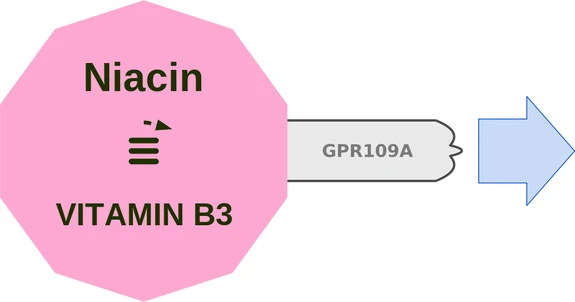
Mechanism of action: Niacin ballicule
Open Niacin in the interactive console ↗
Memory aids: mascots and interaction avatars