Naltrexone
REVIA
What it isCompetitive mu opioid antagonist; alcohol and opioid use disorder.
Why this oneIt reduces heavy drinking days in alcohol use disorder without requiring abstinence to start, and the monthly injection removes adherence as a variable.
What limits itIt blocks opioid analgesia entirely and precipitates withdrawal, so seven to ten days opioid-free are required first.
FDA-approved for
- opioid use disorder (1984)
- alcohol use disorder (1994)
Off-label
- self-injurious behavior
- weight loss (low-dose)
- impulse-control disorders
FDA label
Read the full label on DailyMed ↗
| FDA dosing | Population | Start | Target | Max |
|---|---|---|---|---|
| Alcohol dependence | Adults | 50 mg QD | 50 mg QD | 50 mg QD |
| Opioid dependence (blockade) | Adults | 25 mg once; if no withdrawal, 50 mg QD | 50 mg QD | 50 mg QD |
Renal Undefined
Hepatic Undefined
Higher risk of hepatocellular injury with single doses above 50 mg
Instructions
- Patient must be opioid-free (incl. tramadol) 7–10 days before starting
- Consider naloxone challenge test if occult opioid dependence suspected; do not start if positive
- Do not start in acute opioid withdrawal or positive opioid urine screen
- Alternative supervised schedules (e.g., 100 mg every other day, 150 mg every third day) reduce blockade
Contraindications
- Patients receiving opioid analgesics
- Current opioid dependence, incl. maintenance on agonists (methadone) or partial agonists (buprenorphine)
- Acute opioid withdrawal
- Failed naloxone challenge test or positive opioid urine screen
Cautions
- Dose-related hepatocellular injury (esp. doses above recommended)
- Precipitated / exacerbated opioid withdrawal in non-opioid-free patients
- Vulnerability to opioid overdose after treatment (reduced tolerance) or attempts to overcome blockade
- Depression and suicidality reported
- Withdrawal/deaths reported with ultra-rapid opioid detoxification
Adverse reactions
- Nausea
- Headache
- Dizziness
- Nervousness
- Fatigue
- Insomnia
- Vomiting
- Anxiety
- Somnolence
- Abdominal pain/cramps (opioid-dependent patients)
Pregnancy Category C; increased early fetal loss in animals at high doses; use only if benefit justifies risk
Lactation Undefined
NO BOXED WARNINGS
Principal riskPrecipitated withdrawal; blocks opioid analgesia
Cost, est. cash$300–$5,000/dose or month
Generic entry2023
Classes and tags
Clinical profile
Legacy pregnancy categoryC
Defining liabilityGenerally tolerated at therapeutic doses; clinically important risks are agent-specific and increase with interactions or organ impairment.
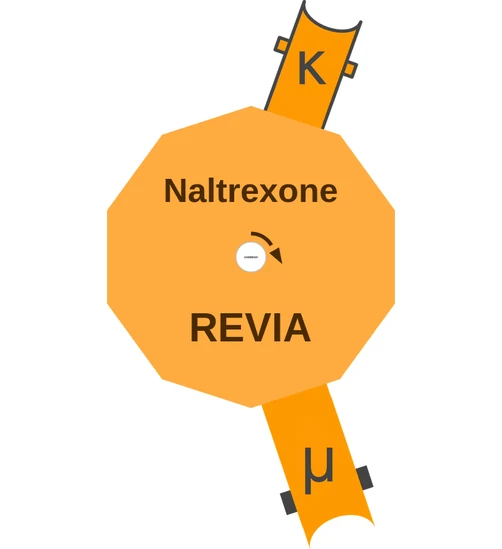
Mechanism of action: Naltrexone ballicule
Open Naltrexone in the interactive console ↗
Memory aids: mascots and interaction avatars

dilated pupils → opioid blocker