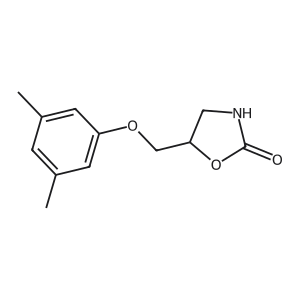
Metaxalone
SKELAXIN
Pronunciation: me-TAX-a-loen
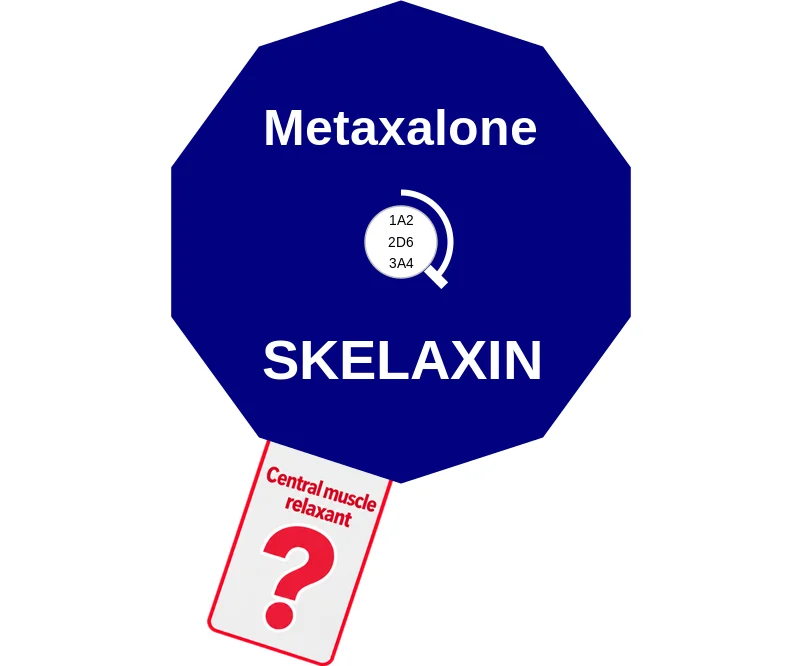

“Skeletor Relaxin’ (with a) Meat ax, alone”
Mao Zedong → monoamine oxidase (MAO) inhibitor
What it isCentral muscle relaxant of uncertain mechanism; acute musculoskeletal spasm.
Why this oneIt impairs alertness less than many skeletal muscle relaxants, but direct evidence of benefit is unusually thin.
What limits itFood raises exposure, and alcohol or opioids amplify sedation; rare hemolytic anemia and hepatotoxicity occur.
Metaxalone prescription history
Animated chart of estimated U.S. prescriptions per year, Muscle relaxants (1950–2026). Metaxalone enters in 1962 (estimated).
FDA-approved for
- muscle spasm (1962)
Principal riskWeak efficacy evidence; take with food
Classes and tags
Clinical profile
Legacy pregnancy categoryUnknown / historical label unavailable
Defining liabilityGenerally tolerated at therapeutic doses; clinically important risks are agent-specific and increase with interactions or organ impairment.
FDA label
Read the full label on DailyMed ↗
NO BOXED WARNINGS
| FDA dosing | Population | Start | Target | Max |
|---|---|---|---|---|
| Acute painful musculoskeletal conditions (adjunct) | Adults & pediatric ≥13 yr | 800 mg TID–QID | 800 mg TID–QID | 800 mg QID |
Renal Contraindicated in significantly impaired renal function
Hepatic Contraindicated in significantly impaired hepatic function
Instructions
- 800 mg tablets are not substitutable mg-for-mg with metaxalone 640 mg tablets
- Switching from 640 mg: only if taken on an empty stomach — stop 640 mg TID/QID, start 800 mg TID/QID on an empty stomach; do not switch if taken with food
Available strengths
- tab 400, 640, 800 mg
Contraindications
- Known tendency to drug-induced, hemolytic, or other anemias
- Significantly impaired renal or hepatic function
Cautions
- Serotonin syndrome reported with concomitant serotonergic drugs (and at higher-than-recommended doses as single agent)
- Drowsiness/dizziness — may impair driving
- Hemolytic anemia; leukopenia
- Hypersensitivity/anaphylaxis; rash
- Jaundice
Adverse reactions
- Drowsiness
- Dizziness
- Headache
- Nervousness/irritability
- Nausea
- Vomiting
- GI upset
Pregnancy Safe use not established; should not be used in women who are or may become pregnant, particularly in early pregnancy, unless benefit outweighs hazard
Lactation Undefined
Cost
Generic entry2010
Serotonin and MAOI
Provisional washout figures
Elevating mechanismMAO-A inhibitor
Non-elevating actionNone recorded
Exposure dependencePrimarily supratherapeutic/overdose exposure
Washout AFTER an MAOIU days
Evidence confidenceModerate
InterpretationWeak MAO-A inhibition, most relevant at supratherapeutic or overdose exposure.
Open Metaxalone in the interactive console ↗
Memory aids: interaction avatars

Open Metaxalone in the interactive console ↗
Self-check
- How does food affect metaxalone exposure?
Raises it. - How strong is direct evidence for metaxalone’s benefit?
Unusually thin.