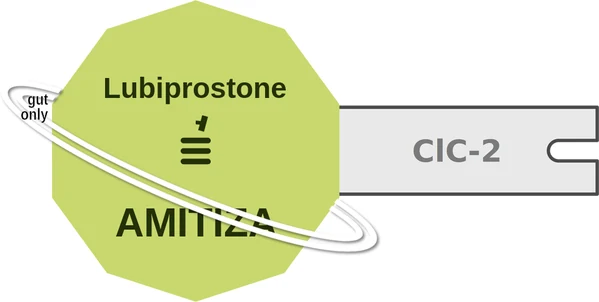
Lubiprostone
AMITIZA
What it isChloride channel type 2 activator increasing intestinal fluid; chronic constipation and opioid-induced constipation.
Why this oneIn opioid constipation it preserves analgesia without the withdrawal risk of peripherally acting opioid antagonists.
What limits itNausea is dose-limiting and reduced by taking it with food. It does not work for methadone-induced constipation.
FDA-approved for
- chronic constipation (2006)
FDA label
Read the full label on DailyMed ↗
| FDA dosing | Population | Start | Target | Max |
|---|---|---|---|---|
| Chronic idiopathic constipation (CIC) | Adults | 24 mcg BID | 24 mcg BID | 24 mcg BID |
| Opioid-induced constipation (OIC) | Adults | 24 mcg BID | 24 mcg BID | 24 mcg BID |
| Irritable bowel syndrome with constipation (IBS-C) | Adult women | 8 mcg BID | 8 mcg BID | 8 mcg BID |
Renal Undefined
Hepatic CIC/OIC: moderate (Child-Pugh B) 16 mcg BID, severe (C) 8 mcg BID. IBS-C: moderate no adjustment, severe 8 mcg QD. Mild (A): no adjustment.
Instructions
- Swallow capsules whole; do not break apart or chew.
- Take with food and water.
- Periodically assess need for continued therapy.
Contraindications
- Known or suspected mechanical gastrointestinal obstruction
Cautions
- Nausea (concomitant food may reduce)
- Avoid in severe diarrhea; discontinue if severe diarrhea occurs
- Syncope and hypotension (may occur after first or subsequent doses)
- Dyspnea (usually within 1 h of dose)
- Evaluate for bowel obstruction before initiating
Adverse reactions
- Nausea
- Diarrhea
- Headache
- Abdominal pain/distension
- Flatulence
Pregnancy Limited human data; animal data show dose-dependent fetal loss (likely secondary to maternal toxicity).
Lactation No human data; monitor breastfed infant for diarrhea.
NO BOXED WARNINGS
Principal riskNausea, dose-limiting
Cost, est. cash$5–$150/month
Generic entry2021
Classes and tags
Clinical profile
Legacy pregnancy categoryC
Defining liabilityDiarrhea, dehydration and electrolyte disturbance, especially with excessive or prolonged use.
Mechanism of action: Lubiprostone ballicule