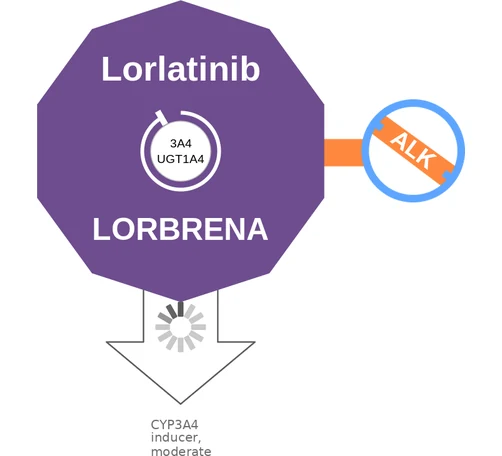
Lorlatinib
LORBRENA
What it isThird-generation, brain-penetrant ALK inhibitor; ALK-positive metastatic non-small-cell lung cancer.
Why this oneIt was designed for CNS penetration and covers many resistance mutations that defeat earlier ALK inhibitors.
What limits itMood change, psychosis, and cognitive slowing can require interruption or reduction; hyperlipidemia and edema need monitoring.
FDA-approved for
- ALK-positive non-small cell lung cancer (2018)
FDA label
Read the full label on DailyMed ↗
| FDA dosing | Population | Start | Target | Max |
|---|---|---|---|---|
| ALK-positive metastatic NSCLC | Adults | 100 mg QD |
Renal CLcr 15 to <30 mL/min: 75 mg QD; CLcr 30–89: no adjustment
Hepatic Severe (Child-Pugh C): 50 mg QD; mild–moderate: no adjustment
Dose reductions: 75 mg, then 50 mg; discontinue if 50 mg QD not tolerated
Instructions
- Swallow whole with or without food; do not chew, crush, or split; take at the same time daily
- If a dose is missed and the next is >4 hr away, take it; do not double
- Discontinue strong CYP3A inducers for 3 half-lives before starting (contraindicated)
- Use effective non-hormonal contraception
Contraindications
- Concomitant use with strong CYP3A inducers (risk of serious hepatotoxicity)
Cautions
- Serious hepatotoxicity with strong CYP3A inducers
- CNS effects (seizures, mood/cognitive/psychotic/speech changes, suicidal ideation)
- Hyperlipidemia
- Atrioventricular block
- Interstitial lung disease / pneumonitis
- Hypertension
- Hyperglycemia
- Embryo-fetal toxicity
Adverse reactions
- Edema
- Peripheral neuropathy
- Weight gain
- Cognitive effects
- Fatigue
- Dyspnea
- Arthralgia
- Diarrhea
- Mood effects
- Hypercholesterolemia
- Hypertriglyceridemia
- Cough
Pregnancy Can cause fetal harm (animal malformations, increased post-implantation loss, abortion)
Lactation Do not breastfeed during treatment and for 7 days after the final dose
NO BOXED WARNINGS
Principal riskCNS effects: mood change and cognitive slowing
Cost, est. cash$5,000–$30,000+/month or cycle
Generic entry2038 est.
Classes and tags
Clinical profile
Legacy pregnancy categoryNot assigned — PLLR-era drug
Defining liabilityMyelosuppression and agent-specific hepatic, cardiac, pulmonary, neurologic or reproductive toxicity require oncology monitoring.
Mechanism of action: Lorlatinib ballicule