Lithium ER
LITHOBID
What it isLithium carbonate extended-release 300 mg (LITHOBID, approved pre-1982) inhibits GSK-3β and inositol recycling; bipolar disorder.
Why this oneFlatter peaks than IR reduce post-dose tremor and GI upset, but serum-level monitoring is unchanged.
What limits itNarrow therapeutic index: monitor lithium levels, kidney and thyroid function. NSAIDs, thiazides and ACE inhibitors raise levels.
FDA-approved for
- bipolar disorder (~1980)
FDA label
Read the full label on DailyMed ↗
| FDA dosing | Population | Start | Target | Max |
|---|---|---|---|---|
| Acute mania | 900 mg BID (or 600 mg TID) | 1800 mg/day; serum lithium 1.0-1.5 mEq/L | Serum should not exceed 2.0 mEq/L during acute phase | |
| Long-term control (maintenance) | 600 mg BID (or TID up to 1200 mg/day) | 900-1200 mg/day; serum lithium 0.6-1.2 mEq/L |
Renal Use with caution and reduced dosage; substantially excreted by kidney and toxicity risk greater with impaired renal function - monitor
Hepatic Undefined (not specifically addressed)
Dose individualized by serum lithium concentration and clinical response
Instructions
- Swallow extended-release tablets whole; never chew or crush
- Maintain normal diet including salt and adequate fluid intake (2500-3500 mL), especially during initial stabilization
- Draw serum lithium 8-12 hours after previous dose; monitor twice weekly during acute phase and at least every 2 months during maintenance
- Reduce or suspend dose during febrile illness, protracted sweating, or diarrhea
Cautions
- Lithium toxicity (neurologic, cardiac, renal, respiratory, GI)
- Unmasking of Brugada Syndrome - generally avoid in patients with or suspected of Brugada Syndrome
- Pseudotumor cerebri
- Renal effects (nephrogenic diabetes insipidus, nephrotic syndrome, morphologic changes)
- Encephalopathic syndrome with neuroleptics (e.g., haloperidol)
- Serotonin syndrome with serotonergic drugs/MAOIs
- May prolong effects of neuromuscular blocking agents
- Increased toxicity with diuretics, ACE inhibitors, ARBs, NSAIDs
Adverse reactions
- Fine hand tremor
- Polyuria
- Thirst/polydipsia
- Nausea
- Diarrhea
- Vomiting
- Drowsiness
- Muscular weakness
- Lack of coordination
Pregnancy May cause fetal harm; lithium birth registries suggest an increase in cardiac and other anomalies, especially Ebstein's anomaly.
Lactation Lithium is excreted in human milk; nursing not recommended except in rare circumstances; toxicity signs (hypertonia, hypothermia, cyanosis, ECG changes) reported in some infants/neonates.
⚠ BOXED WARNING
- Lithium toxicity is closely related to serum concentration and can occur at doses close to therapeutic levels
Classes and tags
Clinical profile
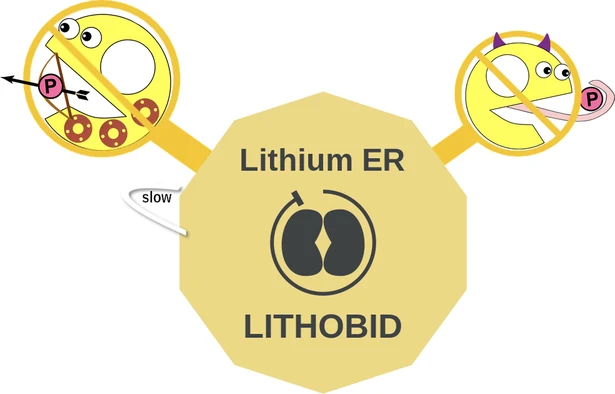
Mechanism of action: Lithium ER ballicule
Open Lithium ER in the interactive console ↗
Memory aids: mascots and interaction avatars