Lisinopril
ZESTRIL
What it isACE inhibitor for hypertension, heart failure and renal protection in proteinuric kidney disease.
Why this oneUnlike most ACE inhibitors, it is active as administered rather than requiring conversion from a prodrug.
What limits itCheck creatinine and potassium after starting or increasing it. Cough may end the trial; angioedema and pregnancy are stop signs.
FDA-approved for
- hypertension (1987)
- heart failure (~1993)
FDA label
Read the full label on DailyMed ↗
| FDA dosing | Population | Start | Target | Max |
|---|---|---|---|---|
| Hypertension | Adults, not on a diuretic | 10 mg QD | 20–40 mg QD | 40 mg QD (doses to 80 mg give no greater effect) |
| Hypertension | Adults already taking a diuretic | 5 mg QD | 20–40 mg QD | 40 mg QD |
| Hypertension | Peds ≥6 yr with GFR >30 mL/min/1.73 m² | 0.07 mg/kg QD (up to 5 mg) | Titrate to BP response | 0.61 mg/kg QD (up to 40 mg); above this not studied |
| Systolic heart failure (adjunct to diuretics ± digitalis) | Adults | 5 mg QD; 2.5 mg QD if serum sodium <130 mEq/L | Increase as tolerated | 40 mg QD |
| Reduction of mortality in acute MI | Hemodynamically stable adults within 24 h of symptom onset | 5 mg, then 5 mg at 24 h, 10 mg at 48 h; 2.5 mg start if SBP ≤120 and >100 mmHg during first 3 days post-infarct | 10 mg QD for at least 6 weeks | 10 mg QD (reduce to 5 mg, temporarily 2.5 mg, if SBP ≤100 mmHg) |
Renal CrCl >30 mL/min: no dose adjustment. CrCl 10–30 mL/min: halve the usual initial dose (hypertension 5 mg, systolic heart failure 2.5 mg, acute MI 2.5 mg), then up-titrate as tolerated to max 40 mg/day. CrCl <10 mL/min or on hemodialysis: initial 2.5 mg QD. Not recommended in peds with GFR <30 mL/min/1.73 m².
Hepatic Undefined
Instructions
- Discontinue as soon as pregnancy is detected.
- Post-MI: continue dosing for at least 6 weeks; withdraw if prolonged hypotension (SBP <90 mmHg for >1 h) occurs.
- Hypotension after the first dose does not preclude careful subsequent titration once the hypotension is managed.
- In heart failure, the diuretic dose may need adjustment to minimize hypovolemia-driven hypotension.
- Monitor renal function and serum potassium periodically.
Contraindications
- Concomitant use with a neprilysin inhibitor (e.g., sacubitril); do not administer within 36 hours of switching to or from sacubitril/valsartan
- History of angioedema or hypersensitivity related to previous ACE inhibitor treatment
- Hereditary or idiopathic angioedema
- Co-administration with aliskiren in patients with diabetes
Cautions
- Fetal toxicity: RAS-acting drugs in the 2nd/3rd trimester reduce fetal renal function → oligohydramnios, lung hypoplasia, skull hypoplasia, anuria, hypotension, death.
- Angioedema of face, extremities, lips, tongue, glottis or larynx at any time in treatment, some fatal; discontinue promptly and monitor to full resolution. Higher rate in Black patients; increased risk with concomitant mTOR inhibitors (sirolimus, everolimus, temsirolimus) or a neprilysin inhibitor.
- Intestinal angioedema presenting as abdominal pain ± nausea/vomiting, sometimes with no prior facial angioedema and normal C-1 esterase.
- Anaphylactoid reactions during hymenoptera venom desensitization, during dialysis with high-flux membranes, and during LDL apheresis with dextran sulfate absorption.
- Impaired renal function including acute renal failure — highest risk with renal artery stenosis, CKD, severe CHF, post-MI or volume depletion; monitor periodically.
- Symptomatic hypotension, sometimes with oliguria, progressive azotemia, acute renal failure or death; monitor BP after initiation.
- Hyperkalemia — monitor serum potassium periodically.
- Cholestatic jaundice progressing to hepatic failure — monitor for jaundice or signs of liver failure.
- Less antihypertensive effect in Black than in non-Black patients.
Adverse reactions
- Hypertension: headache, dizziness, cough.
- Heart failure: hypotension, chest pain.
- Acute MI: hypotension, renal dysfunction.
- Dose-related (ATLAS, high vs low dose): dizziness 19% vs 12%, hypotension 11% vs 7%, increased creatinine 10% vs 7%, syncope 7% vs 5%, hyperkalemia 6% vs 4%.
- Hyperkalemia (K >5.7 mEq/L) in 2.2% of hypertension and 4.8% of heart failure patients; reversible minor BUN/creatinine rises.
- Fatigue, asthenia, orthostatic effects.
- GI: pancreatitis, constipation, flatulence, dry mouth, diarrhea.
- Rare: bone marrow depression, hemolytic anemia, leukopenia/neutropenia, thrombocytopenia.
- Skin: urticaria, alopecia, photosensitivity, erythema, flushing, diaphoresis, toxic epidermal necrolysis, Stevens-Johnson syndrome, pruritus.
- Special senses: visual loss, diplopia, blurred vision, tinnitus, taste and olfactory disturbances.
- Impotence; a lupus-like symptom complex (positive ANA, raised ESR, arthralgia, myalgia, fever, vasculitis, eosinophilia).
Pregnancy Can cause fetal harm — discontinue as soon as pregnancy is detected; 2nd/3rd-trimester exposure causes oligohydramnios, fetal renal failure, lung hypoplasia, skeletal/skull deformation and death. Observe exposed neonates for hypotension, oliguria and hyperkalemia.
Lactation No human milk data; present in rat milk. Advise women not to breastfeed during treatment.
⚠ BOXED WARNING
- Fetal toxicity; discontinue as soon as pregnancy is detected
Principal riskAngioedema, and hyperkalemia
Cost, est. cash$4–$80/month
Generic entry2002
Classes and tags
Clinical profile
Legacy pregnancy categoryD
Defining liabilityHyperkalemia, kidney injury, angioedema, fetal toxicity and increased lithium exposure.
Mechanism of action: Lisinopril ballicule
Open Lisinopril in the interactive console ↗
Memory aids: mascots and interaction avatars
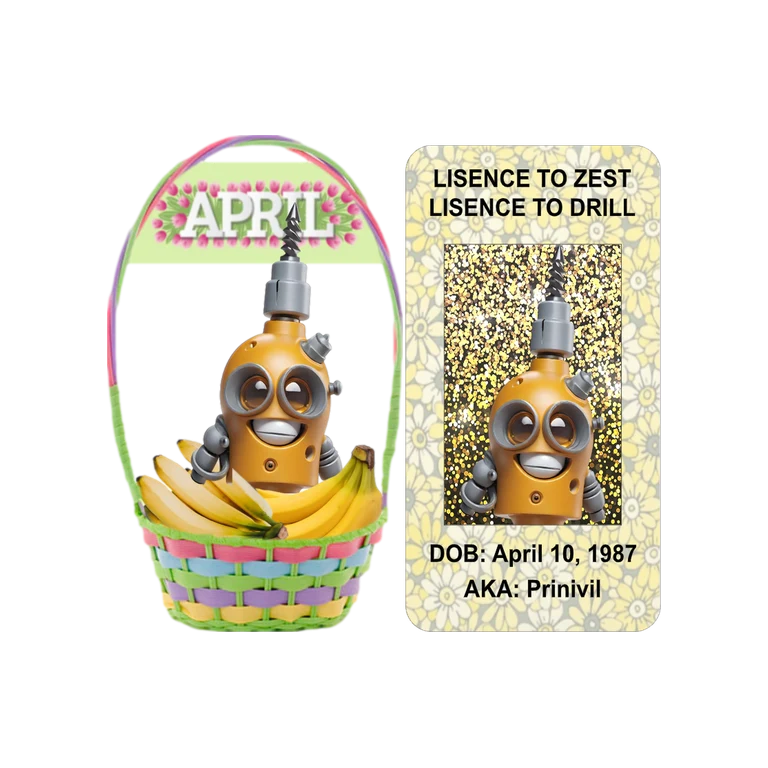
Bananas in bunches → ↑ serum potassium