Lerodalcibep
LEROCHOL
What it isSmall recombinant PCSK9-binding fusion protein with human serum albumin — not an antibody; FDA-approved 2025 for hypercholesterolemia including HeFH.
Why this oneOnce-monthly small-volume subcutaneous injection with room-temperature stability up to three months distinguishes it from earlier PCSK9 therapies.
What limits itInjection-site reactions and access are the main practical constraints; no cardiovascular outcome data yet.
FDA-approved for
- hypercholesterolemia incl. HeFH (2025)
FDA label
Read the full label on DailyMed ↗
| FDA dosing | Population | Start | Target | Max |
|---|---|---|---|---|
| Primary hypercholesterolemia incl. HeFH / ASCVD risk (indications section not in extract; population from trial descriptions) | Adults | SC: 300 mg once monthly | SC: 300 mg once monthly | 300 mg once monthly |
Renal Mild-moderate impairment (eGFR 30 to <90): no adjustment; severe (eGFR <30)/ESRD not studied
Hepatic Mild or moderate impairment: no adjustment; severe not studied
Instructions
- Inject SC into abdomen or upper front thighs; back of upper arm only if given by caregiver/HCP; rotate sites; avoid tender, bruised, red, or indurated skin
- If refrigerated, warm to room temperature (up to 25 C) for at least 30 min before use
- Inspect: clear to slightly opalescent, brownish-yellow to amber; do not use if cloudy or contains particles
- Push plunger fully until syringe is empty to deliver full 300 mg dose
- Missed dose <7 days: give ASAP, keep original monthly schedule; missed >=7 days: give ASAP and start new monthly schedule from that date
- Assess LDL-C when clinically indicated; effect measurable as early as 4 weeks after initiation
Adverse reactions
- Injection site reactions (12-18%)
- Nasopharyngitis (13-15%)
- Diarrhea (3%)
- Nausea (2%)
- Peripheral edema (2%)
- Injection site reactions were the most frequent reason for discontinuation
Pregnancy Discontinue when pregnancy recognized (or weigh ongoing need); may cause fetal harm based on mechanism (lowers LDL-C/cholesterol-derived substances); treatment of hypercholesterolemia generally unnecessary during pregnancy
Lactation No human data; present in monkey milk — weigh benefits of breastfeeding against maternal need and infant risk
NO BOXED WARNINGS
Classes and tags
Clinical profile
Mechanism of action: Lerodalcibep ballicule
Open Lerodalcibep in the interactive console ↗
Memory aids: mascots and interaction avatars
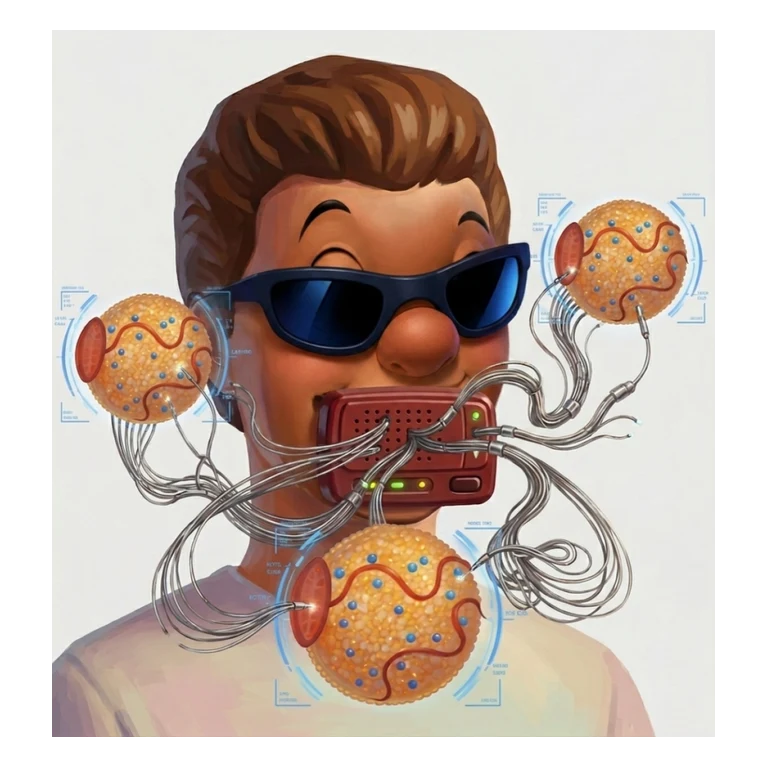
Third-generation PCSK9 inhibitor — binding protein, not a mAb
300 mg SC once monthly; room-temp stable up to 3 months